
What are helping verbs?
Helping verbs are auxiliary verbs that work with the main verb to create an action in a sentence. They do not hold much meaning themselves but they help form tenses, moods, voices, or make negative forms of sentences or questions. Examples of helping verbs in English include be, do, have, or even can, will, and must.
They are one of the verbs in English that can be viewed through a verb phrase that consists of a helping verb + a head verb working as a unit. Like in the simple example:


Here, the am part is the helping verb, and playing is the main verb that is combined to form a phrase that expresses an action happening right now.
The 3 primary helping verbs (be, do, have)
If you have ever wondered before starting your studying journey, is English hard to learn, today’s topic will help you to get closer to the answer, “No, it is not” because there are three main verbs that form the foundation of grammar.
These are the most common helping verbs and are essential in the construction of various verb tenses, question formation, negatives, and emphatics. Knowing how these terms are used will go a long way in ensuring that we form good sentences. Let’s get down to the list of helping verbs and real-world examples.
The verb “to be”
The verbs am, is, are, was, were, been, and being are used for constructing continuous and passive constructions to demonstrate that an activity is being carried out or that the subject receives some kind of action. Here are helping verb examples in sentences:
Here, is helps form a present continuous tense, indicating that the action is happening at the moment.

In this sample, was is used for the passive type, where the focus is on the activity.
The verb “to have”
The forms of to have (have, has, had) are employed in perfect tenses, which express the idea of completion or association of actions with certain moments of time. These forms should be accompanied by the past participle of the verb expressing the action.
This is one of the grammar points that becomes easier to master with the right app for learning English that can assist you with verbs that appear in everyday speech, writing.
It is all about perfect tenses, showing that the action is complete, and the results are visible now.
It indicates that one operation happened before another in the past.
The verb “to do”
The verb to do (do, does, did) forms interrogative sentences, negative statements, and emphatic statements. It accompanies the principal verb, remaining in its infinitive form.
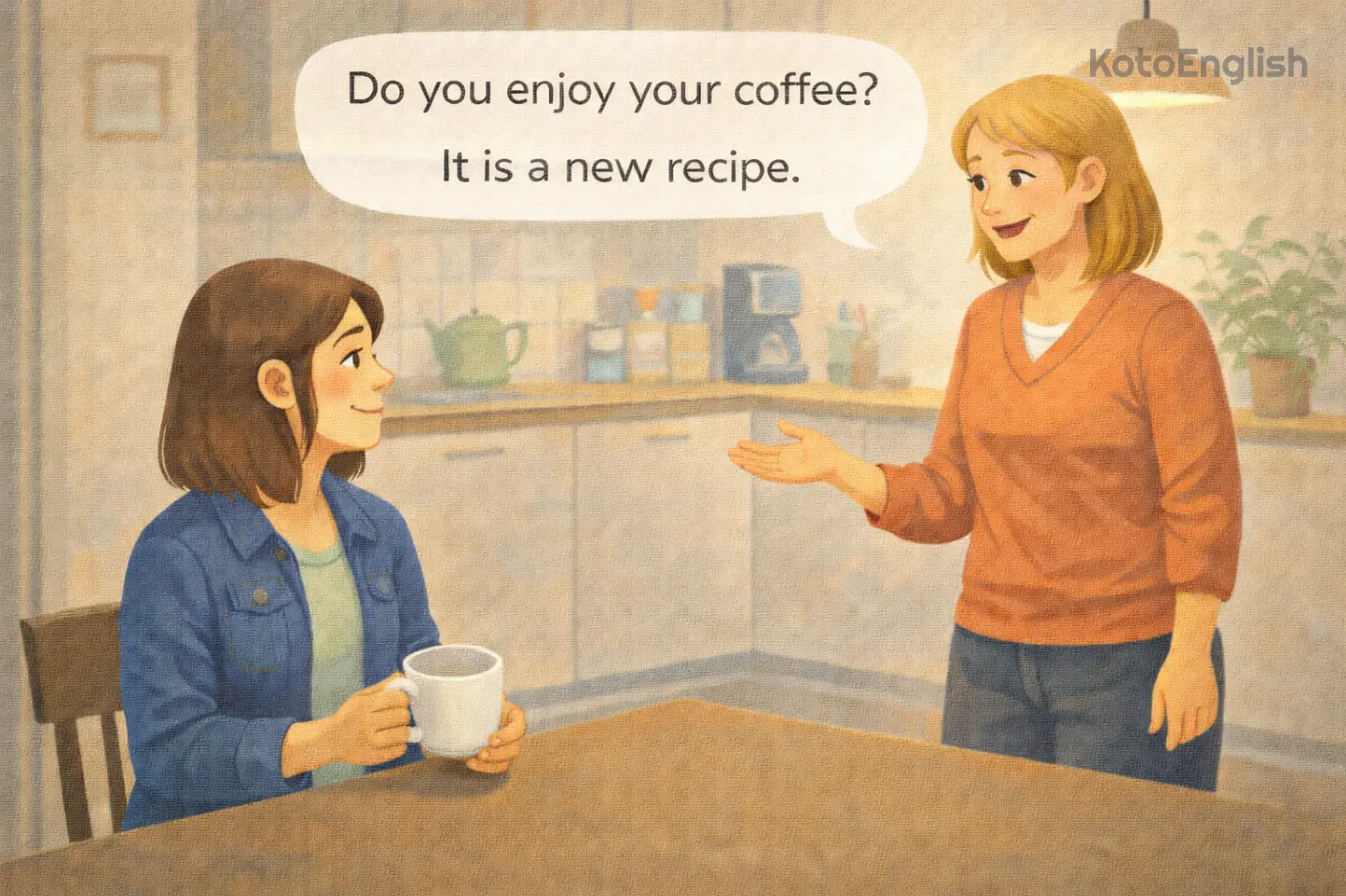

The term here helps to form a question.
It is a negative section that is possible owing to not being added to does.
Used for emphasis, it makes the statement clearer and more forceful.
Modal helping verbs
Modal auxiliaries are used to express attitudes, probabilities, or intentions, not simply actions. Rather than describing what occurs, modal auxiliaries indicate the degree of certainty, necessity, or possibility of an action. The core words include:
- can
- could
- shall
- should
- will
- would
- may
- might
- must
There are some rules about their usage that will help you to build correct sentences:
No verb changes — ever
Modal verbs don’t change form depending on the subject, remaining the same:
Always followed by the base form
It is a typical mistake that takes place in beginners’ study path, so memorize the usage:
To receive a clearer vision of how these verbs function in communication, let’s turn to samples that take place at work, conversations between friends, and more:
|
Sentence |
Function |
|---|---|
|
AI tools
|
Ability/limitation |
|
You
|
Advice |
|
This creator
|
Possibility |
|
I
|
Opinion |
It is the modal auxiliary verbs that give your English speech a human feel and not a mechanical one. They help you convey uncertainty, certainty, attitudes, and intentions much more than mere actions.
Helping verbs vs. main verbs: How to tell the difference
One of the most prevalent issues in understanding helping verbs as opposed to main verbs is the fact that some verbs, like to be and to have, can be classified as either. It is not about what the verb is, but rather what the verb does. Here is a simple rule to remember:
- If there is only ONE verb, then it is the main one
- If there are TWO or more verbs, the first is the helping, the second is the main.
The reason to get confused for learners is that some verbs can do two jobs. Like when is remains the main verb and can describe a state and functions as one of the linking verbs, you can learn by following the link. Here is a quick comparison table before we dive into more details:
|
Sentence |
Role of the first verb |
Why |
|---|---|---|
|
I
|
Main verb |
Only one verb; it shows possession |
|
I
|
Helping verb |
It helps form the present perfect |
|
She
|
Main verb |
Only one verb that describes a state |
|
She
|
Helping verb |
Forms the continuous tense |
|
They
|
Main verb |
“Do” means perform |
From the experience of advanced learners, the difference matters because it affects some crucial patterns in English grammar, such as how you:
- form tenses
- build a question
- make negative sentences
- avoid missing verbs
In examining a sentence, you must consider more than the words individually. Consider the entire verb phrase as one unit. This is the simplest way to distinguish between auxiliary verbs and main verbs.
The moment you begin recognizing whether the verb is doing the work or helping another verb, you will find it very easy to identify the distinction.
Common mistakes with helping verbs
Using helping verbs in English can be challenging, especially when learners translate them directly from their native language.
The phrase that might sound correct in one language might not necessarily make sense in English. Therefore, learners need to learn about examples and how they are constructed. Let’s check some examples.
Stacking modal verbs (using two of them together)
In English, it is not possible to have two modal verbs expressing one activity. Unlike many other languages, it is not possible to conjoin the modal verbs.
This problem often occurs when people attempt to convey future tense and ability using two modal verbs. This can be corrected by substituting the second modal verb with:
|
I will can finish the project tomorrow.
|
I will be able to finish the project tomorrow.
|
|
She must can solve this Math problem.
|
She must be able to solve this Math problem.
|
Double conjugation with “do,” “does,” and “did”
It’s a very typical error that beginners make (levels A1–A2). It occurs when the conjugation of the auxiliary verb is used simultaneously with the conjugation of the verb.
Grammar rule: The auxiliary verb is responsible for the grammatical form, therefore, the main verb should be in the base form (infinite form without “to”).
|
She doesn’t knows the answer.
|
She doesn’t know the answer.
|
|
Did you went to the store?
|
Did you go to the store?
|
Omitting the helping verb in continuous tenses
Another typical mistake made by people is the use of an infinitive verb as a complete verb. An infinitive (-ing verb) cannot function alone; it needs to be accompanied by the auxiliary verb “to be” to indicate what tense it is in.
If the auxiliary verb is not used, the sentence will not make sense at all.
|
They playing soccer right now.
|
They are playing soccer right now.
|
|
He working late today.
|
He is working late today.
|
Conclusion
Helping verbs help determine the meaning conveyed in the English language. They work hand in hand with main verbs in forming tenses, interrogative forms, and negative structures.
Now that you have finished studying these grammar patterns, you can go to the next grammar lesson on our website to find out more and take the next step on your way to becoming fluent in English, passing IELTS or other tests, preparing for a travel, job interview, or else.
FAQ
Linking verbs help the subject provide more information, such as describing or adding an additional condition: She is tired. A helping verb helps form the mood, voice, or tense along with the other verb: She has finished.
The total number recognized by English grammarians is 23. This includes primary ones like be, have, and do, as well as modal verbs like can, could, may, might, must, shall, should, will, and would.
Not really. Questions often contain helping verbs, for example, Do you enjoy drinking coffee? However, if the base form of the verb is be, there is no need to add another helping verb, as in Are you prepared?