What is a verb?
The words that make things happen are verbs. They demonstrate what one is doing, feeling, or even being. No action? No sentence. Verbs make your words move, as the most common English verbs like jump, think, laugh, become, all say what is happening.
When you are telling about an event, making a request, or just telling the truth, a verb is doing all the hard work.
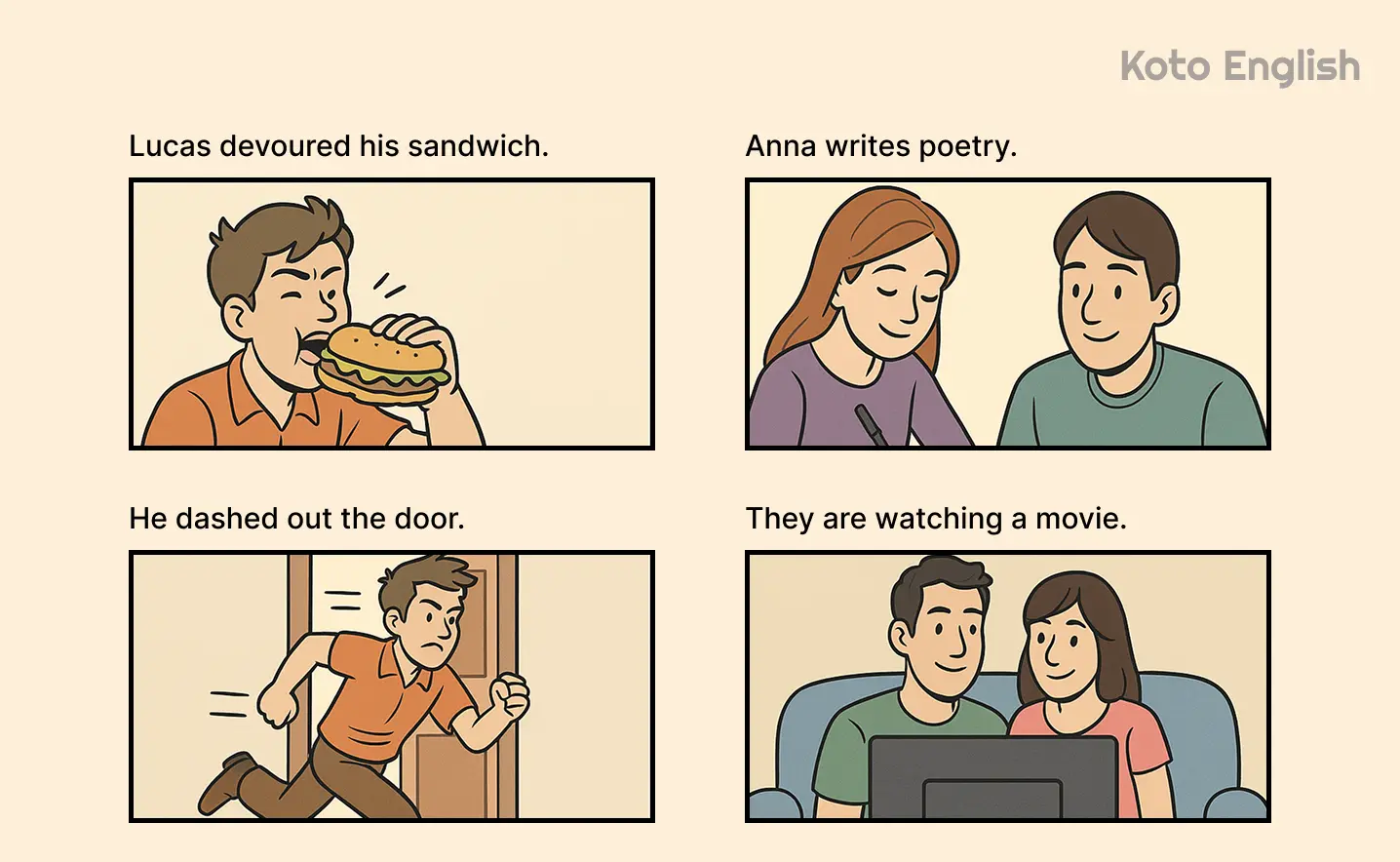
This is a dull illustration:
It only tells us technically that something happened, but there is no detail or energy. Here, now we give it a loft to intentional verbs:
What are verbs? They are the words that give movement or feeling to your sentence. See the difference? In the second version, verbs such as devour and dash make it quite obvious that something has to be done and done intensively.
Level up your English with Koto!
Types of verbs in English
They may all be called a part of speech verb, but they don’t all act the same. Some verbs do the talking, some do the thinking, and others work in the background. Sorting them out is key to using them well.
Overview table
| Type | Description | Example |
|---|---|---|
| Action verbs | Express physical or mental activity |
He
|
| Stative verbs | Describe states, emotions, or thoughts |
I
|
| Regular | Stick to the rules when forming the past tense |
We
|
| Irregular | Change with unique forms you must learn |
The kids
|
| Auxiliary verbs | Help form verb phrases |
They have
|
| Modal verbs | Show ability, necessity, or permission |
You must
|
| Transitive verbs | Require a direct object |
She
|
| Intransitive verbs | Don’t take a direct object |
He
|
| Phrasal verbs | Verb + particle (preposition/adverb) |
She
|
As you can see, verbs come with their own personalities. Mastering when and how to use each one is what turns okay writing into great writing. Below, you’ll find simple explanations and real examples to help each one stick.
By the verbs’ meaning
- Action verbs
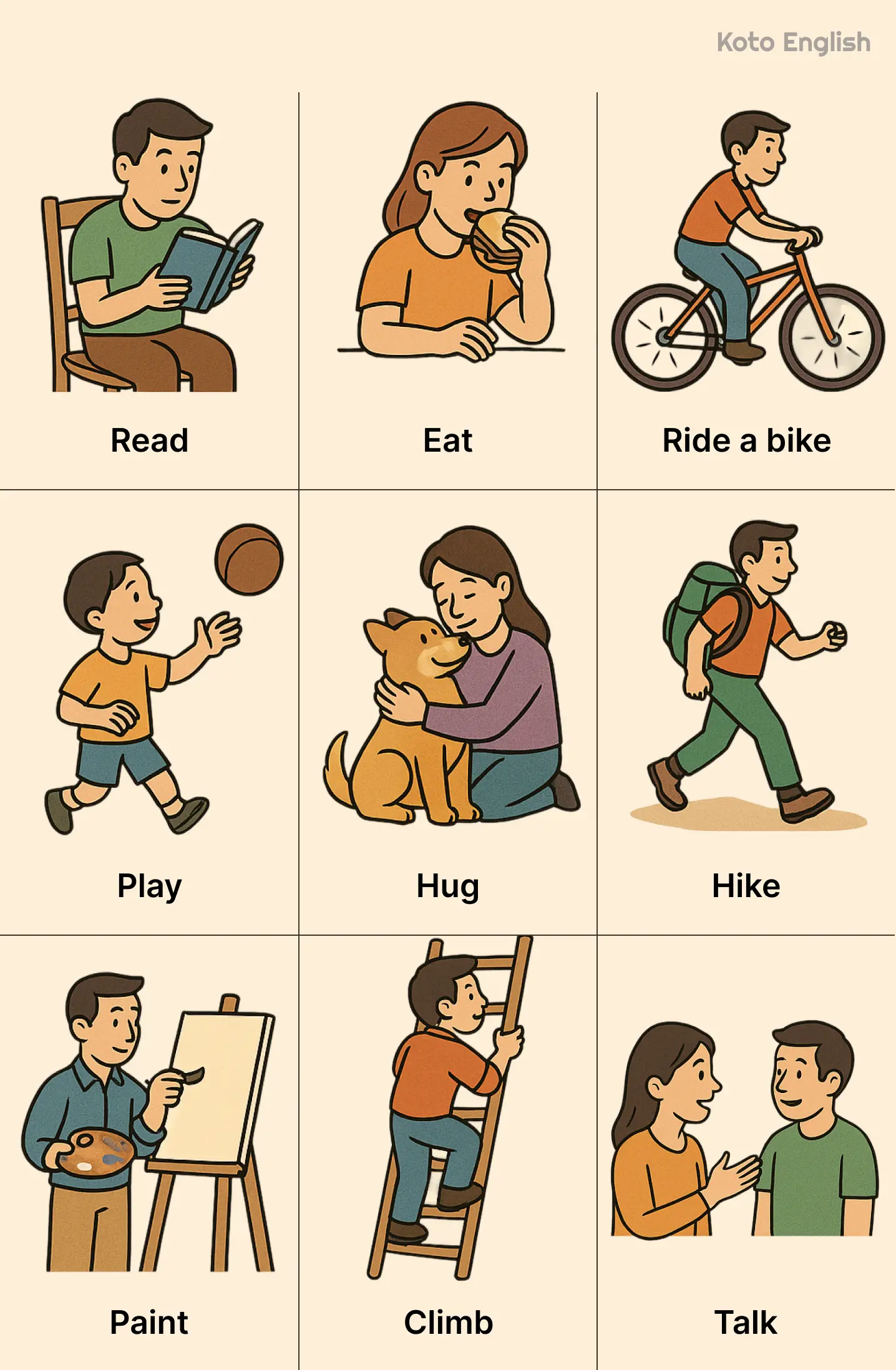
Action verbs describe something a subject does. This can be a physical action (run, throw, jump) or a mental one (think, guess, remember). These are the most dynamic verb examples, they give sentences life and energy.
This verb indicates a real action that is occurring. It can be seen and measured and is therefore a vital component of the majority of storytelling.
- Stative verbs
The stative verbs represent the conditions or states that do not involve physical movement. They characterize feelings, thoughts, associations, or sensorial experience.
Hate here is not a thing that you can see, but it is a state of mind or opinion. These verbs don’t usually work in continuous tenses (you don’t say I am hating).
By form
- Regular verbs
These kinds of verbs follow predictable patterns when changing tense. Usually, you just add -ed for the past tense and past participle.
“Painted” is regular because you just add -ed to the base form “paint.”
- Irregular verbs
Irregular verbs break the rules. Their former orders do not proceed in a fixed sequence and have to be by heart.
Swam is the word that is irregular because the past tense of the verb swim is different altogether.
- Phrasal verbs
Phrasal verbs are made up of a main verb and a particle (preposition or adverb) to form a new meaning.
Set off does not simply mean set, but to begin a journey.
By function in a sentence
- Auxiliary verbs
Also known as helping verbs, auxiliary verbs come to the main verb of a sentence to assist in demonstrating tense, mood, or voice. The typical auxiliary verbs are have, be and do.
Have helps clarify the perfect tense of the verb break. On its own, it would not tell us at what time the action took place.
- Modal verbs
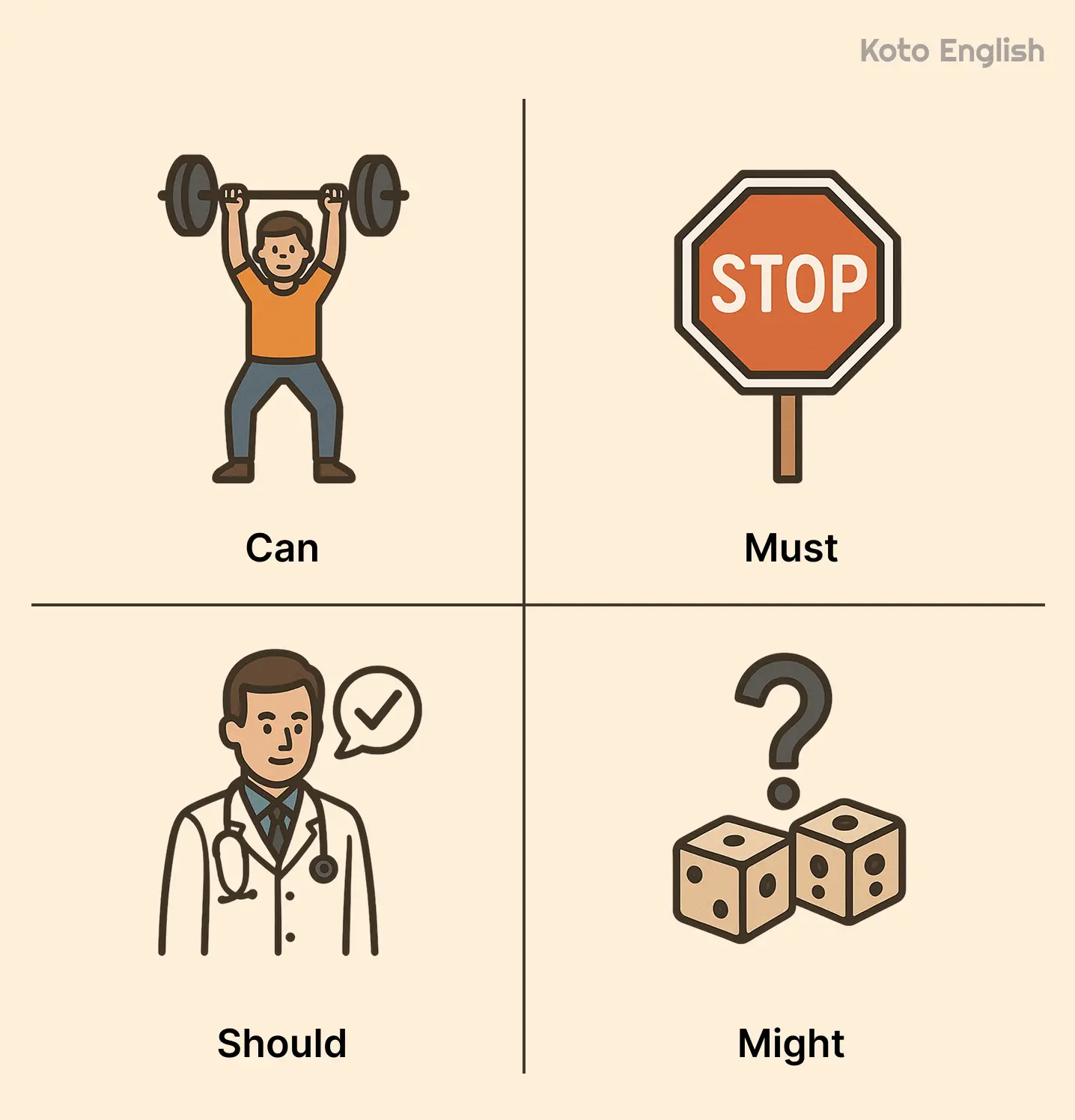
Modal verbs are used to indicate necessity, possibility, permission or ability. Modal verbs are such words as can, must, should and might.
In this case must introduces a degree of urgency or imperative. The main verb is always followed by the simple form of the modals.
- Transitive verbs
These verbs require an object in the sentence to be complete. You can not say She opened, but you must say what she opened.
In the absence of the object (books), the action seems to be incomplete. Verbs that are transitive move their action onto another person or object.
- Intransitive verbs
On the contrary, intransitive verbs do not require a direct object. The action stands on its own.
There’s no object receiving the action. The verb sleeps is complete by itself, often followed by an adverb or prepositional phrase, not a noun.
Verb definition in action: every sentence needs a heartbeat, and verbs provide it. They tell us what’s happening, who’s doing what, and how things change. Master their types and your language becomes sharper, smoother and more dynamic.
How to use verbs correctly in sentences?
Verbs flip the switch on language. They light up the scene so the rest of the words can play their part. So, what are the parts of the speech verb with an example? Cook, dream, eat, exist. Every time you describe an action or state, you’re calling on a verb. Get those right, and everything else starts clicking into place.
- Match your verb to the subject
Singular subject, singular verb. Plural subject, plural verb. It’s grammar’s oldest friendship.
- Choose the right tense to show time
Verbs shift shape depending on when something happens.
Tiny changes, big meaning differences. Don’t sleep on tenses as they’re time machines in disguise.
- Distinguish regulars from rebels
Usually, almost every example of a verb plays nicely and follows the -ed rule for the Past tense. But irregular verbs? They break all the rules.
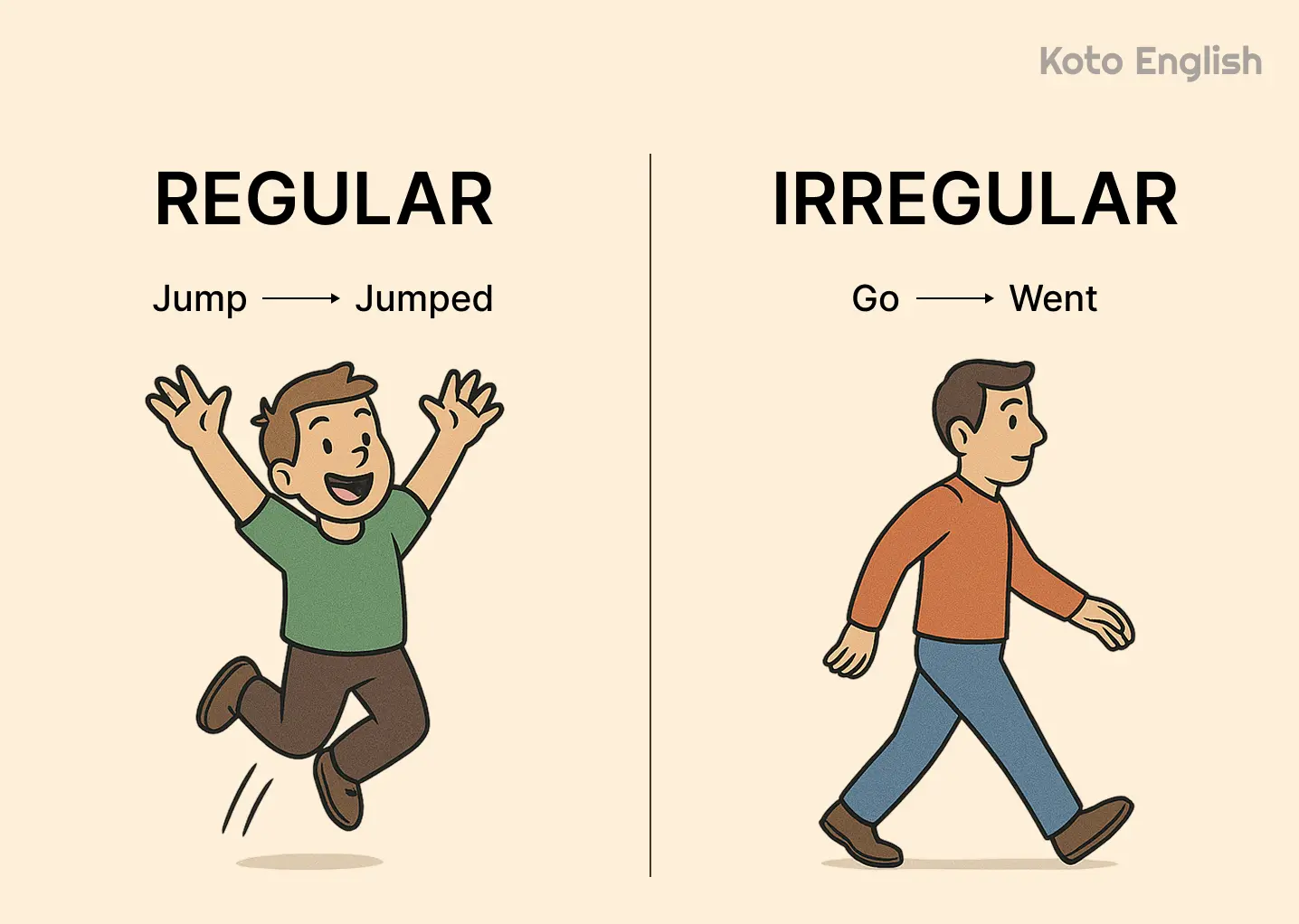
Regular: We
Irregular: We
Learn the common English verbs list and they will not show up uninvited.
- Use helping verbs to build meaning
Want to form questions, negatives, or complex tenses? You’ll need some backup. Enter: do, have, be.
While describing verbs, remember: helping verbs are the behind-the-scenes crew making sure the main verb shines.
- Don’t confuse transitive and intransitive use
Some verbs need an object; others fly solo.
Transitive: Mike
Intransitive: Greg
Shuffle them, and your word may be half-clothed.
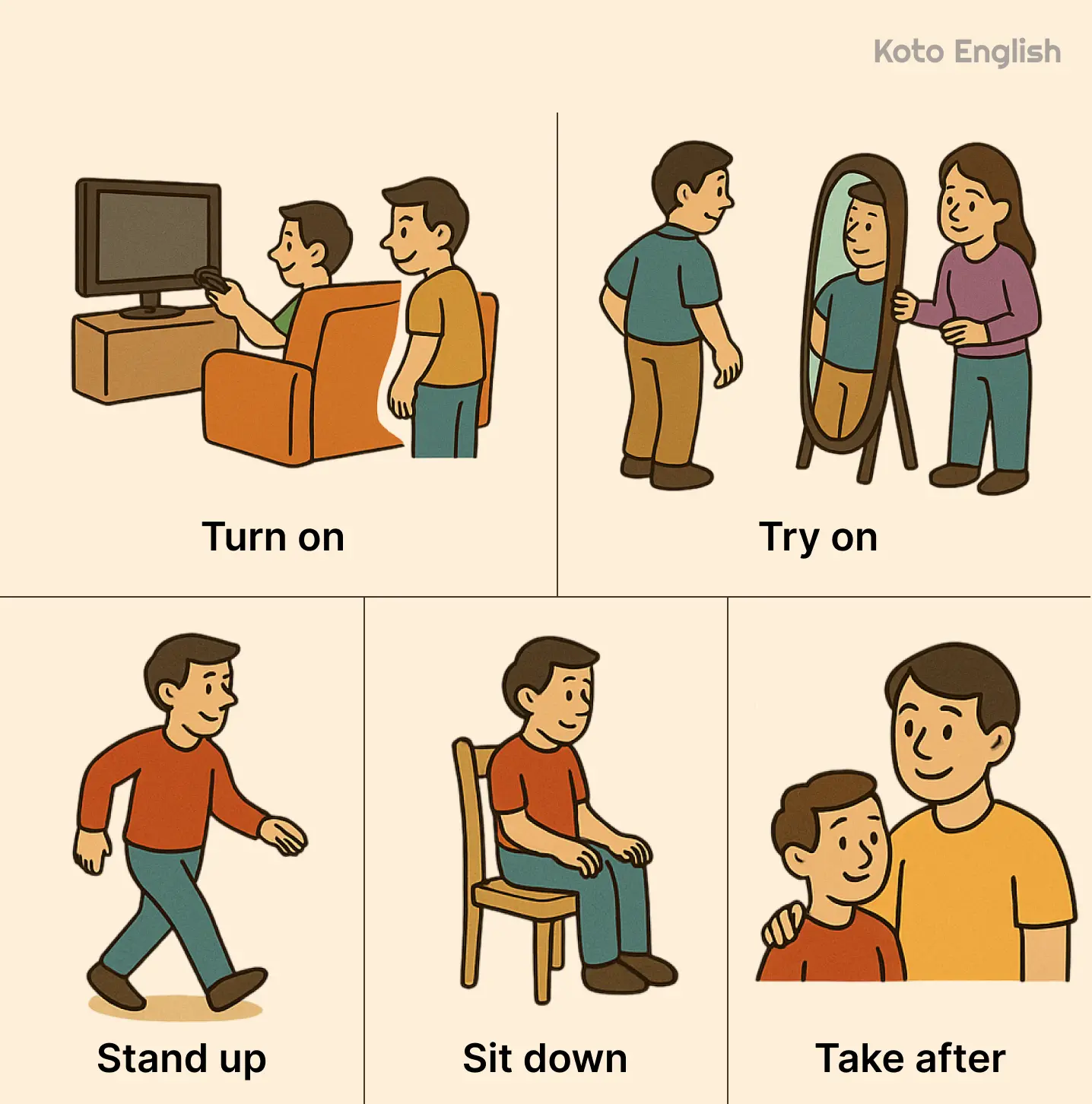
- Watch out for phrasal verbs
These are tricky: one verb + one particle (as up, off, in) = completely different meaning.
Memorize a list of English verbs in phrases like idioms because they do not necessarily mean what they appear to be.
- Use modal verbs for tone and mood
Can, should, might, must are these modals fine-tune your intent.
It is the distinction between being bossy and helpful.
- Clarity beats complexity
Use strong, clear verbs instead of vague ones.
Great verbs don’t just tell — they show. Make your sentences do something.
At its core, the definition of a verb captures energy in language. Verbs direct your sentence like a compass, providing your sentence with direction and motion.
Must-know grammar rules for verbs
You’ve watched verbs bring sentences to life, now meet the playbook behind the performance. These rules are the steps verbs follow to keep your writing sharp and your meaning on point.
- Verbs show tense
Verbs tell when something happens. They change form depending on the time: past, present, or future.
Example of a verb in a sentence:
Don’t mix tenses in one sentence unless there’s a clear reason. Leaping across time zones in the middle of a conversation? Not a good look.
- Subject and verb have to agree
The verb must be in agreement with the subject. When the subject is singular, then the verb is too. In the case of a plural, the verb must also be put on the badge of plurality.
Examples of verbs in a sentence:
(not The cat sleep)
Heads-up: Collective nouns such as team or group are sometimes confusing; consider them singular unless the context of the sentence indicates the opposite.
- Use helping verbs with certain tenses
Some tenses need a little backup. That is where helping verbs like is, was, have, will, do come in.
Example in a sentence:
Helping verbs provide clarity and enable you to construct questions, negatives and passive sentences very easily.
- Regular and irregular verbs follow different rules
Regular verbs play it safe — they add -ed in the past tense.
Regular: walk / walked, visit / visited, clean / cleaned
Irregular: go / went / gone, buy / bought / bought, eat / ate / eaten
Yep, irregular rebels refuse to follow the crowd. As we said not once, it is best to learn this list of verbs by heart.
Common mistakes and tricky areas
Verb rules can be sneaky. When you think you have nailed verbs, the English language provides a twist. Tense inconsistencies, irregular troublemakers, and misplaced modifiers are lurking. The following is your cheat sheet to the common types of verb traps to avoid.
Mistake 1. Subject-verb disagreement
It is grammar 101, yet one of the worst culprits. One subject should have one verb, a multiple subject should have several. Seems simple, until prepositional phrases or complicated topics creep in.
|
The list of items are long.
|
The list of items is long.
|
|
There is many reasons to celebrate.
|
There are many reasons to celebrate.
|
Use passive voice when the doer isn’t important, or unknown. Otherwise, stick with active for punchier writing.
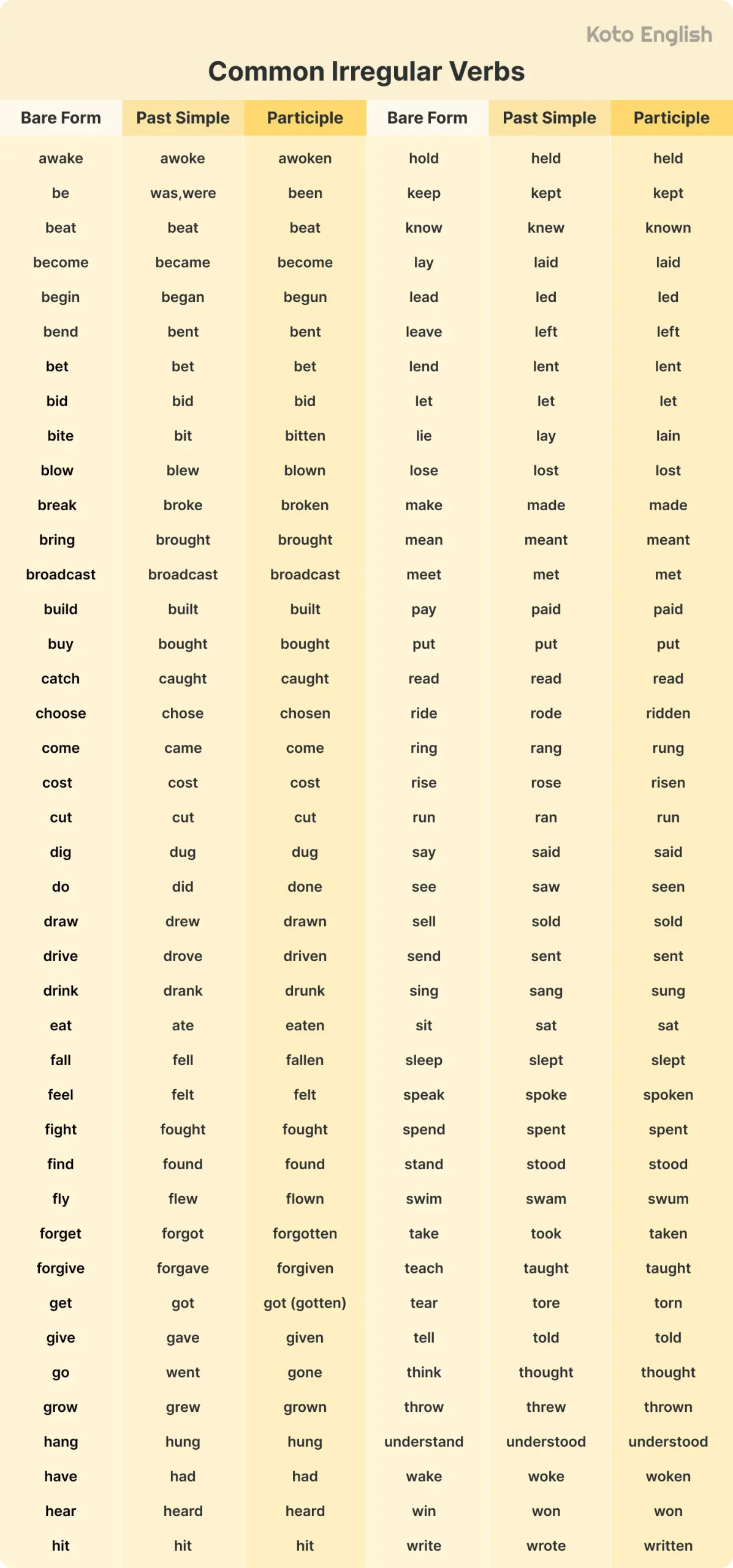
Mistake 2. Irregular verb forms in English
English doesn’t always play fair — many verbs don’t follow the neat -ed rule in the past tense.
|
I seen that movie.
|
I saw that movie.
|
|
She has writed a letter.
|
She has written a letter.
|
Make verbs list of common irregular ones and get familiar. They’re frequent flyers in both writing and conversation.
Mistake 3. Tense inconsistency
Switching tenses mid-sentence can confuse your reader (and yourself).
|
He was running in the park and stops to tie his shoes.
|
He was running in the park and stopped to tie his shoes.
|
|
We watched a movie and are going to bed.
|
We watched a movie and went to bed.
|
Select your time: past, present, or future and use it unless it is evident that you need to change.
Mistake 4. Misusing modal verbs
Modal verbs such as should, might, and must are subject to variation as regards tonality and structure.
|
You mustn’t to be late.
|
You mustn’t be late.
|
|
He can sings every Ed Sheeran song by heart.
|
He can sing every Ed Sheeran song by heart.
|
Verb meaning becomes especially important with modals: they’re always followed by the base form of the verb. No to, no -ing, just the root. Straight, pure and law-abiding.
Mistake 5. Using stative verbs in continuous tenses
Other verbs that are used to describe feelings or conditions are not good with -ing English verb forms.
|
I am believing you.
|
I believe you.
|
|
We are owning two cars.
|
We own two cars.
|
Verbs like know, believe, love, need usually stick to simple tenses and no continuous tense is needed.
Mistake 6. Splitting verb phrases
When a verb in English has a helper ( has, have, is, was, etc), maintain the team. Allow adverbs no chance to creep in and divide them.
|
She has seen never a tiger before.
|
She has never seen a tiger before.
|
|
She has forgotten about that completely.
|
She has completely forgotten about that.
|
Place adverbs after the first helping verb, not in the middle of the verb phrase. Keep the flow natural and easy to follow.
Mistake 7. Overusing passive voice
Passive isn’t wrong, but overdoing it can make your writing vague or dull.
|
The window was broken by the kids.
|
The kids broke the window.
|
|
The letter was sent by him yesterday.
|
He sent the letter yesterday.
|
Use passive voice when the doer isn’t important, or unknown. Otherwise, stick with active for punchier writing.
These common verbs examples of slip-ups may seem small, but they pack a punch. Nail your verbs, and the rest of your sentence will follow suit.
Enjoy personalized learning!
Practice Exercises
Now you know what a verb is with an example. Verbs power language like fuel powers a rocket. Without them, nothing takes off. You’ve explored how they function and now it’s go-time. Test your instincts and give those grammar skills a run for their money.
Useful tips
It may be like keeping a wild animal: one day it will be calm, other times, it will be unpredictable. The trick is to have them work with you and not against you. These are some of the practical measures that can be taken to ensure that verbs are in control and your English is more expressive.
-
Group verbs by type
Rather than learn a list of verbs in English, put them into groups: action vs. stative, regular vs. irregular, transitive vs. intransitive. Patterns are what your brain likes and once verbs have been included in various positions, they become more memorable. As an illustration, you will find it difficult to use stative verbs in continuous tenses, as when you observe this pattern, it will stick.
-
Learn verbs in chunks
Never attempt to decode phrasal verbs one word at a time. Memorize the phrase in one unit of meaning. An example of this is turn down, not turn. Write goofy or personal sentences with them and they will be like glue.
-
Make it personal and playful
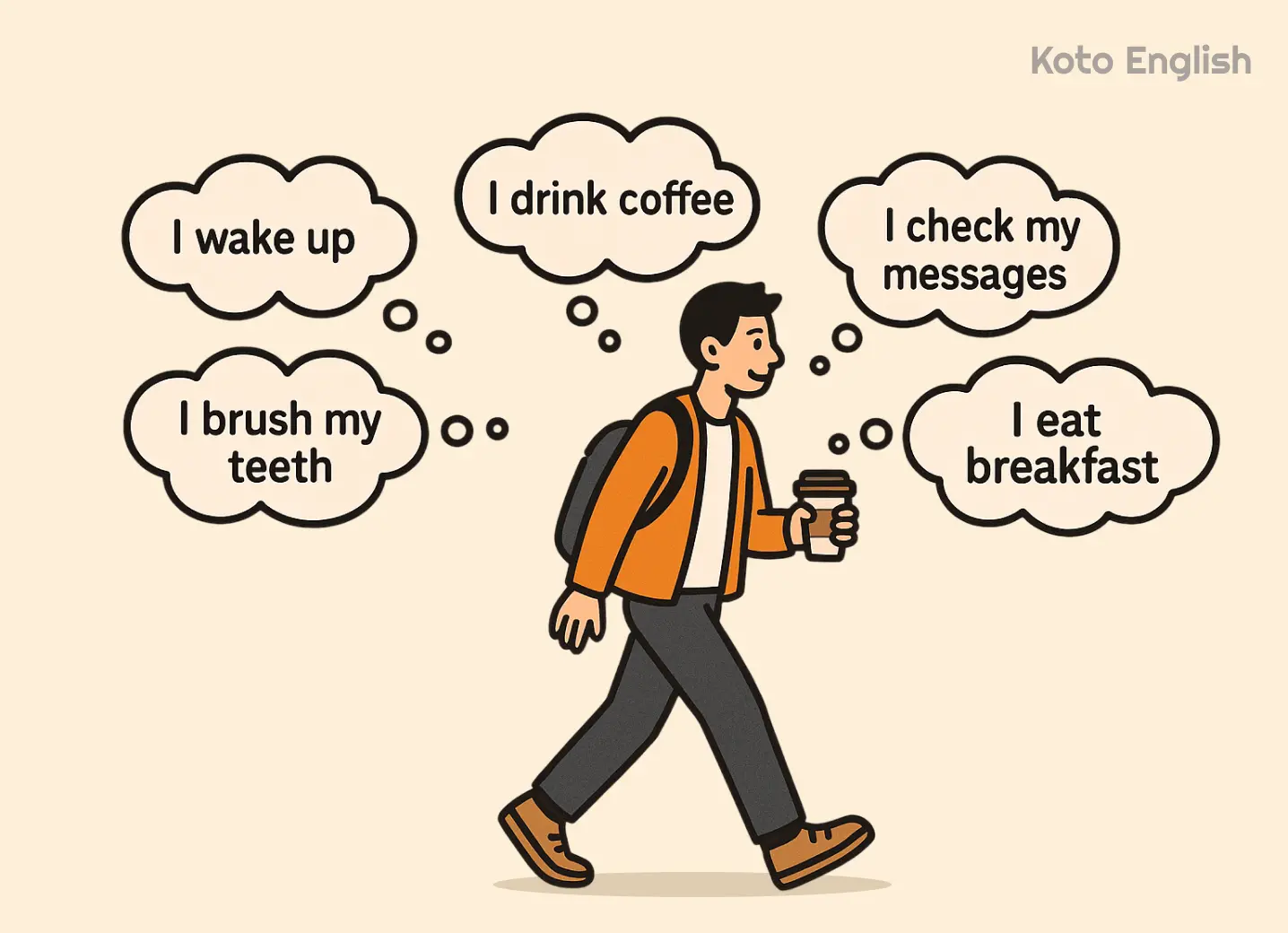
Tie the common verbs in English to what you actually do. For example, rather than “She paints daily,” try “I scroll through my phone before bed.” Everyday habits make grammar click.
-
Spot patterns in irregular verbs
Irregulars in the English verb list are like rebels, but many have small patterns once you look closely: sing/sang/sung, drink/drank/drunk. Grouping them this way helps your brain spot connections instead of memorizing each one in isolation.
-
Don’t fear mistakes
Anybody can fall over verbs but mistakes are your quickest way to get educated. Write, talk, and experiment with new uses of them and every error will be a disguised practice.
Input structure, context and a sense of play and verbs become not a hindrance but a weapon. Always practise and your sentences will throb with life and clarity.
Conclusion
Verbs shape the rhythm of communication and keep sentences alive. They turn ideas into stories and thoughts into clear messages. Keep reading, writing, and using them daily if you want to learn English in a practical way.
Over time, you’ll notice that sentences feel smoother, conversations flow with less effort and expressing yourself becomes more natural. The more you play with verbs in real contexts, the stronger your language skills will grow.
FAQ: common questions about verbs
The verbs in English typically have three primary forms which you must be familiar with in order to use tenses properly. When you learn these forms, then it becomes easier to talk and write correctly.
The base form is the plain verb, which is applied in the present tense and modal auxiliaries. (jog, create, imagine)
Past simple indicates an action that took place. (scrolled, went, saw)
Past participle used in perfect tenses and passive voice. (gone, seen, broken)
Learning these forms will enable you to deal with any form of verb without any fear.
Regular verbs also have a simple and predictable sequence in changing tenses, they simply add -ed to form the past tense and the past participle.
laugh / laughed or call / called.
Easy and neat.
Irregular verbs, however, march to their own beat. Their past forms can change completely or not at all, like:
go → went, buy → bought, or cut → cut.
As we stated earlier, you’ve got to memorize them because they don’t follow the usual rules.
In short: regular verbs play by the book; irregular verbs rewrite the rules.
The English verb rides wildly in the past tense due to its belonging to previous layers of English. Many years ago, verbs were not subject to a single rule; they were members of families, and had their own system of formative changes.
Many irregular verbs come from Old English, where verbs were grouped into different classes with unique patterns, not the simple -ed ending we use today.
Also, changing the whole word helped make past actions clear before we relied on helper words like did. So, these verb shape-shifters survived as handy shortcuts to show time and meaning.
If you have to discover the types of different verbs with examples, irregular verbs are a fine place to watch how English has changed with the ages, and how the sense of a word can reside in a twist of it.
Yes! There are verbs that have different meanings when used in different ways. These are referred to as dual-function verbs and they are dependent on context.
State use
The verb tells of a condition, feeling, opinion, or possession, not something being done:
Action use
The same verb may be moved to refer to some actual activity or process in progress or movement:
Verbs’ definition often includes both action and state meanings. These verbs typically function as action verbs when they occur in continuous forms, such as is having and are thinking. They frequently represent a state in their most basic versions (have, think).
Helping verbs, also known as auxiliary verbs, assist the main verb in indicating a tense, mood or voice.
Do with questions, negatives or emphasis:
Be makes continuous tenses and the passive voice:
Have forms perfect tenses:
With these assistants, your sentences will become grammatically complete and understandable.