What are “to be” verbs: definition and usage
If there was ever a backbone for English, then “to be” verbs are a representative type of English verbs. They can be found anywhere — in descriptions of products, dialogues, and even grammatical constructions you can find in books. Here is a “to be” verbs list:
- am
- is
- are
- was
- were
- be
- being
- been
First of all, you can use “to be” as a linking verb, which means it doesn’t show action but connects the subject to information about it. It is used to express:
- Identity: She
is a designer. - Age: My friend
is 30. - Emotions: I
am excited about our trip. - Weather: It
is freezing outside.
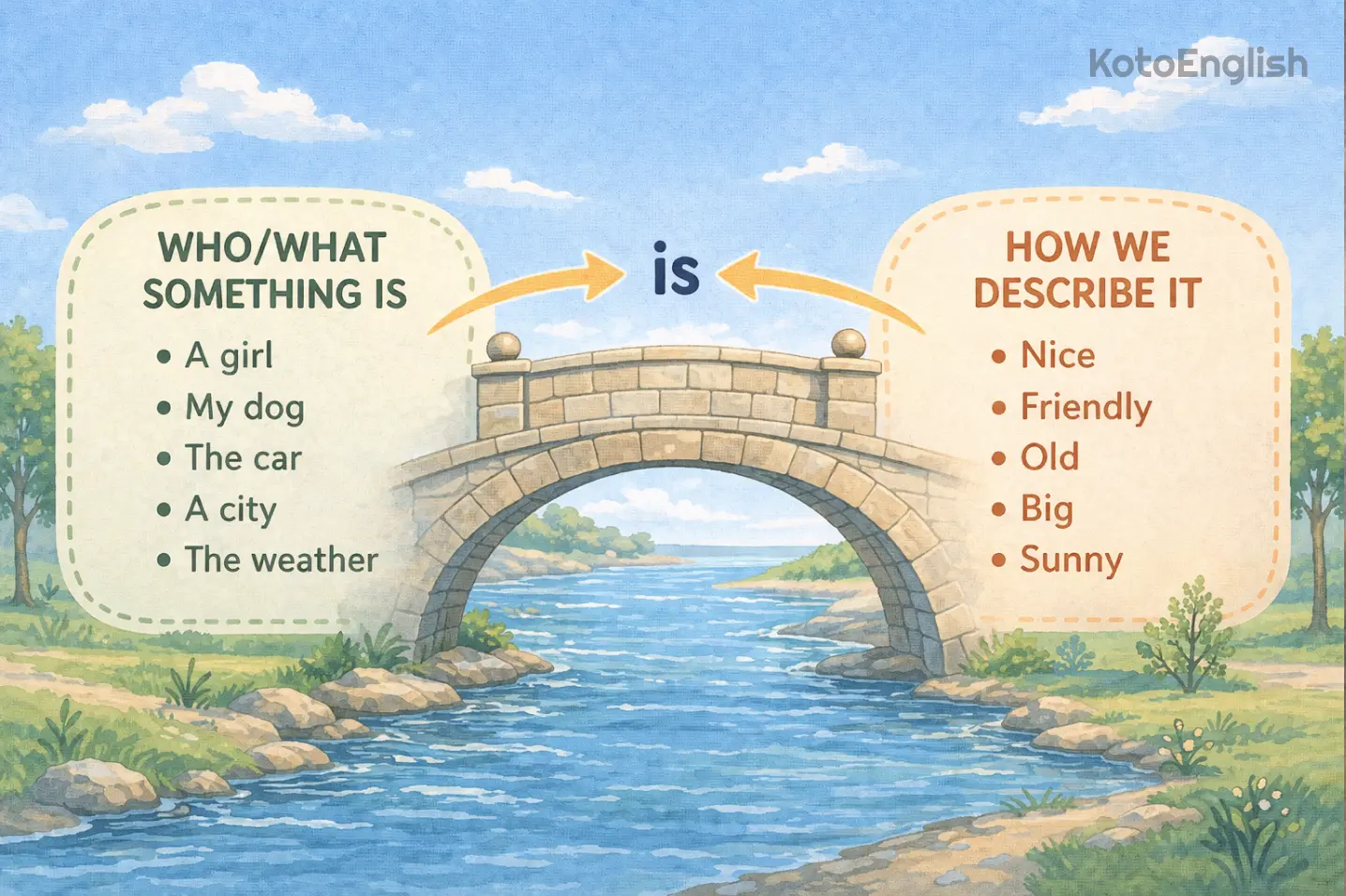
Meaning is delivered instead of any action since “to be” simply connects the subject and its attribute.
Secondly, it can be an auxiliary verb and this were it becomes more dynamic and helps build grammar. It can be used in the continuous tenses and passive voice. Here are the samples:
Mastery of the forms of “to be” is similar to understanding a basic system that underpins English — once it is developed, all other elements make sense.
Forms of the verb “to be” in different tenses
The term is an irregular verb that does not follow grammatical rules. The forms of this verb change according to the subject and time element of the sentence. Learning this pattern, you will see how things work in English sentences, from basic communication to advanced grammar.
Present simple tense (am, is, are)
The present tense “to be” allows you to describe who you are, what something is, and how things feel now, and so on. The tricky nuance is that it changes depending on both subject and tense. Here is how it works with verb “to be” examples:
|
Subject |
Form |
Example |
|---|---|---|
|
I |
am |
I
|
|
He |
is |
He
|
|
She |
is |
She
|
|
It |
is |
It
|
|
We |
are |
We
|
|
You |
are |
You
|
|
They |
are |
They
|
One of the top ways to practice this usage is to do constant Present Simple practice since it is the most frequently used form in common English.
Past simple tense (was, were)
If you need a reminder about these forms, we recommend checking the Past Simple explanation for beginners and coming back. Simply, they are used for finished states and situations in the past.
|
Subject |
Form |
Example |
|---|---|---|
|
I |
was |
I
|
|
He |
was |
He
|
|
She |
was |
She
|
|
It |
was |
It
|
|
We |
were |
We
|
|
You |
were |
You
|
|
They |
were |
They
|
Future simple tense (will be)
This form is the most simplified, as according to the Future Simple rules, “will be” remains the same for all subjects without exception. Therefore, the table explaining this concept looks like this:
|
Subject |
Form |
Examples |
|---|---|---|
|
All subjects |
will be |
I
They
|
Past and present participles (been vs. being)
Unlike any other form, “been” and “being” do not vary according to the subject, but only based on their functions and forms. Let’s start with “to be” conjugation that stands for “been:”
|
Structure |
Example |
|---|---|
|
have/has/had + been |
I
She
|
Now, let’s move to the “being:”
|
Structure |
Example |
|---|---|
|
am/is/are + being |
You
|
|
was/were + being |
He
|
Now that you have learned about the different representativeness of am, is, are/was, were, let’s learn what each form implies.
Still, knowing the forms is only half of the picture so let’s move to the next section and review how to build full sentences of different types for you to be more experienced and proficient in English.
Sentence structures with “to be” verbs
It is crucial to understand how sentences with “to be” verbs work since they work in a different way than other verbs do across affirmative, negative, interrogative types of sentences.
“To be” verbs don’t require auxiliary verbs (do/does) when constructing questions or negative sentences in Simple tenses.
Rather, they change their placement or form alone, making them both straightforward and easy to confuse if you follow the wrong formula. Now, let’s go through each sentence kind and see how to use it for real conversations.
Affirmative sentences
Positive phrases are straightforward in structure, requiring only a subject, “to be” and a noun or adjective. However, there are nitty-gritty details behind more complex tenses, so you can take on Present Perfect grammar exercises and other activities to improve your knowledge of tenses in English.
Here are some examples:


For spoken English, it is preferable (and optional) to use contractions like I’m, she’s, they’re.
Negative sentences
To form this type of sentences, you just need to add “not” to the verb and create full or short form depending on the context and situation.
Interrogative sentences (questions)
Questions need you to use inversion, putting “to be” at the beginning of the phrase (remember to move the verb before the subject).
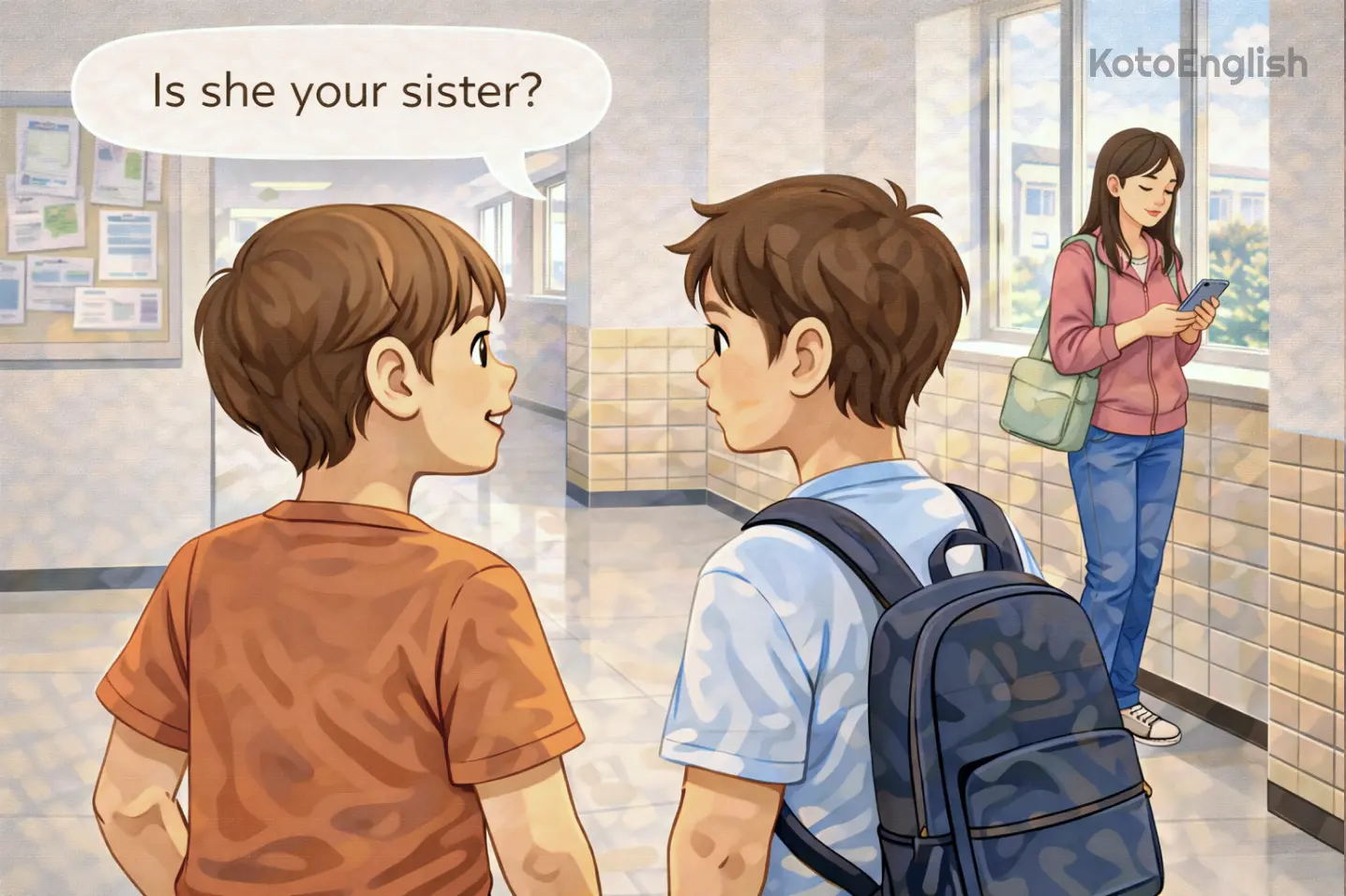
If you need to form a Wh-question, here is the structure to be followed:
Wh-word + “to be” + subject
Common mistakes when using the verb “to be”
“To be” verbs can be considered elementary but they are also among the most frequent triggers of errors, particularly those that attempt direct translations from a mother tongue. Let us discuss three of such errors in detail.
- Using “to be” with another main verb
English does not allow “to be” with the Present Simple. The verbs that we use here such as “agree,” “like,” “know,” and “think,” are sufficient in themselves to convey that meaning.
It happens because some students attempt to translate word-for-word, where a construction such as “I am agree” is possible in their mother tongue.
|
I am agree with you.
|
I agree with you.
|
|
She is like the idea of your paint.
|
She likes the idea of your paint.
|
- Mixing up question forms
English employs specific auxiliaries for specific kinds of questions:
- “To be” (am/is/are) → for conditions
- “Do/does” → for actions
Learners generally memorize “to be” before others and begin to apply it to every question, since they see this as a common formula.
|
Are you play Fortnite?
|
Do you play Fortnite?
|
|
Are they work in this building?
|
Do they work in this building?
|
- Missing the verb completely
Every sentence in English requires a verb. In the case of a lack of action (only description), the verb will be “to be”. The reason for this error is that in many languages, omission of the verb “to be” is acceptable in the present tense. This becomes a habit in English.
|
She gorgeous.
|
She is gorgeous.
|
|
They happy.
|
They are happy.
|
Now you are aware of the errors that affect how clear and natural your English sounds and it will allow you not to break basic communication with native speakers and other students.
The verb “to be” as an auxiliary verb
In higher forms, these terms do not just serve as descriptors, but also function as auxiliary verbs, helping another verb in order to make more intricate sentence formations possible. As opposed to their use as descriptors, these verbs become part of a larger sentence construction that conveys time or process.
Passive voice and past tense of “to be” set the focus on who does the action to what happens. The structure looks like this:
am/is/are/was/were + past participle (V3)
In the real world, you can see this usage in sentences like:
Here, you can notice that the “to be” highlights the result or action itself.
Continuous tenses
For progressive tenses, “to be” assists in expressing actions in progress, i.e., an action that is being carried out at the very moment. Let’s check the examples:
In the above cases, “to be” indicates an ongoing action.
When “to be” is used as an auxiliary verb, it helps to power the machinery of English grammar by allowing you to talk about actions taking place and changing the way sentences are expressed.
Conclusion
Learning “to be” verbs is one of the most essential parts of studying English, as the verb plays an essential role in daily speech. It is used when you have to refer to people, feelings, occupations, or any other circumstances.
Additionally, they are essential to form more complex grammatical constructions, like continuous tenses and passive voice. Therefore, without them, you will hardly comprehend the construction of English sentences.
This is exactly why regular practice of this topic is so crucial. The more you study examples, make your sentences, and solve “to be” verb examples, the easier it will become for you. Mastery is essential to building a basis for all other English grammatical structures, so practice constantly and come back until it becomes second nature to you.
FAQ
Yes, a sentence may contain two types of this term. This is possible because one kind acts as an auxiliary verb while the other serves as a principal one, like in the sample below:
- She is being very helpful.
This word describes state, identity, quality, or condition, acts as a link between the subject and more details, like nouns or adjectives. Moreover, it is vital when forming present tense “to be,” continuous tenses, passive voice.
In simple terms, “be” is used to describe a state, like, “I am frustrated.”
“Do” can be used for actions or to form questions with action verbs, such as, “Do you work today?”