

Quick reference: Top 5 phrasal verbs with “look”
Before we move ahead, here is a handy list of the most important phrasal verbs using the word “look.” We have chosen five common phrasal verbs using “look” to provide you with a quick revision. If you are interested in learning more about verbs, check our guide to English verbs.
|
Phrasal verb |
Short meaning |
Synonym |
Example |
|---|---|---|---|
|
Look after |
Take care of someone/something |
Care for |
I am going on a vacation. Can you
|
|
Look forward to |
Be excited about the future |
Anticipate |
I
|
|
Look up |
Search for information |
Find |
|
|
Look into |
Investigate a problem |
Investigate |
I will
|
|
Look out |
Be careful |
Beware |
|
Most common phrasal verbs with “look”
To facilitate the process of learning, the phrasal verbs have been categorized on the basis of their use in practical contexts. The current part will cover those phrasal verbs that are commonly used in our daily lives when communicating with others, either at home or socially. For more details about such verbs, you may look for phrasal verbs with “take”.
Look after (take care of)
Formula: look + after + object
The “look after” phrasal verb refers to taking care of someone or something. This phrase is usually used in a situation where responsibility is being referred to in connection with looking after animals, human beings, or possessions. Here are the real-life examples:
Look for (search)
The phrasal verb “look for” means that one attempts to search for something required or missing. You can use it like this:


“Look for” focuses on the process, while “find” means you have successfully discovered something.
Look forward to (anticipate)
The phrase “look forward to” means being eager for an event to take place in the future. This is one of the most commonly used idioms in the English language.
Following the idiom “look forward to,” one should use either a noun or a gerund verb form.
As you advance, it is important to see how meaning is modified by comparing verb constructions with other verbs. In this case, analyzing phrasal verbs with “put” will provide valuable insight into the meaning of phrasal verbs.
Phrasal verbs with “look” for work & study
It is now time to turn our attention to some commonly used phrases that are normally used in professional, academic, and formal situations. Such phrases come up often in offices, news stories, and study situations, thus helping to build an advanced English vocabulary. If you would like to memorize more special phrases, click on “set” phrasal verbs.
Look into (investigate)
The “look into” meaning refers to examining a situation carefully to understand it or find a solution. It is often used by native speakers in professional contexts when dealing with problems or complaints (like from customers).
Look up (find information)
The term refers to looking for information from a dictionary, the Internet, or other resources. This phrasal verb is frequently used in academic and business environments, and you can even expand your vocabulary with cool words to sound more interesting.
Being a separate phrase, it can be used like this:
In terms of phrasal verbs, “look” can be used in informal English:
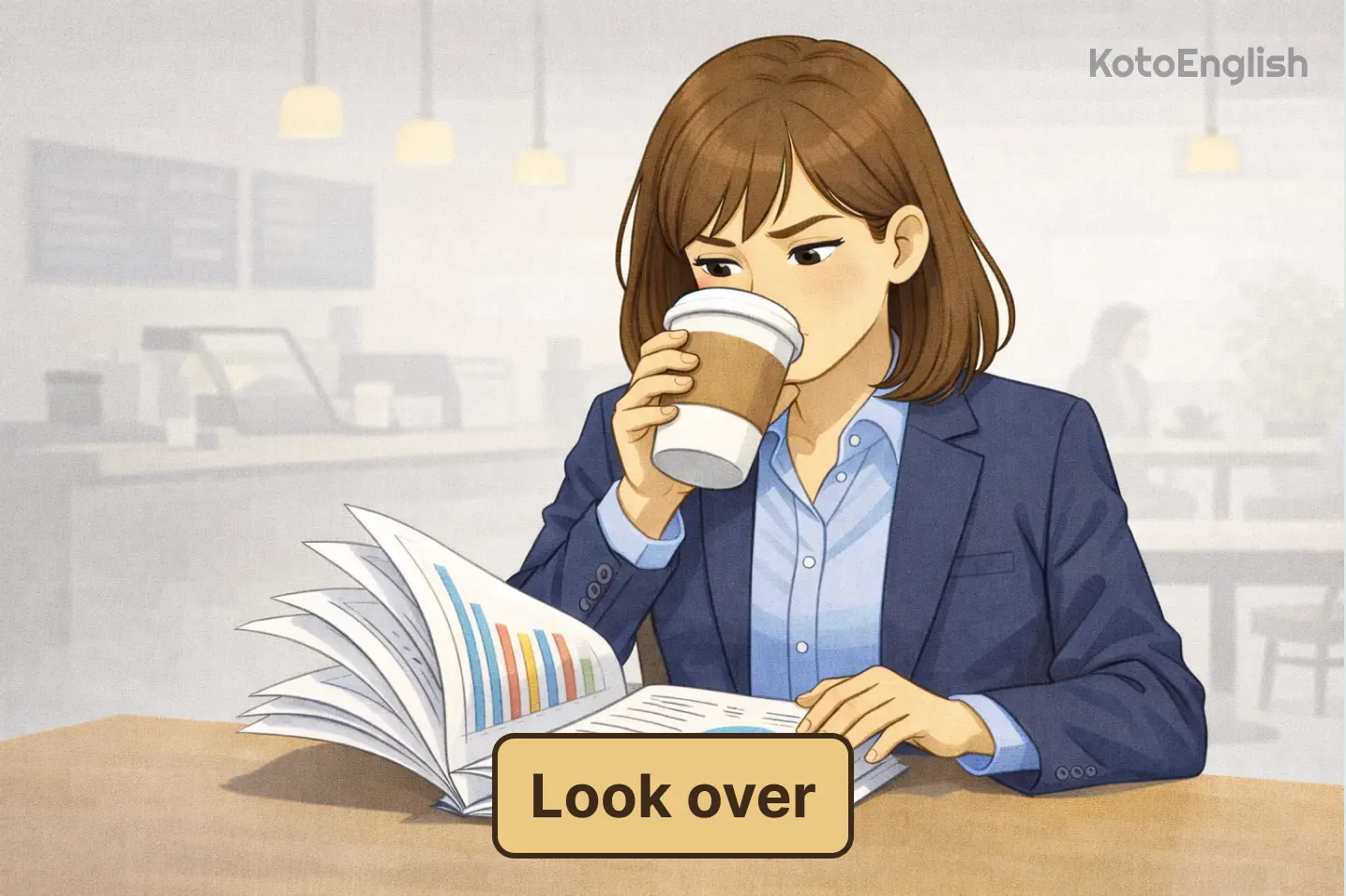
Look over/look through (review)
Look over and look through both mean reviewing or making a quick examination of something, like a document, a report, or an article. They can be used if you do not want to examine everything thoroughly and simply want to get an overview. Here are the examples:

Phrasal verbs with “look:” People & relationships
In this part, we will deal with the use of the verbs formed with the verb look to express interpersonal relationships. The use of these verbs enables you to discuss respect, admiration, or even disapproval, thereby enriching your discourse with emotion and authenticity.
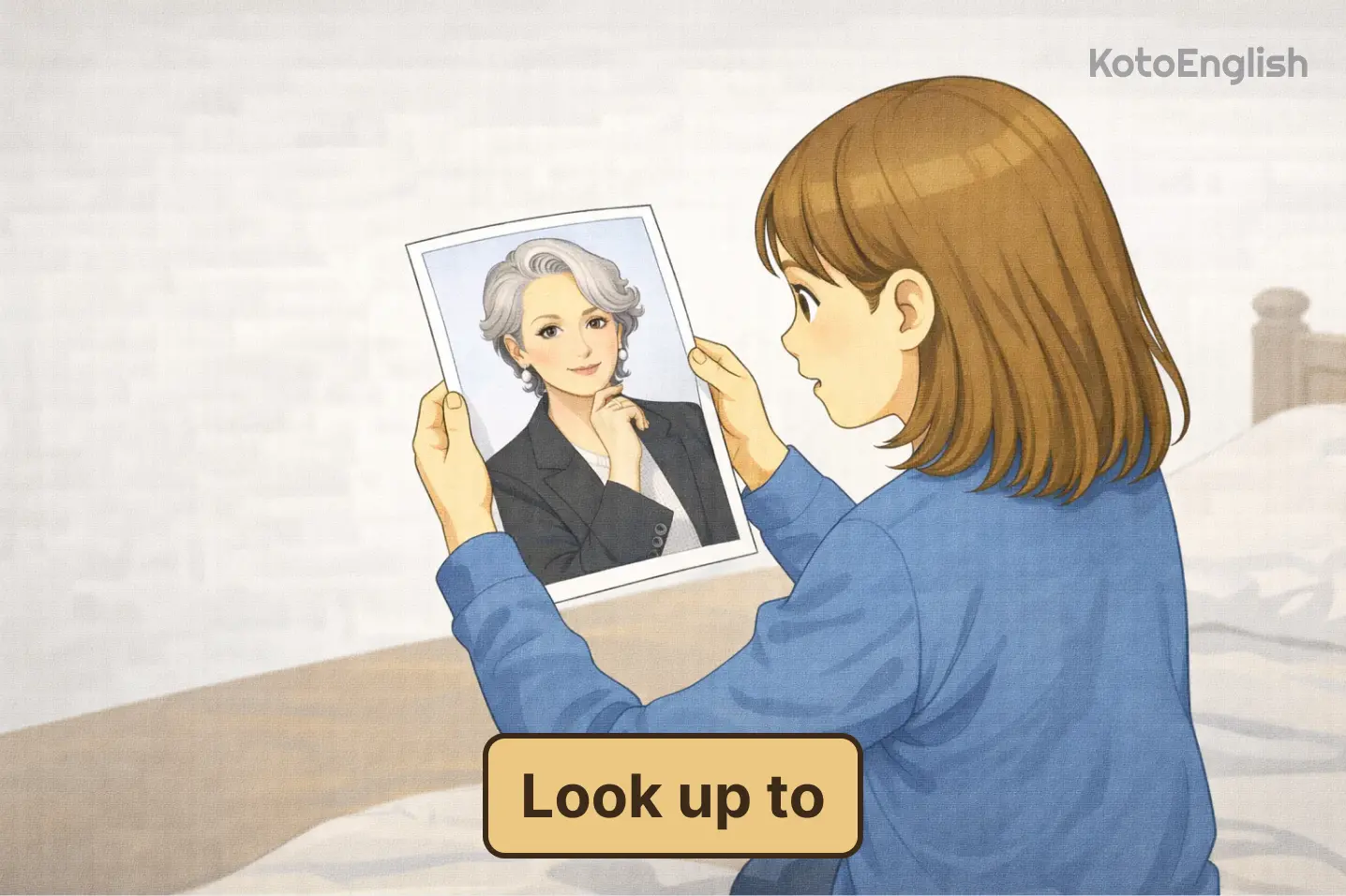
Look up to (respect)
The “look up to” phrasal verb is an example of a multi-word verb that refers to admiration towards another person. It is normally employed to refer to people who have admirable qualities, feats, or characteristics.

Look down on (despise)
Talking about synonyms and antonyms, this one is the antonym of “look up to.” It denotes that one considers another person inferior in some way or treats him/her with disdain.
Conclusion
Learning the English phrasal verbs related to look would help immensely in speaking naturally in English. The phrases using “look” can be seen everywhere, whether in social, workplace, or even personal life interactions. Knowing them, you become more confident and can make your language engaging for other speakers.
For effective learning, a useful strategy is to incorporate one or two phrasal verbs per day in daily speech or writing, for example, when you are writing your friends, preparing homework for your class, writing a daily journal, reviewing a movie, and so on.
Frequently Asked Questions (FAQs)
“Look for” means of finding something that you are looking for and which is not there yet, emphasizing the process of searching. As one of the “look” phrasal verbs, “look after” means to look after something or someone.
A gerund or noun must follow the phrase look forward to; the infinitive cannot follow this phrase because it will form a part of the prepositional phrase. Therefore, say “I look forward to meeting you,” not “to meet you.”
The phrasal verb meaning “investigate” is “look into.” It is often employed in both professional and informal language when an individual or people conduct a thorough examination of a matter.
Practice of these phrasal verbs can be done by making up your own sentences using the verb, watching videos where these verbs appear, and reading articles containing these verbs.