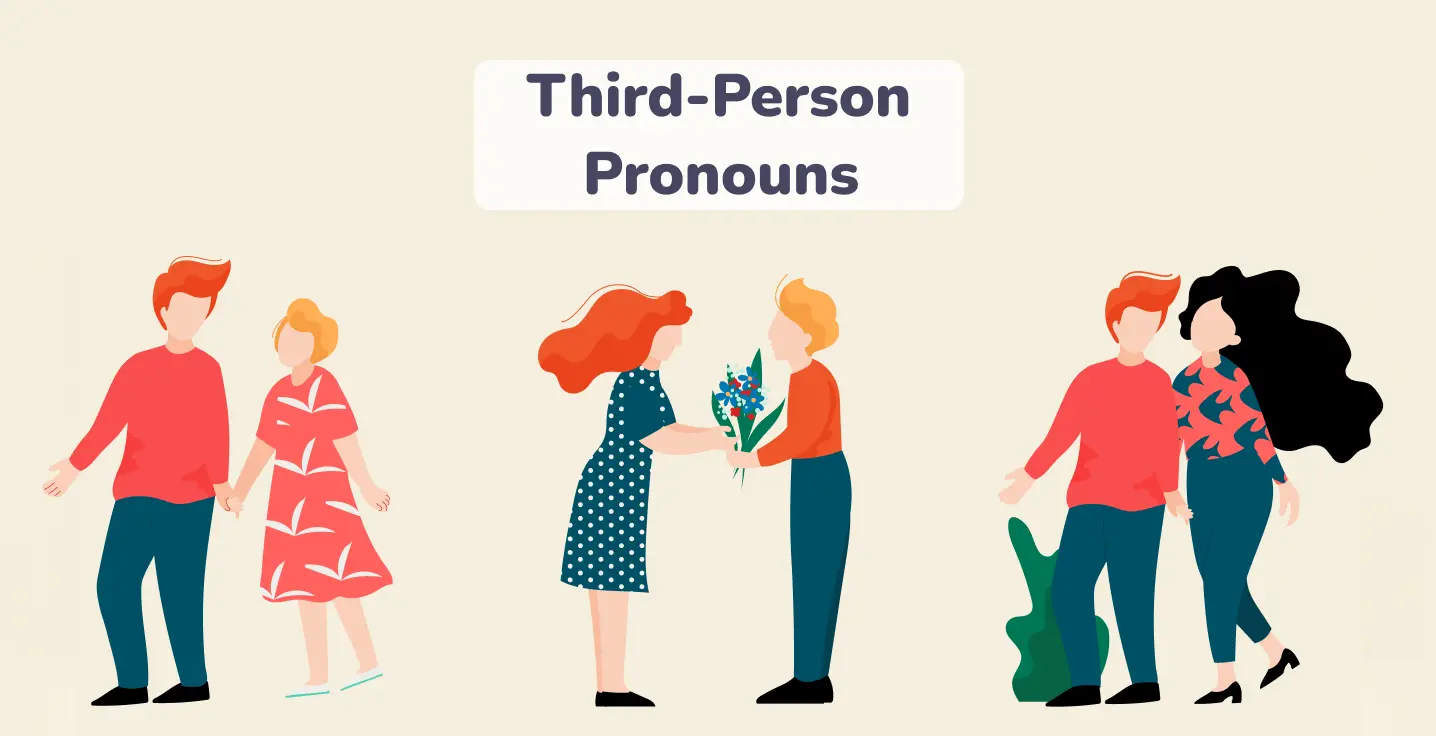
What are third-person pronouns?
Third-person pronouns are the words we use when we’re talking about someone or something, not to them, and not about ourselves. They step in when we refer to other people, animals, places, or things that are already known from context.
Instead of saying “Tom is late” again and again, we say he is late. Instead of repeating “the book,” we just say it. These little terms save us from sounding repetitive and help conversations move along smoothly.
In English, the most common third-person pronouns are he, she, it, and they. Each one has a specific job, and which one you use depends on what you’re talking about. But the core idea stays simple: if it’s not I or you, and it’s not part of the conversation directly, a third-person pronoun is probably what you need.
Third-person objective pronouns may look simple, but they’re essential for speaking and writing clearly. Once you start using them correctly, your English sounds more fluent and natural. But just recognizing them isn’t enough. The real work starts when you try to avoid the typical slip-ups. We’ll cover those next.
Level up your English with Koto!
Types of Third-Person Pronouns
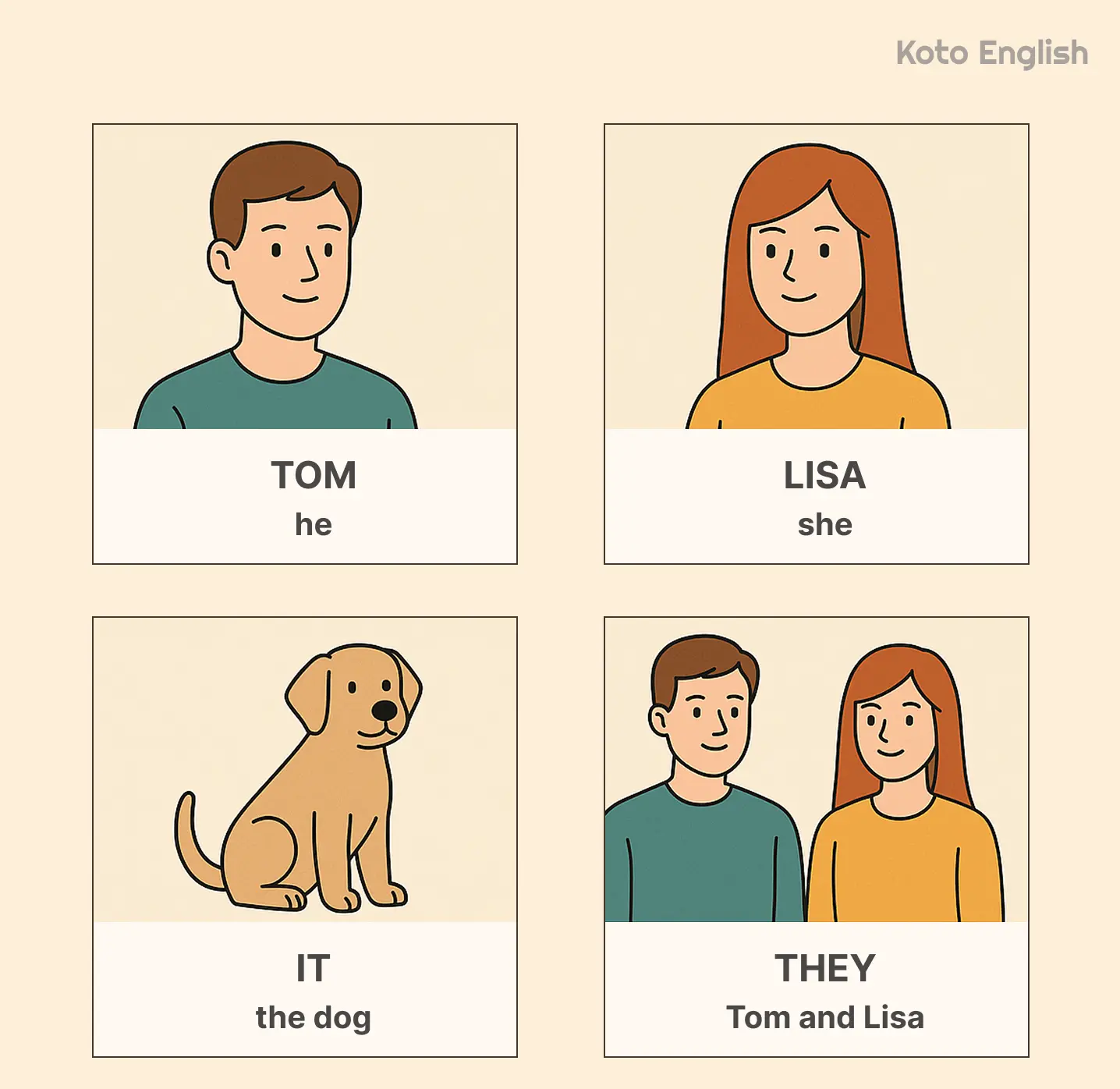
Pronouns used in the third person come in different forms, depending on what they do in a sentence. Some act as the subject, some as the object, and some show possession. Each kind plays its own role in keeping your English flowing smoothly.
Before we move on to using pronouns in real sentences, here’s a quick visual summary of the third-person forms we’ve just covered.
This makes it easier to review, memorize, or even use during classroom activities:
| Type | Singular | Plural |
|---|---|---|
| Subject | he, she, it | they |
| Object | him, her, it | them |
| Possessive Adjectives | his, her, its | their |
| Possessive Pronouns | his, hers, (no neuter) | theirs |
| Reflexive | himself, herself, itself | themselves |
Tip: Use this table as a quick reference before tests, while writing essays, or during conversation practice.
Subject pronouns
Subject pronouns are the ones doing the action in a sentence. They’re the main characters, the ones making things happen. In the third person, the subject pronouns are:
- He – used for a male
- She – used for a female
- It – used for an object, an animal, or an idea
- They – used for more than one person or thing
Examples:
These third-person words usually appear at the beginning of a sentence and answer the question of who or what is doing the action. They keep the sentence moving and help avoid repeating names.
Object pronouns
Object pronouns play a supporting role. You’ll usually see them come after a verb or preposition, finishing the sentence.
The third-person object pronouns are:
- Him
- Her
- It
- Them
Examples:
Object pronouns can make or break the flow of your sentence. Even if your meaning is clear, a wrong pronoun might still sound strange to someone fluent.
Possessive adjectives and possessive pronouns
When it comes to showing ownership, English offers two handy tools: possessive adjectives and possessive pronouns. They sound alike, but don’t play the same role.
Possessive adjectives:
These come before a noun and describe who owns it.
- His
- Her
- Its
- Their
Examples:
Possessive pronouns:
These replace the noun entirely and stand alone.
- His
- Hers
- Theirs
Examples:
Tip: If the word is followed by a noun, it’s a possessive adjective (her shoes). If the word replaces the noun, it’s a possessive pronoun (the shoes are hers). Small difference, big impact.
Reflexive pronouns
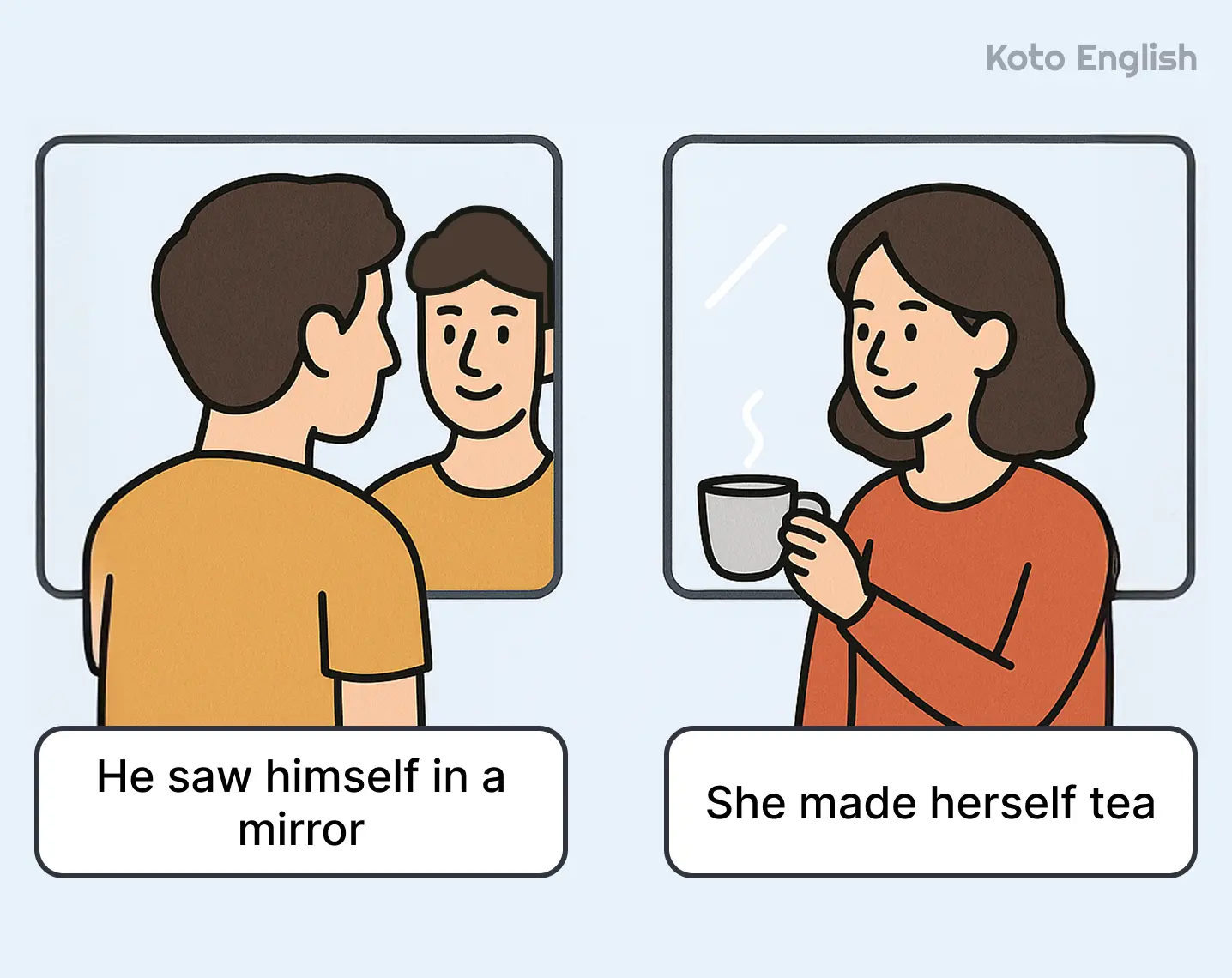
We’ll go deeper into reflexive pronouns a bit later, but here’s a quick intro: reflexive pronouns are used when the subject and the object are the same person or thing. In third person, these are:
- Himself
- Herself
- Itself
- Themselves
Examples:
They always reflect the subject and are often used to emphasize or clear up what’s happening. The next section will explain exactly how.
Tip: Reflexive pronouns are also used in more complex sentence structures, especially with indirect objects or emphasis.
Examples:
These constructions help show autonomy or involvement, and are common in both written and spoken English.
How to Use Third-Person Pronouns Correctly
Reviewing examples of third-person pronouns can make you think it’s easy to use them right, but real comfort comes with practice. The key lies in identifying who or what the pronoun replaces and placing it correctly in a sentence.
Match the pronoun to the subject or object
The first rule is simple: use subject pronouns when the pronoun is the one doing the action, and object pronouns when it’s receiving the action.
Mixing these up can confuse your listener or reader. Keeping this in mind will make your sentences clear and easy to understand.
Pay attention to the number and gender
Third-person pronouns shift depending on the reference: one person, multiple people, or something neutral like an object or idea.
- Use he or she for a single person, depending on gender.
- Use they for more than one person, or when gender is unknown or nonbinary.
- Use it for objects, animals, or ideas.
Examples:
The best third-person pronouns examples highlight why using the wrong number or gender pronoun can cause confusion or offense, making careful use essential.
Avoid typical mistakes
Some common pitfalls include:
- Using they instead of them as an object.
- Mixing its (possessive) and it’s (it is).
- Confusing subject and object pronouns.
Keep an eye out for these, and don’t hesitate to double-check your sentence if it feels off.
Practice makes perfect
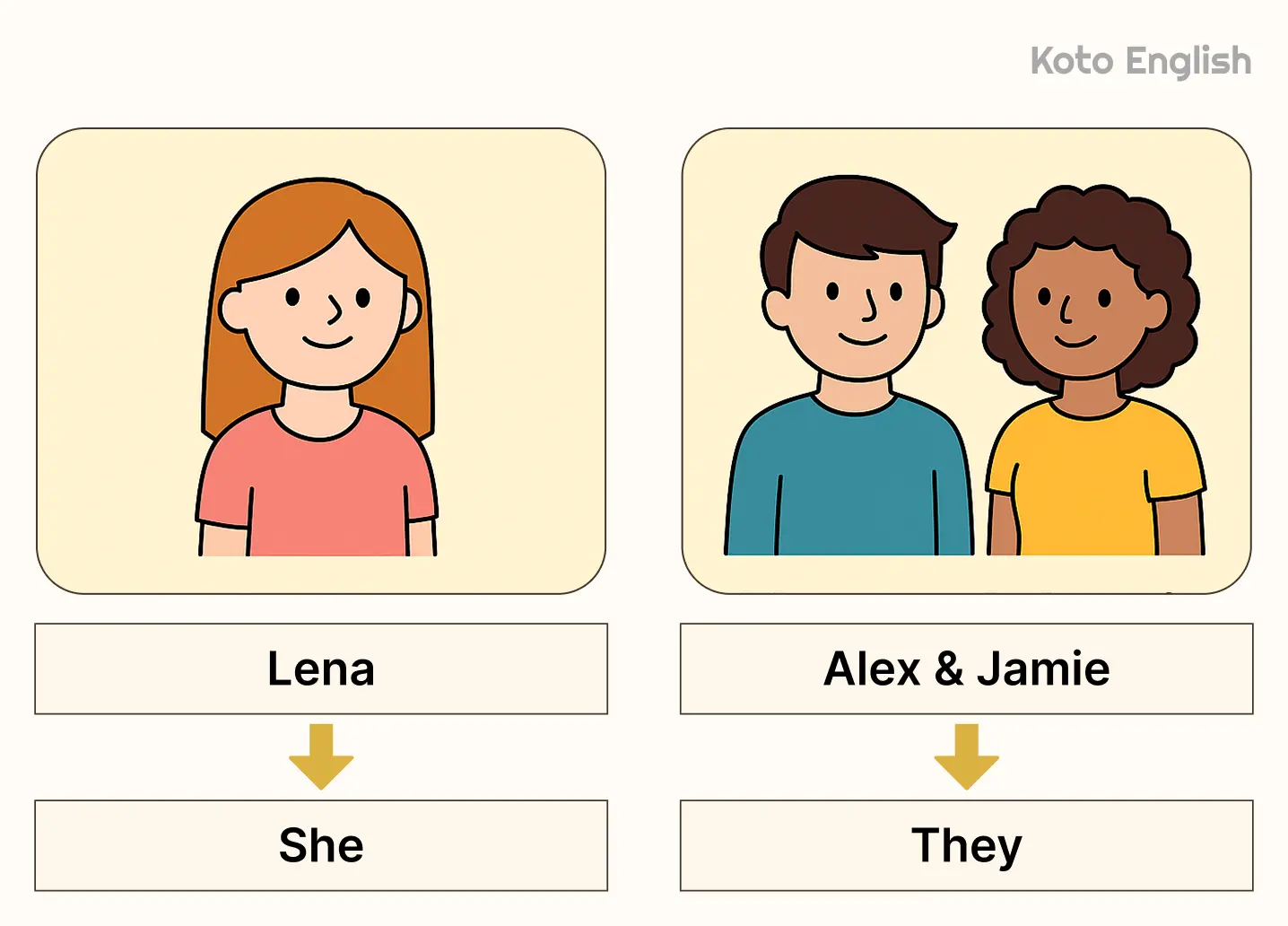
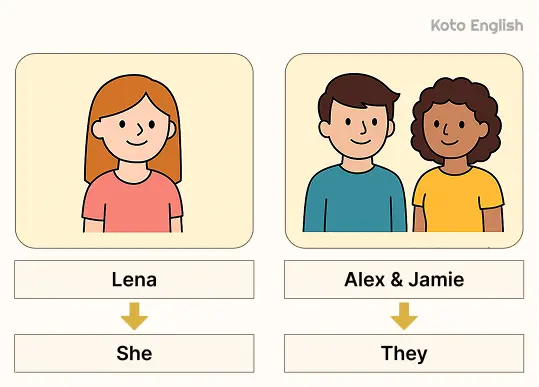
The best way to master third-person pronouns is by practicing regularly. Listen carefully to native speakers, read books or articles, and try writing your own sentences. Over time, using the right pronoun will become second nature.
Common Mistakes to Avoid
Even confident English learners can slip up when using third-person pronouns. These words seem simple on the surface, but getting them right takes more than just memorizing a 3rd person pronouns list. Let’s walk through some of the most widespread errors and how to fix them.
- The subject-object mix-up
This is one of the most frequent errors. Using he when you need him, or they when it should be them, can make your sentence sound confusing.
Can you help he with this?
Can you help him with this?
Us went to the cinema.
We went to the cinema.Tip: If the pronoun comes before the verb and does the action, it’s the subject. If it comes after the verb and receives the action, it’s the object.
- Confusing Its and It’s
These two are small but mighty troublemakers.
- Its shows possession: The dog wagged its tail.
- It’s is short for it is or it has: It’s going to rain.
If you can replace the word with “it is,” use the apostrophe. If not, skip it.
- Using “they” for a singular person incorrectly
English has embraced they as a singular pronoun for someone whose gender is unknown or nonbinary. But it still throws people off, especially when switching between singular and plural forms.
Example:
Jamie said they would call later. (Correct if referring to one person who uses they/them.)Just make sure the rest of your sentence matches the singular or plural meaning you’re aiming for.
- Forgetting gender or using the wrong one
Accidentally calling someone he when they should be she, or vice versa, happens more often than you’d think. This can lead to confusion or even offense. When in doubt, double-check the context or, better yet, the person’s preference. Glancing at a list of third-person pronouns before writing or speaking might save you from an unintended slip.
- Overusing names instead of pronouns
Some learners avoid pronouns altogether and just keep repeating names. While it might feel clearer at first, it makes your sentences feel robotic.
Too much:
Lena went to Lena’s house because Lena forgot Lena’s phone.Better:
Lena went to her house because she forgot her phone.When you’re not sure which pronoun to use, say the sentence out loud. If it sounds awkward, there’s a good chance something’s off. With time and practice, choosing the right third-person pronoun will become second nature.
Summary and tips
Third-person pronouns in English may seem straightforward at first glance, but they pack plenty of nuance. From knowing when to use he versus him to understanding the growing role of they as a singular option, getting these details right helps your writing stay clear, inclusive, and grammatically smooth. Quick tips to keep in mind:
- Use he, she, it, or they as subjects (the ones doing the action).
- Use him, her, it, or them as objects (the ones receiving the action).
- Choose their or theirs for possession, depending on sentence structure.
- They works for both plural and singular references when gender is unknown or non-binary.
- Avoid using it for people unless it’s explicitly requested.
The third-person pronouns list helps, but it is just the beginning. Confidence with third-person pronouns grows through repetition and exposure.
Enjoy personalized learning!
First Person Pronouns FAQ
In third person, you’re talking about someone or something, not to them and not as yourself. The common pronouns are he, she, it, they, him, her, them, his, hers, its, their, theirs, and themselves. Each one fits a different situation depending on the number, gender, and role in the sentence.
Some are gendered, like he/him and she/her. Others are gender-neutral, like they/them and it. The right choice depends on the context, referring to a person, an object, or when the gender is unknown or non-binary.
Yes, and it’s not a modern invention. Singular they has been in use for centuries, especially when the gender of a person is unknown or when someone prefers gender-neutral pronouns.
Their is a possessive adjective — it comes before a noun.
Theirs is a possessive pronoun — it stands alone.
Both show ownership, but the placement in the sentence changes the form.
Generally, no. It is used for objects, animals (when the gender is unknown or not relevant), and sometimes babies in casual speech. Using it for a person is considered rude or dehumanizing. The exception? When someone explicitly asks to be referred to that way, but that’s rare and very context-specific.