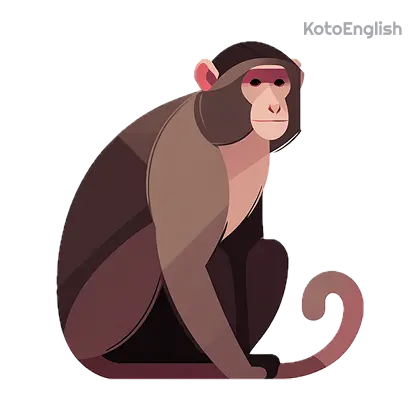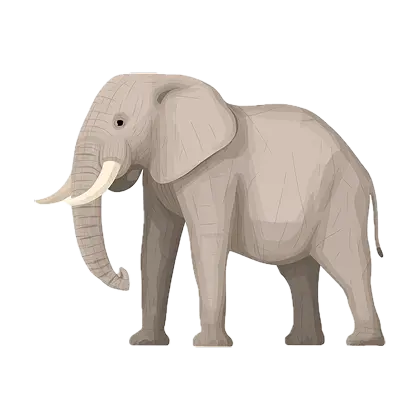

Elephant (noun) — the second largest creature on Earth, from ears to toes, which we can find in regions of Asia and Africa. Worldwide, there are three types of them, their names are dedicated to the location: African Savanna, African forest, and Asian elephant.
How to Pronounce “Elephant”?
 Audio (UK):

 Audio (US):
It may seem hard to say out loud, but you can break it into three parts: el with a short e and soft l, then goes the short i, and fənt like in the word “phone.”
Level up your English with Koto!
Examples: How to Use “Elephant” in a Sentence?
Learning a new word is hard without understanding how to place it in real-world sentences. Here, you will see how it works:
What Are Synonyms for the Word “Elephant”?
The “elephant” word describes a particular animal, but you can still use a few alternative and related words to make your saying more interesting.
Related nouns: giant mammoth
Synonyms (contextual): none, it’s a specific noun
Common collocations: colossal elephant young elephant fight an elephant
“Elephant” Word Formation and Description in Context
Learning “elephant” in English is more than memorizing the word, but also how to use it with other parts of speech. Here, you will study the common example:
With adjectives: grey elephant playful elephant hungry elephant
With verbs: elephant walks elephant drinks elephant grooms
With nouns (noun + noun): baby elephant elephants’ herd
Idioms and Phrases with “Elephant”
Idioms are special sayings that have double meaning and add more expressions to your thoughts that you say out loud or write down. Here are some of them with the word “elephant.”
-
An elephant never forgets — it’s a fact that these animals’ memories are wild, so with this phrase, you mean that you or someone will remember an action.
My husband always remembers what I promised —an elephant never forgets . -
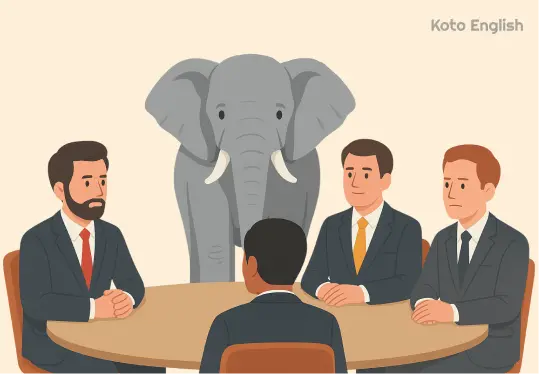
Elephant in the room — tells that some issue is too obvious, but no one wants to speak about it.
My sister’s behavior is theelephant in the room . We don’t talk about it.

-
As big as an elephant — people use it to describe something massive, just like the animal itself.
He goes to the gym four times a week. He isas big as an elephant !
Quick Elephant Meaning Quiz
Are you ready to check your understanding of the elephant’s definition? We have three engaging activities.
Enjoy personalized learning!
“Elephant” Word in Other Languages
Do you also want to learn how to say “elephant” in three world popular languages to increase your knowledge? Here you go:
| Language | Word for “Elephant” |
|---|---|
 Spanish
 |
Elefante |
 French
 |
Éléphant |
 German
 |
Elefant |
Did You Know It? Fun Facts About “Elephant”
You have learned the meaning of “elephant” and may be impressed by this animal: giant and powerful. After reading the facts we found, you will be even more.
-
Lin Wang was the oldest elephant who ever lived in captivity.
The 86-year-old elephant lived in the Taipei Zoo located in Taiwan. It was recorded by the Guinness World Records in 2003, when the animal passed away. -
On land, elephants are the biggest creatures.
Bush elephants (which you may know under the name African Savanna) can weigh almost 6k kilograms according to the information on WWF. -
Elephants’ eating habits are wild — they always eat.
On the same site linked above, we found information that an elephant can eat ~150 kg of food daily.
Famous Quotes About “Elephant”
This word is used by authors a lot. They define “elephant” to describe their loyalty, use their image to describe life situations, and more.
— Jennifer Richard Jacobson
Explanation: Elephants have emotions and express them when they meet others after being apart especially their families and friends.
Explanation: Elephants have force and live in another world than ants — they are too different. In the same way, people can also ignore what happens beyond their view, due to different reasons.
— Herb Caen
Explanation: You already know this idiom — about having a memory like an elephant — and here, it is used ironically.