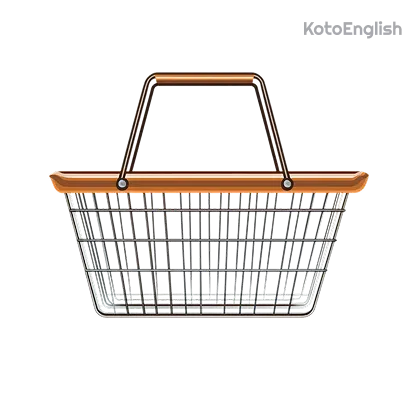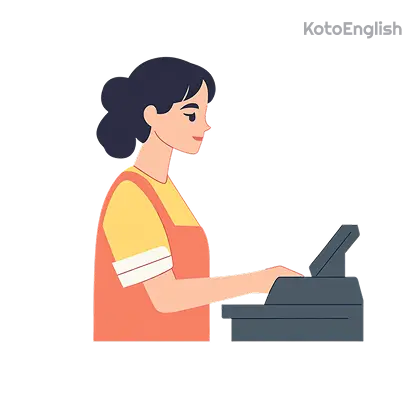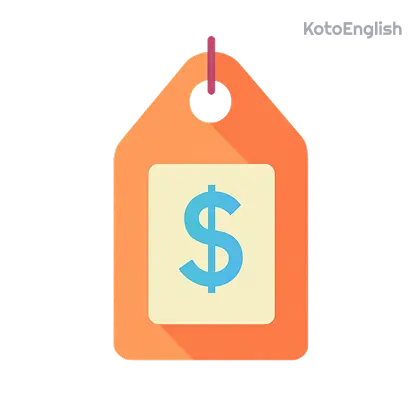
Price (noun) — the cost or the amount of money it takes to purchase something, which is usually written on the product tags in the stores or posted on the internet.
How to Pronounce “Price”?
 Audio (UK):

 Audio (US):
The beginning should be strong pr, the long ai vowel should flow down and should end with a light s.
Level up your English with Koto!
“Price” in Sentence: How It Appears in Daily Conversation and Texts
The following sentences are used to emphasize how “price” may be used in English with different meanings and tones, which provides you with a better understanding of the meaning and tone of the word price as used.
What Are Synonyms for the Word “Price”?
“Price” synonyms are used to explain the meaning of cost, value, or worth in a different shade of meaning. The following are some of the helpful substitutes:
Related nouns: cost charge rate fee amount
Synonyms (contextual): expense value cost
Common collocations: high price low price price tag price increase price range
“Price” Word Formation and Description in Context
The word “price” may be used together with other parts of speech to represent costs, economic trends, or symbolic meanings like sacrifices and consequences.
With adjectives: reasonable price fixed price discounted price fair price full price
With verbs: set a price pay the price lower prices raise prices compare prices
With nouns (noun + noun): price list price chart price war price difference price point
Idioms and Phrases with “Price”
The definition of “price” frequently varies with the way it is applied in idiomatic phrases. A few more typical expressions and sayings with the word price that are used by native speakers are listed below:
-
To pay the price is the cost of having to deal with the results/outcome of the action or decision that one has made.
He ignored the doctor’s advice, and now he’s paying theprice with his health. -
At any price means to do something irrespective of the expense or the challenge.
Alison was determined to win the competition at anyprice .


-
The price of success is a term that defines what it takes in terms of sacrifice or effort to do something.
Long hours and constant travel are theprice of success in her career. -
A high price to pay explains that the event is accompanied by great loss or suffering.
Losing his family for fame was a highprice to pay.
Test Yourself with a “Price” Mini-Quiz!
See how confidently you can use the word “price” in speech and writing through this quick interactive review.
Enjoy personalized learning!
“Price” Word in Other Languages
Add a touch of linguistic variety to your learning and see how to say “price” in other European languages.
| Language | Word for “Price” |
|---|---|
 Spanish
 |
Precio |
 French
 |
Prix |
 German
 |
Preis |
Unusual Facts You May Not Know About “Price”
The simplest method to define “price” is to find some curious and unusual facts about it. The following are also some that will make you view the term differently:
-
Price used to refer to value rather than cost
In the early times, price was used to mean something of value, honor or respect and not money. In old French pris and Latin pretium it referred to anything of value or worth, much before it was associated with money. -
The most expensive object on the planet was not what you would imagine
It was not a painting or a diamond, it was the International Space Station. It has an estimated price of over 150 billion dollars, thus making it the most expensive man-made object in history. -
Display of prices was not always available
During the 19th century, fixed prices were not applied in most of the shops. The customers bargained on every purchase and it was not until the late 1800s that the price tag became more popular with the advent of department stores such as Macy’s. -
Buying behavior is influenced by the psychology of price
When the price of a product is set at $4.99, it is perceived to be less expensive than when the price of the product is $5 due to a mental processing effect called left-digit anchoring. This is a trick that retailers have been employing for decades and it still works like magic.
Insightful Quotes Exploring the Idea of “Price”
In literature, philosophy, and economics, the term “price” frequently appears to represent worth, sacrifice, and our decisions. The quotations that follow, which use “price” in English, demonstrate how human ambition, morality, and wisdom are reflected in it.
— Winston Churchill
Explanation: Churchill links achievement to moral duty. Every position of power, success, or recognition comes with a cost, reminding us that nothing valuable is ever free.
— Warren Buffett
Explanation: Buffett highlights the difference between cost and worth — money spent doesn’t always reflect real value. True wisdom lies in recognizing when something delivers more than its price tag suggests.
— Desmond Tutu
Explanation: Tutu reminds us that freedom is never free or permanent. It demands constant awareness, courage, and effort to protect it from being lost.