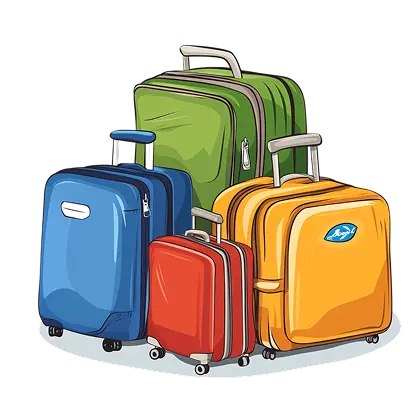
Ticket (noun) — a small paper piece or digital document that allows you to attend an event, get on a plane, or take part in something.
How to Pronounce “Ticket”?
 Audio (UK):

 Audio (US):
Pronounce the first syllable tick solidly — like the tick of a clock, and add the second syllable et softly and quickly.
Level up your English with Koto!
Examples: How to Use “Ticket” in a Sentence
When we’ve already learned how to say “ticket” like a native, it’s time to take a look at some examples of use.
What Are Synonyms for the Word “Ticket”?
Knowing how to say one word in different ways can help you make your speech more diverse and rich.
Related nouns: pass coupon card
Synonyms (contextual): entry admission voucher
Common collocations: buy a ticket show a ticket ticket’s price
“Ticket” Word Formation and Description in Context
To excel in English for real, it would be beneficial to investigate the formation rules and description of “ticket” in context.
With adjectives: digital ticket golden ticket expired ticket
With verbs: to get a ticket to find a ticket to validate a ticket
With nouns (noun + noun): ticket office ticket seller ticket machine
Idioms and Phrases with “Ticket”
But knowing the ticket’s description is not often enough to sound like a native speaker, so it’s better to have some idioms in your memory. Here are some common phrases featuring the word “ticket” that you might like to note down.
-
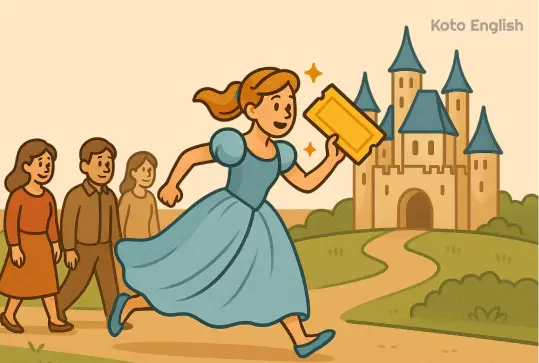
A golden ticket — a lucky ticket that brings a prize or a great chance.
“To be at this ball meant getting agolden ticket to a rich life, and she knew it.”
-
To get a ticket — to get a fine or penalty, usually for breaking traffic rules.
“Shegot a ticket for speeding on the highway.” -
A one-way ticket to — something that leads to a negative outcome or failure.
“If he won’t start preparing for his exam now, he’s buying aone-way ticket home.”
Ticket Meaning Exercises: Test Your Knowledge
You have already learned the formation, definition, and common phrases using “ticket,” so fixing the result with a short quiz is just right. Let’s see if you’re a quick learner or if you need to take a step back and recall something.
Enjoy personalized learning!
“Ticket” Word in Other Languages
Learning how to say one word in different languages not only makes you smarter, but also opens new traveling perspectives.
| Language | Word for “Ticket” |
|---|---|
 Spanish
|
Entrada |
 French
|
Billet |
 German
|
Fahrkarte |
Discover Fun Facts About “Ticket”
It wouldn’t be us if we left you without the interesting and, sometimes, even funny facts related to tickets. Let’s dive in!
-
The first paper tickets were used in the 19th century for train travel.
The Stockton and Darlington Railway in England used the first paper tickets in the 19th century. They were hand-written until, in the 1840s, Thomas Edmondson invented standardised, printed, and numbered card tickets. -
The world’s most expensive ticket ever sold was for a space flight!
The most expensive space flight tickets ever sold were a Blue Origin New Shepard flight in 2021 for $28 million, a $70 million ticket for an International Space Station (ISS) trip led by Axiom Space, and a $450,000 trip from Virgin Galactic. -
You can get tickets for free (but only sometimes).
You can visit museums and attend some events without paying a penny for that, but only on special dates. For example, the Louvre Museum in Paris opens its doors for free on the first Saturday of each month.
Famous Quotes Featuring “Ticket”
We can not let you go without discussing the uses of this word in world-famous movies and novels. This will help you enrich your language with beautiful similes and metaphors.
— James Cameron
Explanation: One of the most famous Jack Dawson’s lines is when he addresses Rose and reflects on the lucky poker game that won him a ticket on the Titanic, on which he met her, the love of his life.
But I’d rather see the sunrise, in your eyes.”
— Electric Light Orchestra
Explanation: The main character has a “ticket to the moon,” which is a metaphor for freedom, but he’d rather see something more meaningful — the sunrise through the eyes of someone she cares about.
— Steven Spielberg
Explanation: In this humorous moment, Indy throws an unwanted passenger off a zeppelin. The scene became memorable for its perfect comedic timing and slight absurdity.