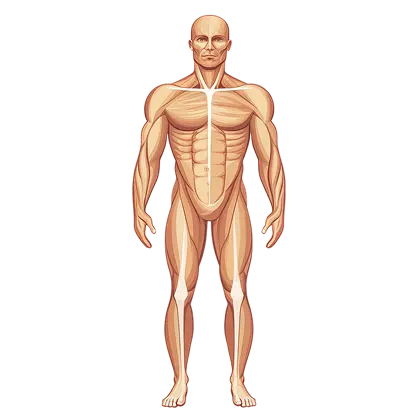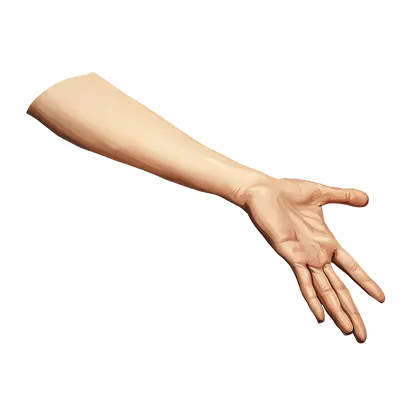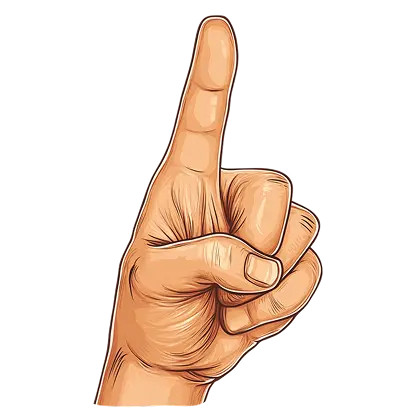
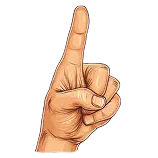
Finger (noun) — one of the slender, jointed extensions at the end of the human hand, usually numbering four on each hand in addition to the thumb, used for grasping, touching and manipulating objects. It is composed of bones, muscles, tendons and skin.
How to Pronounce “Finger”?
 Audio (UK):

 Audio (US):
To pronounce it correctly, start with the short i sound in “sit,” followed by ng as in “sing,” and ending with ger like in “tiger.”
Level up your English with Koto!
Examples: How to Use “Finger” in a Sentence?
Discover how you can make use of this word in sentences to create various meaningful expressions.
What Are Synonyms for the Word “Finger”?
There are not so many words that reflect the meaning of the “finger,” but they still exist, so you can learn more about them and enrich your spoken and written English.
Related nouns: thumb knuckle nail
Synonyms (contextual): none, it’s a specific noun
Common collocations: point a finger lift a finger snap fingers
“Finger” Word Formation and Description in Context
Take a closer look at how you can combine this word with other parts of speech in order to create new, interesting constructions and empower your language understanding.
With adjectives: long finger index finger nimble fingers delicate fingers
With verbs: tap fingers cross fingers lick fingers bend a finger
With nouns (noun + noun): finger nail finger tip finger ring finger hold
Idioms and Phrases with “Finger”
What does “finger” mean? You can answer this question already, but what if we ask you to explain the different idiomatic meanings of this word in various contexts?
-
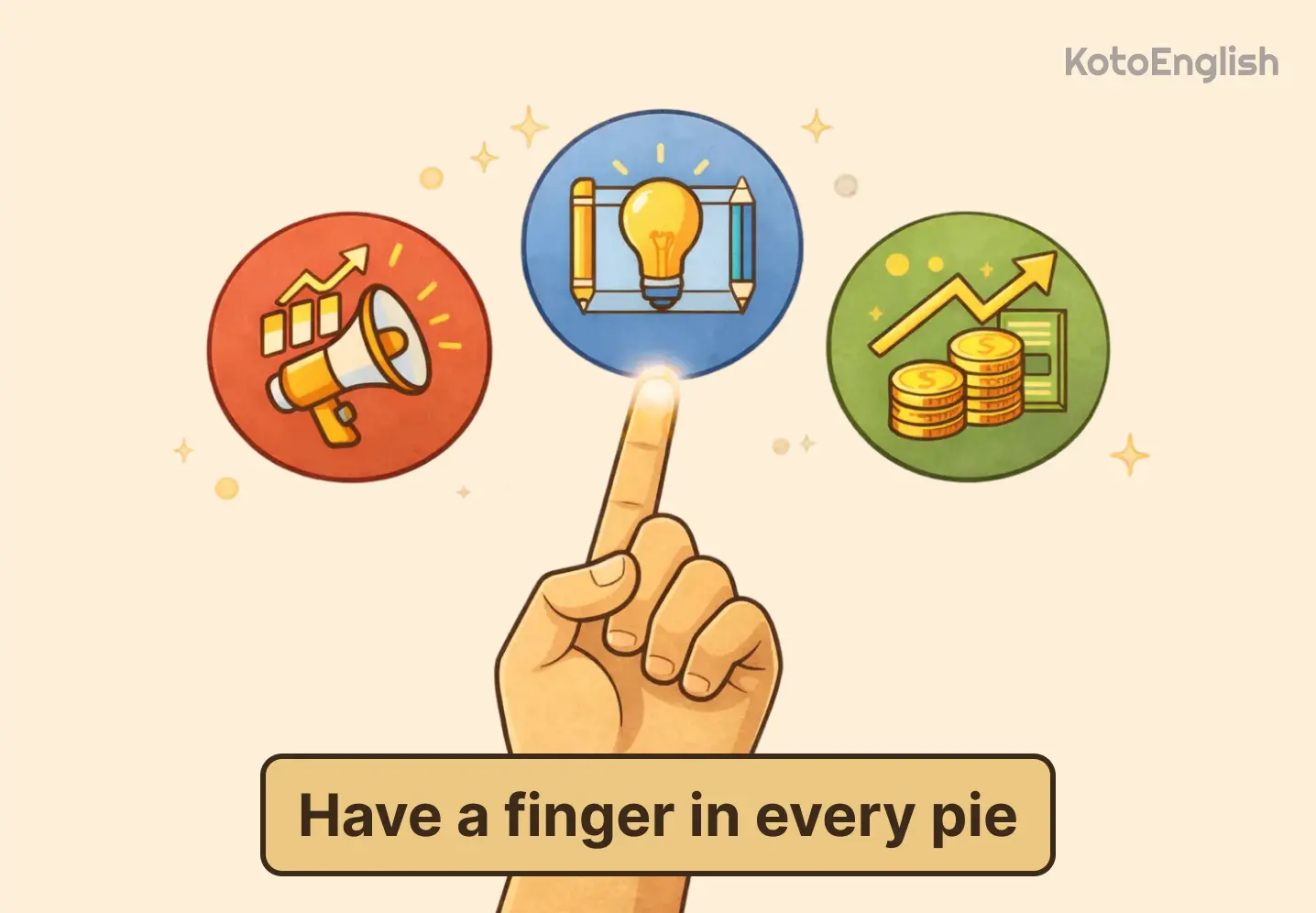
Have a finger in every pie — being involved in multiple activities, projects, or businesses simultaneously, often more than one should be.
Sarahhas a finger in every pie at the company; she manages marketing, oversees design and even checks the accounts.
-
Point the finger at — to blame or accuse someone for something, often implying responsibility for a mistake or problem.
When the project failed, everyonepointed the finger at Mark, even though it was a team effort. -
Burn one’s fingers — this implies suffering a loss or getting into trouble as a result of taking a risk or making a mistake.
Tom invested in that startup and reallyburned his fingers when it went bankrupt within months.
Test Your Knowledge of “Finger” Meaning
Define a “finger” by completing our intellectual game, through which you will learn a lot of new information, broaden your horizons and have some fun.
Enjoy personalized learning!
“Finger” Word in Other Languages
Look at how to spell “finger” and how to pronounce it in other widely used European languages to surprise your family and friends with your knowledge.
| Language | Word for “Finger” |
|---|---|
 Spanish
 |
Dedo |
 French
 |
Doigt |
 German
 |
Finger |
Did You Know It? Fun Facts About “Finger”
The definition of “finger” may seem very simple and understandable and it truly is, but have you ever thought about the interesting information you might not know about this term?
-
Each finger has its own unique fingerprint pattern
No two people in the world have the exact same fingerprints, not even identical twins. These patterns are produced before birth and remain permanent throughout life. Fingerprints are used for identification because of their incredible uniqueness. -
Fingers can sense tiny differences in texture
The skin on the fingertips contains various types of nerve endings known as mechanoreceptors. These allow you to register the smoothness and roughness of surfaces with varying degrees, from as smooth as glass to as rough as sandpaper. -
Fingers are stronger than you think
-
Fingers can heal quickly, but scars easily
Fingers are commonly claimed to heal fast because of the blood supply. However, the skin is delicate and therefore, it scars quite easily. This combination makes fingers resilient yet prone to visible marks, reminding us of physical activities we’ve participated in. -
Fingers can perform tiny, independent movements
Each finger has multiple joints, muscle-powered from within the hand and forearm, giving them the liberty to bend, rotate, or move in synchrony or individually.
Famous Quotes Featuring “Finger”
We can see the word “finger” not only in idioms but also as a part of well-known quotations and today we will take a look at some of them.
Explanation: He’s describing his natural and expressive movements to music. Instead of hooking on one rhythmic gesture, he combines all of them to demonstrate spontaneity and freedom of expression.
— Louis Nizer
Explanation: This is a warning about self-awareness and accountability. In blaming others, people tend to ignore their role in it. Here, the four fingers analogy is intended to explain that the finger pointing usually reflects more about the accuser than it does about the accused.
— James Cash Penney
Explanation: Here, the hand is used as a metaphor for teamwork. The individual members, or fingers, can act in isolation, but joined together as a fist, they exert much greater power, a witness to the strength of organization and unity.
— Isaac Asimov
Explanation: Writing is a very direct extension of thinking for him. When his fingers are on the keyboard or the pen is in his hand, his thoughts are being channeled, showing how the physical act of writing is intertwined with the mental one, letting him put words on paper effortlessly.
— Jane Kaczmarek
Explanation: She is humorously describing her view of a perfect lazy day: “Not lifting a finger” is just another way of saying “doing nothing.” There comes a time when doing nothing is all you want to do.