What are interrogative pronouns?
If we wish to ask about something or someone, or decide between two or more options, we use a limited but potent list of words called interrogative pronouns. These are the words we use in place of the nouns in the question we’re asking, substituting the unknown answer we’re waiting for with the kind of information we’re trying to get from the listener.
Think of them as placeholders for the unknown parts:
Any of these words used to start a sentence means that what follows is a question and that the speaker wants to know that particular piece of information. They not only begin questions, but they also shape them, immediately letting the listener in on what kind of question you are asking.
Why are interrogative pronouns important in English
Understanding question words is not just about grammar, it’s a skill that can affect your everyday communication and fluency in spoken English. Here’s why:
- They give us tools to ask questions. They are essential for forming clear, direct sentences that will be immediately understood.
- They are present in real-life conversations. Natural, everyday speech is filled with these expressions, whether you are asking a friend which movie to choose on Netflix or defining who sent you an Amazon gift card.


It is also essential for you to learn to become a good listener, whether you need it to pass an exam or to communicate with other English speakers. Split-second understanding that you gain from practicing who, what, which, and whose develops your ability to become fluent.
Main interrogative pronouns in English
Not all these terms function equally well as questions. Each word of inquiry has its own path, and choosing the wrong word can lead the listener down a completely different track. The four pronouns listed below point to a different piece of information:
- Who — points to a person or a group of people
- What — asks about an object, idea, or piece of information
- Which — signals a choice between defined options
- Whose — asks about ownership or belonging
In the table below, you can see them brought together to be easy-to-learn:
| Pronoun | Usage | Example |
|---|---|---|
| Who | people |
|
| What | things |
|
| Which | choice |
|
| Whose | possession |
|
Note the way that each word immediately clarifies the possibilities. If you hear “Who…”, you know that a name will follow. If you hear “Whose…”, you know that a sense of ownership will be involved. The clarity of these four terms is what makes them valuable in conversation.
How to use interrogative pronouns in questions
Knowing the pronouns in English is just the first step. The real work starts from where you put them and how you deal with the surrounding structures. The position, the verb, and even word order change depending on the function of the pronouns in the sentence. Here’s how it all comes together.
Using at the beginning of a question
Interrogative pronouns grammar states that these terms should almost always start a sentence, because they signal that a question is coming to the conversation. It is not just a habitat but a rule that you can see from the examples:
The moment this word is spoken, the listener can immediately tell what kind of information is being requested, before even hearing the rest of the sentence.
Using them as the subject
If the interrogative pronoun is the subject of the sentence, there is no need for an auxiliary verb, but if it is the object of the sentence, an auxiliary verb is required. Here are the examples:


Using them as the object
Object pronoun questions always follow the same pattern. Once you get the hang of the rhythm, it’s hard to forget it. The important thing to remember about object pronoun questions is that the auxiliary verb must come directly after the question word — never later in the sentence.
In real life, the interrogative pronouns are used like this:
Word order with do/does/did
Object pronoun questions have a very simple, fixed pattern. It is not too difficult once you get the hang of it. The basic idea is that the auxiliary verb comes right after the question word, but nowhere else in the sentence.
Here is a simple formula:

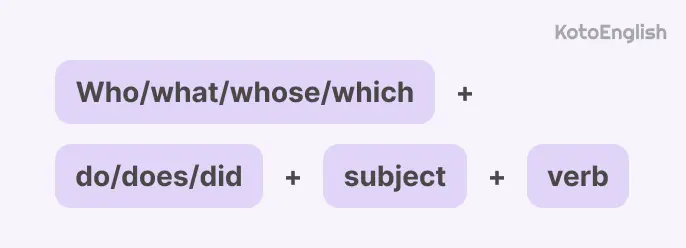
To memorize it better, check the following examples:
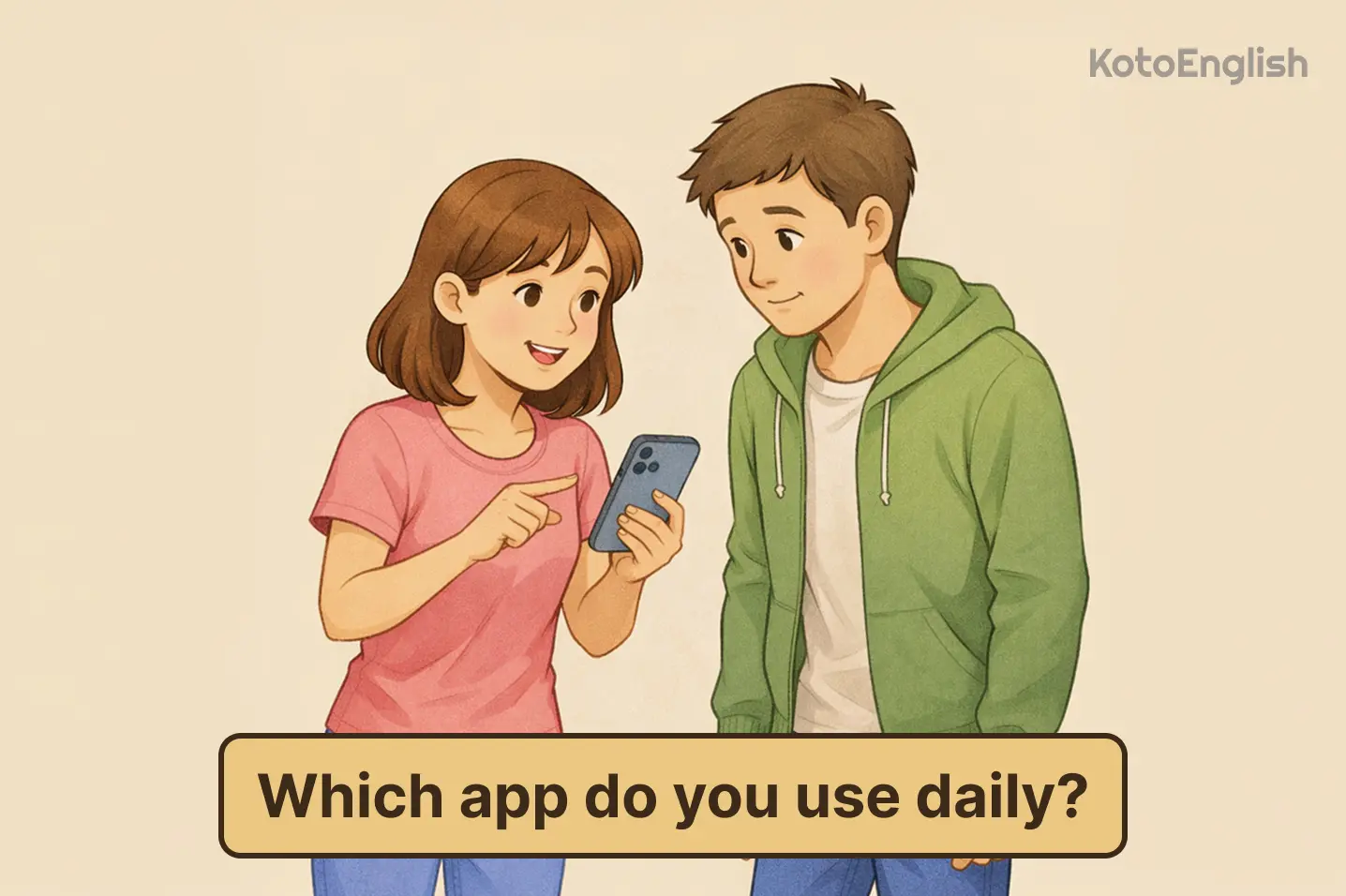
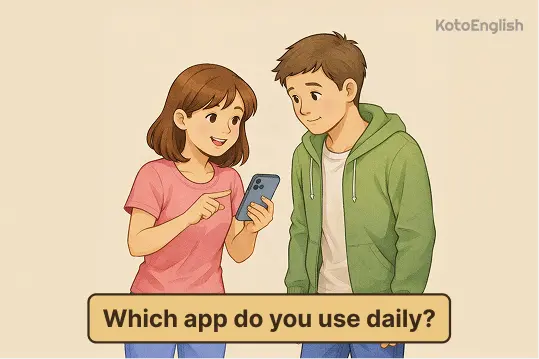
This ordering comes into play when the word that is being questioned is an object rather than a subject. The auxiliary verb is like the keystone that holds everything together. Take it away, and the question collapses.
Using this grammar, you see how to use interrogative pronouns in questions with ease, as you need to get the term at the beginning, figure out if it is doing or receiving an action, and let the rest of the sentence build itself.
Interrogative pronouns vs interrogative determiners
When differentiating pronouns and determiners, the confusion comes because the form of these words never changes. The basic concept requires only one thing to be understood, which states that the word functions differently when it is used as a standalone term or as a preceding term for a noun.
Questions in English use pronouns to replace nouns entirely. The statement requires no additional words because it already conveys its complete meaning. The rule states that a verb or auxiliary verb must follow an interrogative pronoun without any intervening nouns.
Interrogative determiners come directly before a noun and specify exactly which object or person is being asked about. The construction needs a noun because the question word with its current form is not valid without it. Let’s compare them for a clear view:
| Interrogative pronoun | Interrogative determiner |
|---|---|
|
|
|
|
|
|
|
|
|
The table reveals an obvious pattern that is evident in its contents. The question word functions as a pronoun when it stands alone to precede a verb. The word functions as a determiner when it requires a noun to follow in order to complete a sentence. You can learn more about possessive pronouns and their usage in our guide.
Interrogative pronouns examples in sentences
With all the knowledge you gained, it is time to move to the actual demonstration of the practical use of English question words and how these terms do their job in real sentences.
Who
What
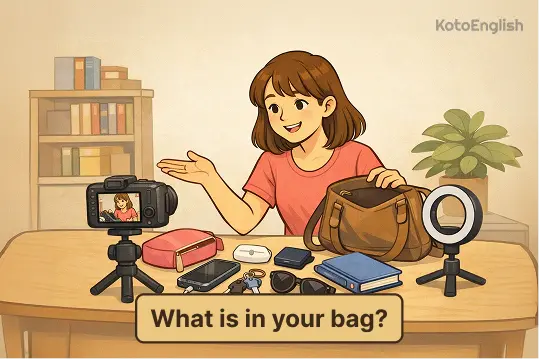
Which


Whose
Common mistakes with interrogative pronouns
Even after you’ve mastered the pronouns, you can make some mistakes, whether speaking or writing — everyone does, including fluent speakers. The good news is that almost all of them come down to a single error or a missing rule. Here are the three mistakes to get straight before they become bad habits.
- Confusing who and whom
Though casual conversations can focus on who, formal speech requires whom, which makes it more appropriate in official situations.
|
Who did she marry in secret?
|
Whom did she marry in secret?
|
|
Who are you texting at 2 a.m.?
|
Whom are you texting at 2 a.m.?
|
- Mixing up whose and who’s
Whose signals possession and who’s is a short form of who is or who has, and they can end up messed up because of similarity. Here, you just need to pay attention to the task.
|
Who’s textbook is it?
|
Whose textbook is it?
|
|
Who’s turn is it to pay for the dinner?
|
Whose turn is it to pay for the dinner?
|
- Putting which when there is no choice to make
Which suggests a set list of choices. If you embed it in an open-ended question, it can give the impression that the answer is limited, which it isn’t.
|
Which is your dream job?
|
What is your dream job?
|
|
Which is your favourite song?
|
What is your favourite song?
|
However, you can ask, “Which is your favourite song?” if there is a shortlist, like on Spotify, and the choice is limited to a number of songs.
Summary
You have made good strides in understanding English questions, from the fundamentals of interrogative pronouns to defining the pitfalls that even experienced language learners may fall into. Now it’s time to put what you have learned into practice outside of the textbook and into real conversations.
The next step will be to dive into the other types of pronouns, learn how to use them in sentences, and familiarize yourself with the rules that govern their use. Each new topic will build on the previous one, and the momentum you will create today will take you further than you think.
Stay curious, keep practicing, and the progress will come. The Koto English platform is full of worksheets and blog posts to help you get closer to fluency — so we’ll catch you in the next guide.
Frequently asked questions (FAQs)
They commonly differ in scope. What is used when the range of possible answers is broad, undefined or unlimited. Which is a common choice when the speaker is asking someone to choose from a specific, limited, or already-known set of answers.
The difference persists in grammatical roles within a sentence. Who is used when you are asking about people performing an action, such as “Who wrote this message?” Whom stands for the object, the one that receives an action.
In casual speaking, whom is replaced by who, but in formal situations, it is better to use the correct grammar form.
Yes, whose meaning in English is about possession or ownership, it refers to whom an item belongs. It can be applied to goods, ideas, and other things that you can use with possessive adjectives my/your/their, but here, you formulate it as a question.
Yes, they can, when the pronoun itself is performing the action that a verb describes. Like in the question, “Who baked this cake?”, the pronoun is the subject because it refers to the person who made the sweet.