Duolingo learning process
Duolingo will not necessarily appeal to all learners in the same way, so the question here is not what it offers, but what kind of learning experience it provides. The app provides a series of exercises, repetition of familiar content, and constant interaction with the program.
While this works well for one kind of learner, it may be frustrating for others, particularly those who want more explanation, more flexibility, or more practice in speaking the language. So, the core question is whether its format aligns with how you prefer to study English.

For example, it can be about gamification, which is used by many apps, as we described in our full Mondly breakdown, or a low-pressure entry point as in today’s app we review. Let’s consider the study process to see if it matches your vibe.
Vocabulary and grammar acquisition
Vocabulary building is introduced in Duolingo gradually and tends to recycle the same terms across multiple exercises without the feeling that you are overloaded with new words. You will not meet lists of words to be remembered, but short phrases and simple sentences where they are used, as well as images for better memory retention.
Grammar is handled less directly. In many instances, Duolingo relies on learners to pick up on grammar through repetition rather than explanation. This may work reasonably well for those who are comfortable picking up on grammar through repetition.
For users who would like to know why a particular sentence is correct, or what rule is being followed, or how sentences differ from one another, this is less helpful.
The review system does, in a sense, solidify the weaker content by bringing it back again, which in turn supports retention over time. Yet, the approach is better suited to identifying and reinforcing patterns rather than creating a strong, explicit understanding of grammar.
Listening and speaking modules
Duolingo is a free English language learning app where listening exercises seem to be mostly useful in terms of getting learners accustomed to listening to the language regularly. They seem to provide repetition, which can be useful, especially for beginner and low-intermediate people studying English.
The speaking component encourages people to speak out loud (in a microphone, on their own, which is perfect for introverts) and receive speaking practice feedback on whether a response is close enough.
User interface and accessibility
One of the strengths of Duolingo is its ease of use. The application is designed so that when the user opens it and begins using it, they can easily follow along and know where they are in the app. From an operational standpoint, the mobile learning interface is part of the reason why it is so easy to use.
This is essential for learners looking for something simple and handy. Duolingo doesn’t require much setup, and the platform doesn’t force the user to make too many decisions at once.
Simplicity also brings its own trade-offs, which we have to mention in the Duolingo English review, and one such trade-off is that there is little room for customizing the interface. Thus, while the app performs well for its convenience, this same convenience may also make the app too controlled for those who prefer a flexible approach to their own progress.
Core methodology and gamification
The basic approach that Duolingo follows is based on consistency rather than intensity. The app is designed to ensure that users continue to use it, even if it is for a short time every day. Many aspects of the application are geared towards this objective, and the concept of a streak is a vital part of this.
For some, this is one of the platform’s largest benefits since the system of rewards, XP, leagues, badges and other small forms of progress can make the study process feel less mentally taxing and more achievable. Students struggling with a short attention span can find it useful for daily maintenance of progress in English.
Alignment with global standards (CEFR)
The structure of the app follows CEFR level goals, especially in its large language programs, rather than serving as a CEFR test itself. According to Duolingo, its largest programs are designed to take users up to a B2 level, while smaller ones may end sooner depending on how complete they are.
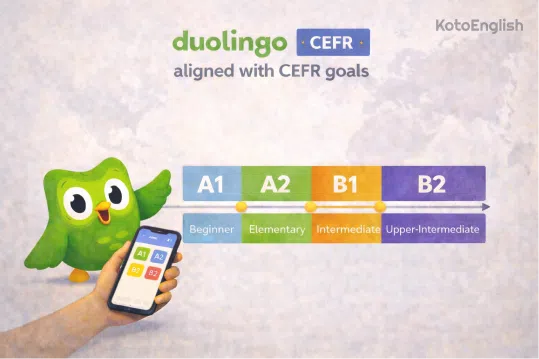
The English course is one of the clearest examples of CEFR levels alignment in this platform. Moreover they have a visualization posted on the blog with connections between internal progress bands and ranges for CEFR. So, Duolingo says many of its major courses are aligned with CEFR learning goals.
Comparing subscription plans: Free vs. Super vs. Max
Since the pricing varies from one app to another, we include cost details in every exploration, like in the hands-on italki app review. It is essential for casual users and anyone looking for an affordable, effective way to learn English.
Across three options offered by Duolingo the core content stays broadly the same while paid plans mainly change convenience and add premium functions.
The freemium model analysis
Following an honest Duolingo review in 2026, it is worth mentioning that it still allows users to learn for free, and core lesson content remains available on the free tier, while paid plans mainly reduce friction and add extra features.
For free users, Duolingo has a mistake limit based on a hearts model, though the specifics may vary as the company continually tests changes to their product on different user segments.
Super Duolingo features
In order to give an honest Duolingo Super review, one must talk about the convenience factor. With Super, users receive an ad-free experience and unlimited hearts, making practice smoother and less interruptive.
Duolingo also claims that both free and paid users practice the same things, and thus one must see Super as an upgrade in terms of comfort.
So, is Super Duolingo worth the money? The named pros make the Super version the easiest to justify for those who are already using the app often enough to notice the annoyance of the ads and limits in the free variant.
If ads and limits are disrupting concentration, then it can make the platform easier to use. If Duolingo is only used occasionally, then its value is less clear.
Duolingo Max and generative AI
If learners would like to get all the benefits from the Super plan and AI-powered features such as Roleplay, Video Call with Lily, and Explain My Answer, it is worth checking the Duolingo Max review.
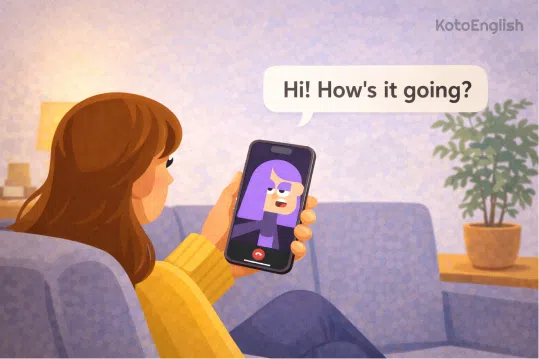
Max is more sensible when you specifically need speaking practice exercises with guidance, as well as additional support from the AI in the practice exercises. The Duolingo AI features review shows that Max can be purchased in the iOS and Android apps but not on the web, and that AI functionality is only supported in certain courses.
Cost-benefit analysis
At this level, the decision is no longer based on the content that Duolingo allows you to work on your English, but rather the comfort level you wish to have with the learning process. The free level still provides access to the content, so a paid option is not required to use the application.
The difference between Super and Max is the overall experience, with fewer interruptions and greater flexibility, plus additional AI features at the Max level. Here is a brief overview of the Duolingo experience at different levels:
|
Plan |
Best for |
Features |
|---|---|---|
|
Free |
Casual use |
Access to the course without paying |
|
Super |
Frequent learners |
A smoother, uninterrupted experience |
|
Max |
Users interested in AI tools |
More interactive practice inside the app |
The final decision of the free vs paid version depends on your goals and capabilities. It is worth noting that the app can offer discounts due to special occasions, allowing engaged learners to save costs.
Can you reach fluency with Duolingo alone?
While Duolingo can take a learner far, for most of them, it works best as the foundation for aspects of language progress based on repetition, such as basic vocabulary, core sentence construction, familiarity with the sounds, and the discipline to show up every day.
In this Duolingo app review, you have seen that the core features provided keep English in front of you — literally in a phone/tablet/web that is commonly used. It means that a student who automatically reaches for their phone can take it as a challenge to complete a bite-sized lesson.
Those who would like to add a tutor-based learning approach to the gamified way of studying can consider our unbiased Preply evaluation to put those differences into another context.
Performance for different learner levels
Duolingo is not equally effective at all stages of progressing in English. Its design is clearly geared towards those who need guidance, repetition, and a convenient way to practice without too much hassle.
This means that it may be more effective for beginners as they are still learning basic words and phrases. For those at more advanced stages, format may actually become limiting as it is less about repetition and more about how you use English. Let’s check the advantages for new learners that we prepared for this Duolingo review.
Benefits for beginners
If you get to this overview with a question, “Where do I start with my English studying journey?”, it is notable that Duolingo answers it.
Duolingo divides practicing into small parts, which can make improving a new language for the first time less intimidating. Instead of forcing users to dive into long descriptions or long sessions, it offers users small tasks to complete quickly and frequently.
Even highly motivated users know that motivation is not guaranteed to last for long but the learning process is a marathon, not a sprint. So if traditional study approaches don’t work for you, a gamified app gives you exposure, routine, structure to not feel lost.
Limitations for advanced learners
At advanced levels the app becomes less convincing as a primary tool. Considering Duolingo for advanced learners, the main point with the application in this regard is not that it can become limiting for them.

At this point, the user must be able to progress in terms of nuances, expressions, understandings, and the ability to deal with new topics. The platform for C1–C2 learners can be a way to maintain contact with English, serving as an additional interactive tool.
Summary of pros and cons
In conclusion, here is a concise summary of what has been reviewed so far, providing a quick rundown of the main pros and cons of Duolingo based on its features, learning style, and actual use.
Let’s point out areas where Duolingo excels and areas where its weaknesses are most evident, especially for those considering whether Duolingo suits them or not.
Pros:
- Easy to start with no experience in English
- Gamified learning experience
- Short lessons for busy days
- Daily learning habit building
- Good for basic vocabulary
- Clear and simple mobile interface
- Availability of the free plan
Cons:
- Limited speaking practice for real conversations
- Basic grammar explanations
- The free version has limits and ads
- Less effective for advanced learners
Combining discipline side, like daily streak motivation offered by this app, with other sources that delve deeper into grammar, you can get a stronger practice on your way to becoming fluent, passing the test, or otherwise.
The role of Duolingo in modern language learning
If the intention is to make the practice of English easier to start, easier to repeat, then it can be very useful. I think that is the most realistic approach to take in looking at it.
The platform is most useful if the primary concern is consistency. The app reduces the threshold, helps reinforce the vocabulary, and maintains the use of English as part of the daily schedule. This is especially important for new learners or when returning to the language after an extended hiatus.
For now, when the path is aimed at becoming easier, more interactive with AI-powered features, and more effective, Duolingo is one of the apps that suits modern generations and people who prefer to study in a more convenient way.
FAQ
You can apply for the adaptive test at the very beginning, assessing your grammar, vocabulary, and comprehension. It is valuable when you have the basics and would like to move to the point of the course where you can develop new skills.
Yes, you can easily switch between courses and continue studying the language chosen. However, the “heart” system is shared across the account, so if you have free access, it is worth remembering.
It offers corporate learning as a supplementary tool through Duolingo for Business that allows employers to provide Super subscription for their team members.