Quick summary: Top English grammar books
Let’s start with a quick and informative table that compares all the grammar guides we will consider in today’s article:
|
Title |
Author |
Target level |
Best for |
|---|---|---|---|
|
Essential Grammar in Use by Raymond Murphy |
Raymond Murphy |
A1–A2 |
Self-study |
|
Basic English Grammar |
Betty Azar |
A1–A2 |
Beginners, classroom use |
|
English Grammar For Dummies |
Geraldine Woods |
A2–B1 |
Casual self-study, easy explanations |
|
English Grammar in Use |
Raymond Murphy |
B1–B2 |
General learners |
|
Fundamentals of English Grammar |
Betty Azar |
B1–B2 |
Teachers, structured courses |
|
Oxford Practice Grammar (Intermediate) |
John Eastwood |
B1–B2 |
Extra practice, exam preparation |
|
Macmillan English Grammar in Context |
Michael Vince |
B1–B2 |
Grammar in context |
|
Advanced Grammar in Use |
Martin Hewings |
C1–C2 |
Academic English |
|
Practical English Usage |
Michael Swan |
C1–C2 |
Teachers, grammar reference |
|
Understanding and Using English Grammar |
Betty Azar |
B2–C1 |
Tutor-led lessons, comprehensive study |
Best English grammar books for beginners (A1–A2)
For beginners, clarity and many illustrations are required to provide a clear understanding. Difficult rules may be intimidating, thus books with good explanations will include schemes and various examples.
Want to check how well you understand the basic grammar topics before choosing a book? Try this quick Past Continuous Test for A2.
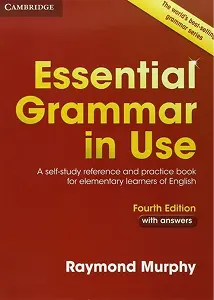
Essential Grammar in Use by Raymond Murphy
Description:
You can find this source under the name of the “red Murphy” (because it has a distinctive bright red cover). It is defined as the best English grammar workbook by many self-study students owing to the structure: the left page contains theory, and the right page contains exercises.
This way, you are able to apply what you have just learned immediately, accomplishing plenty of activities that vary in form. For more efficiency, you can pair it with one of the English learning apps to cover all four skills required for fluency.
Pros: clear structure, easy to follow
Cons: limited speaking/reading practice
Basic English Grammar by Betty Azar

Description:
Being the most beneficial for ESL learners and for the in-class setting, this book focuses on interactions, offering more guided and varied exercises compared to other sources. It provides informational grammar charts, an expanded syllabus, communication activities, and more.
It can be used separately for independent learners but also in combination with tutoring, as the teacher can deliver more detailed grammar clarification.
Pros: strong focus on practice, great for classroom use
Cons: less intuitive for pure self-study
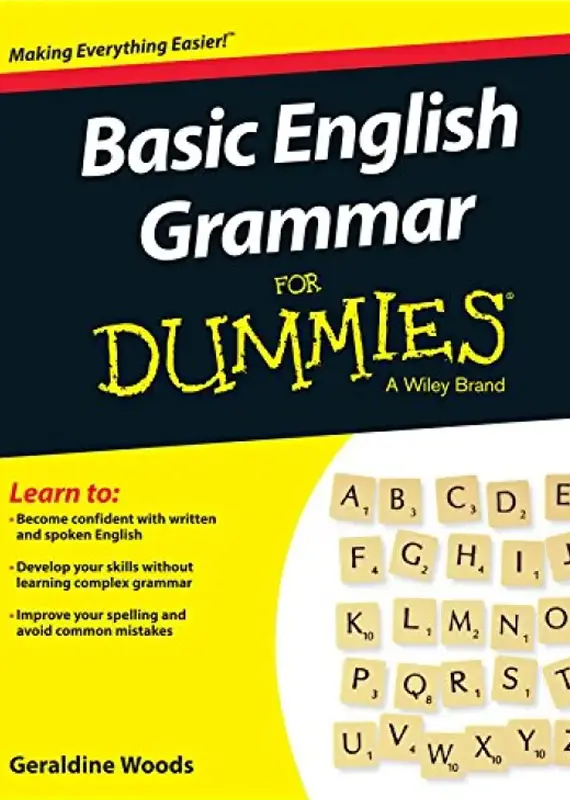
English Grammar For Dummies by Geraldine Woods
Description:
The title is funny and depicts the way this material is built — it is one of the English grammar books for adults written in a friendly tone with humor and simple explanations. Instead of heavy terminology, it focuses on helping you understand how grammar works in real life.
For adults, especially the busiest ones, it is a suitable option for grammar and punctuation improving. Since it is easy to read, students will not be overwhelmed with complex explanations. It can be a good starting point before moving on to more focused practice, for instance, if you want to test Past Perfect Continuous skills.
Pros: engaging style, no complicated academic language
Cons: fewer systematic exercises
Top English grammar books for Intermediate learners (B1–B2)
In the case of intermediate-level students, it can be assumed that they are well aware of the fundamental principles, but their usage is often incorrect during interaction. This is precisely the reason why the ideal grammar books for the B1–B2 level learners include the aspect of practice.
Intermediate textbooks on grammar will serve the purpose well only if they can enable you to go from “I understand the rule” to “I know how to apply it automatically,” like when you can complete Past Continuous exercises easily. Now would be a great time to pick up a textbook that suits your study method.
English Grammar in Use by Raymond Murphy

Description:
Among English grammar books recommended for those who have the absolute basics, this one is a match, simultaneously avoiding overly technical explanations. In addition, the fifth edition features an interactive e-book with sound in certain versions, making it more applicable for self-taught users than the previous editions.
The standpoint of this resource is an interactive ebook with audio for the 5th edition, making a difference for students who need deeper learning.
Pros: good organization by units, sufficient practice for each concept
Cons: limited speaking-oriented activities
Fundamentals of English Grammar by Betty Azar
Description:
The book proves most useful to those learners who need the grammar lessons to benefit their development in all four skills, not only the written ones. Pearson says that this textbook offers students a program in which each lesson starts with charts, followed by practice and warm-ups.
The methodology is particularly suitable for students who require repetition in varied formats, since the same format is used in controlled practice, in open tasks, and in communicative exercises.
Pros: greater skills integration, effective for classrooms, suitable for repetitive learners
Cons: more academic for some students
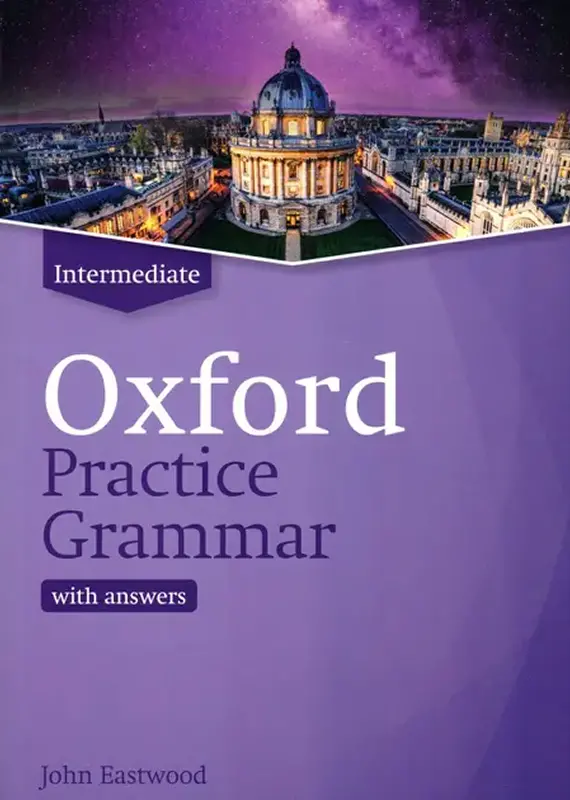
Oxford Practice Grammar (Intermediate) by John Eastwood
Description:
This one will be a good choice for those learners who require a textbook with more information than Murphy but do not require a book that focuses only on theory. According to Oxford, this series of textbooks can be used both in classrooms and when studying on one’s own, providing practice tests/exercises.
Due to various editions, it is recommended to check the table of contents, page count and publication year based on the particular book you are interested in.
Pros: solid amount of workarounds, suitable for self-study and class support
Cons: can feel exercise-heavy if you prefer shorter study sessions
Macmillan English Grammar in Context by Michael Vince
Description:
The uniqueness of this book is that it teaches grammar not independently but by means of contexts. As stated on Google Books, this is a series of grammar exercises based on contextual examples and intended for classroom and individual study.
It will prove particularly helpful for those who have already learned the basics and know the grammar rules but find it difficult to identify them in actual reading and usage.
Pros: context-based learning, more engaging than purely mechanical drill books
Cons: may feel less intuitive if you prefer a rule-by-rule structure
Advanced English grammar books (C1-C2)
In the higher levels, learners often require more than just an explanation of rules. The emphasis at these levels is on learning complex structures, appreciating semantic nuances, and using grammar correctly in formal writing, including academic writing and professional writing.
Advanced Grammar in Use by Martin Hewings

Description:
When it comes to books for the advanced level, this one is set up for C1–C2, and the textbook continues to use the traditional format of explanations and examples on the left page and exercises on the right page, with a comprehensive answer key in the back.
The reader’s benefit in this book lies in the fact that he or she gets to control grammar which distinguishes good English from confident and accurate English, such as inversion, hedging, complex clauses, modal meaning, and other grammatical difficulties found in written language.
Pros: strong for exam preparation, familiar layout
Cons: less useful for spoken fluency is it is the goal
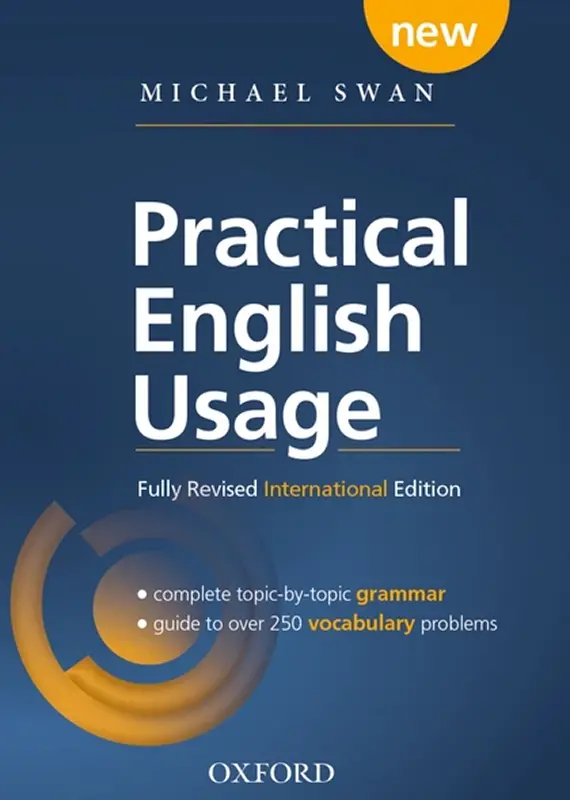
Practical English Usage by Michael Swan
Description:
Oxford refers to it as a book that addresses the grammar and lexical problems both students and their tutors have concerning the English language, using a corpus-informed approach, while the fourth edition is divided into two sections, namely grammar and lexical.
This practical approach is precisely what makes this grammar guide so useful to many teachers. It is perfect for the highly skilled who often write essays or ask such queries as, “Does this structure sound incorrect, or simply less natural?” or, “How do these almost synonyms differ from one another?”
Pros: exceptional as a reference book, perfect for advanced self-correction
Cons: not a step-by-step workbook
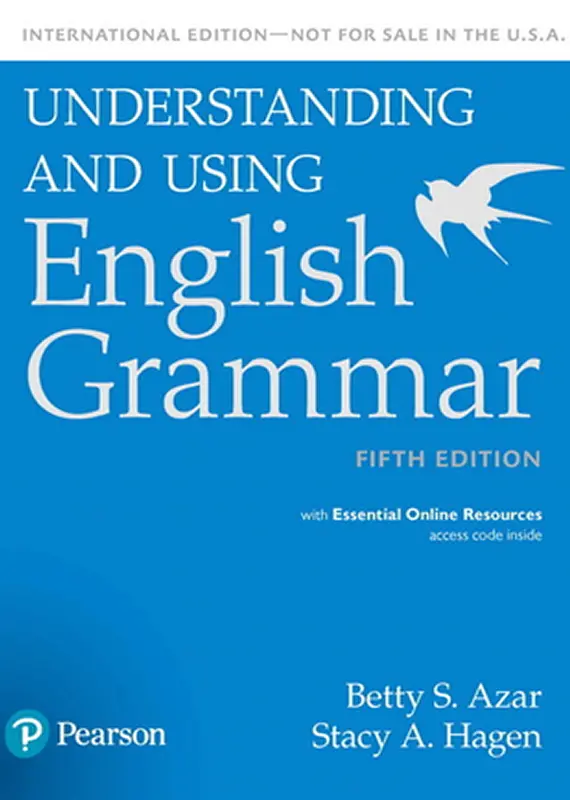
Understanding and Using English Grammar by Betty Azar
Description:
This is the most course-like advanced option of all the options in this list. Both Pearson and Google Books highlight the effectiveness of its well-proven methods, improved grammar tables, chapter pre-tests, and grammar usage exercises.
The difference is that the fifth edition draws attention to the distinctions between written and spoken English, in addition to the newly added chapter dealing with articles which cause difficulties even for advanced learners.
Pros: comprehensive and systematic, strong for academic and tutor-led study
Cons: heavier than typical self-study workbooks
How to choose the right grammar book for you
Selecting good English grammar books is no easy feat, but it is made easier by a straightforward checklist, especially when you’re on the hunt for a self-study English grammar book. To ensure that you select a reliable source of information, let’s turn to the checklist below:

✓Does it include “Answer Keys”?
For studying on your own, it is essential to be able to check your answers immediately, check progress, and understand mistakes without a tutor.
✓More theory or more practice?
There are some books that are based on theory, while others are exercise-based. Newcomers can gain more from balanced books, whereas experienced readers might want those that are more practical.
✓Is the level right for you?
Using a source that is too easy leads to minimal progress, as you repeat familiar things, which can become boring and demotivating. However, struggling with a book for a higher level is not an option, so ensure to match the grammar book for measurable improvement.
If you would like to know your proficiency before choosing a book, you can complete a quick English level test.
Conclusion
The best English grammar books may not necessarily be those that cost much or those that are best-sellers. The choice will depend on the level of the learner, his/her objectives, and their learning vibe. While some students learn well using a self-study textbook, there are those who require a more comprehensive one for classroom instruction.
One piece of advice worth emphasizing above all else is that you select one textbook and stick with it until you have finished it. Steady practice with one suitable source will bring better outcomes than switching between many of them, since consistency is essential for fluency in English.
FAQ
For an office worker or busy student, the opportunity to open a smartphone and take one or two bite-sized lessons is a perfect option to keep the progress. But grammar books provide systematic, deep learning of grammar concepts.
Based on review and according to different levels, you can choose English Grammar in Use being a B1–B2 student, and Advanced Grammar in Use or Practical English for deeper engagement.
The choice depends on your goal since in terms of grammar, they will be mostly similar. So, if you need British English for IELTS or a UK context (like traveling or job), focus on this approach, and if you take on TOEFL or need US-focused learning, prefer American-based books.
Not really, as fluency requires a comprehensive approach, and it is preferable to use other sources. You can use books to build accuracy in grammar, but when it comes to speaking and real communication, it has to be combined with apps/podcasts, and content where you can actually hear pronunciation and speak.