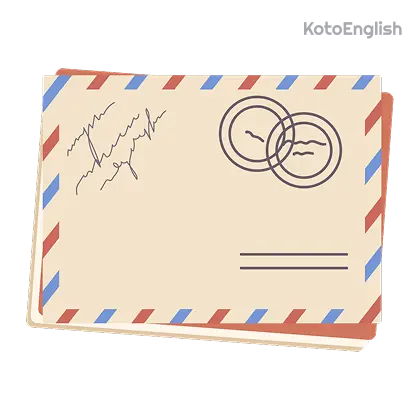
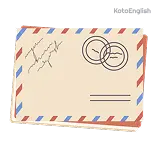
Postcard (noun) — a small card you send through the mail, usually with a picture on one side and space for a message and address on the other.
How to Pronounce “Postcard”?
 Audio (UK):

 Audio (US):
It’s two syllables: POST-card, with the first syllable louder and longer, the second one quick and soft.
Level up your English with Koto!
Examples: How to Use “Postcard” in a Sentence?
People don’t send postcards much anymore, maybe tourists do. However, you still can do it for fun to greet your friends and relatives. These instances will allow you to define “postcard” in different contexts:
What Are Synonyms fWhat Are Synonyms for the Word “Postcard”?or the Word “Diary”?
There aren’t really “postcard” synonyms, so you need to stick to this word. It will also be useful to get familiar with some connected terminology to describe a postcard.
Related nouns: greeting card picture card mail
Synonyms (contextual): none, it’s a specific noun
Common collocations: vintage postcard picture postcard postcard view
“Postcard” Word Formation and Description in Context
Some words just go together with this term perfectly, and you will hear them paired up constantly once you start noticing. It will make your understanding of “postcard” description better.
With adjectives: old postcard colorful postcard picture postcard blank postcard
With verbs: send a postcard write a postcard receive a postcard collect postcards
With nouns (noun + noun): postcard collection postcard size
Idioms and Phrases with “Postcard”
There are a couple of phrases people use that are specific and should be explained separately because the meaning of “postcard” differs from the one above.
-
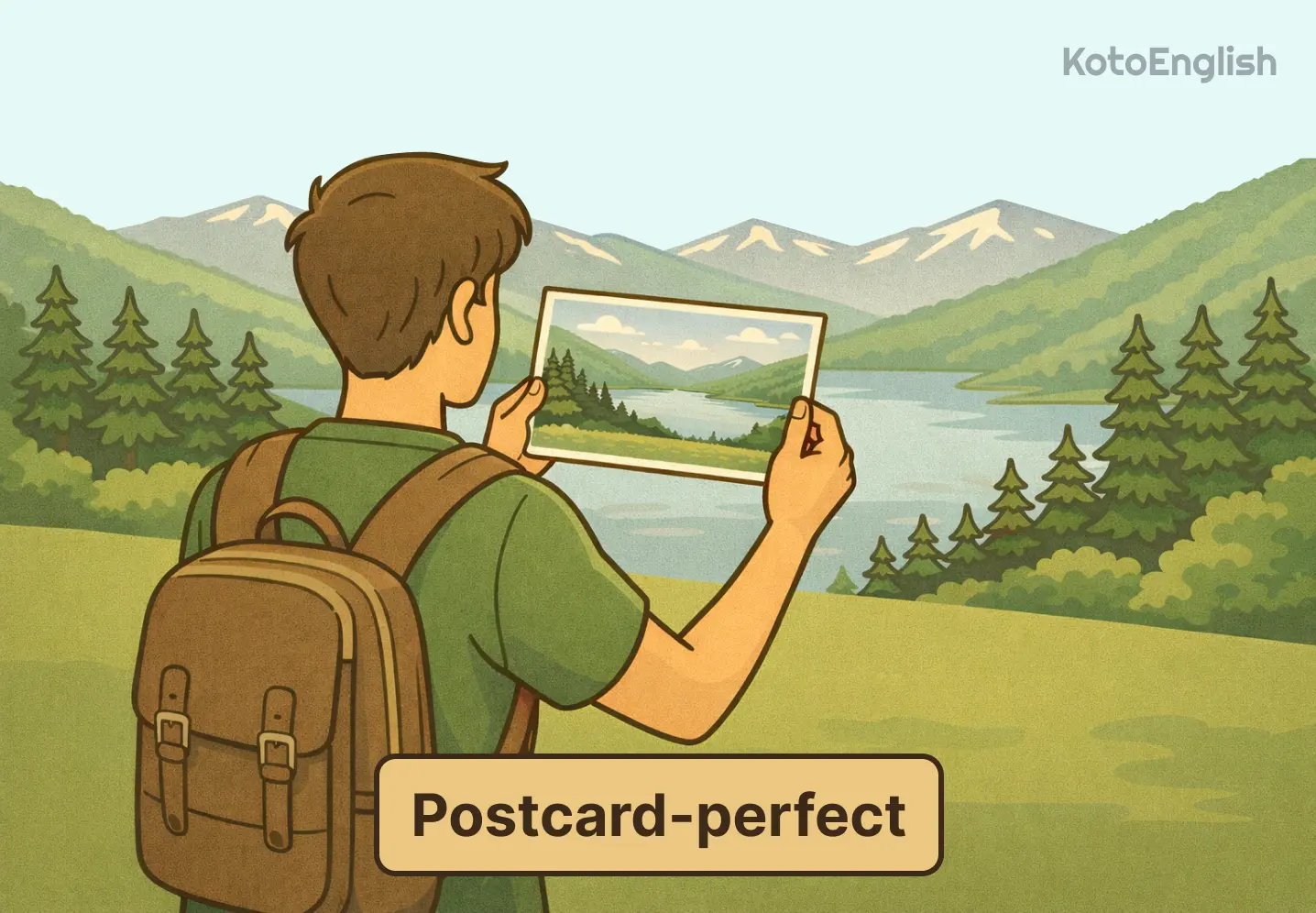
Postcard-perfect — when a place looks so pretty it doesn’t seem real, like someone photoshopped it.
That Swiss village waspostcard-perfect . I’ll show you the photo. He proposed to me there.
-
Drop someone a postcard — sending a quick note while you’re traveling.
I’lldrop you a postcard when I get to Amsterdam. But there won’t be many words. I’m not a good writer.
Test Your Knowledge of Postcard Meaning: Quiz Time!
Let’s see what you know about what a “postcard” means. Complete these exercises and check your answers.
Enjoy personalized learning!
“Postcard” Word in Other Languages
Here’s how you spell “postcard” in other European languages. By knowing this word, you won’t need to worry about whether a cashier knows English or not.
| Language | Word for “Postcard” |
|---|---|
 Spanish
 |
Postal |
 French
 |
Carte postale |
 German
 |
Postkarte |
Did You Know It? Fun Facts About “Postcard”
Postcards have an odd history, and most people have no clue about any of this. Let’s go over these facts to understand how people communicated before the Internet.
-
In 1869 an Austrian guy invented them.
Emanuel Herrmann found letters too inconvenient. He presented this easier card option to Austria’s postal service. It was tested and – Boom! – millions went out in no time. Other nations were watching the event and immediately imitated it. -
The first postcards were open to everybody.
No privacy whatsoever. Postal workers, sorters, and everyone else who handled them could see what you wrote. People, however, still used them for private matters. Love letters, complaints, gossip, everything. -
The act of collecting postcards is termed deltiology.
There are many people who consider the collection of vintage postcards as a serious hobby. The prices of rare ones are exorbitant. Michael Shefers from Germany has a collection of postcards that includes more than 15000 cards. -
Cities used to have mail delivered more than once a day.
In cities such as London or New York, you could post something in the morning and it would reach its destination the same day. A series of deliveries occurred daily. Now it takes a long time, sometimes days or weeks.
Famous Quotes About “Postcard”
Postcards rarely appear in quotes in the works of modern writers; however, there were many mentions of them in the stories of writers of the past.
Explanation: He saw postcards as sad things basically. You only send them when you’re far away from someone. There’s something lonely about writing messages to people you can’t actually see, from places they’re not at.
— The Beatles
Explanation: McCartney composed this during the period when postcards were the main means for communicating with one another. There were no cell phones yet, no instant messages whatsoever. Generally, people had to wait for the mail to arrive.
— Nick Bantock
Explanation: Bantock made those Griffin and Sabine books that are all postcards and letters. He prefers physical mail because you can hold what someone else held, see their actual handwriting, feel the paper.