


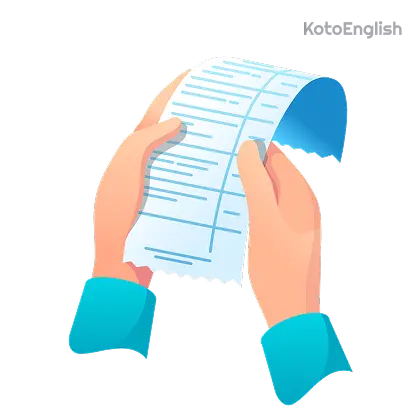

Bill (noun) — a document on which the total amount of money that is to be paid for the purchase of goods or services is indicated. Bills are mostly used at retail outlets, dining places, hospitals or after certain services have been rendered.
How to Pronounce “Bill”?
 Audio (UK):

 Audio (US):
The correct pronunciation of bill is the same as in “billion”, but with a short and quick i sound.
Level up your English with Koto!
Examples: How to Use “Bill” in a Sentence
Some examples of “bill” in English in sentences are as follows:
What Are Synonyms for the Word “Bill”?
Knowing synonyms for “bill” can help one in speaking about payments, invoices, and financial documents.
Related nouns: invoice statement receipt
Synonyms (contextual): account tab note
Common collocations: electricity bill restaurant bill phone bill
“Bill” Word Formation and Description in Context
Here are some of the most common words with “bill” in them used in spoken and written English:
With adjectives: final bill unpaid bill monthly bill
With verbs: pay a bill check a bill receive a bill
With nouns (noun + noun): utility bill hospital bill bill payment
Idioms and Phrases with “Bill”
The term “bill” does not come with a lot of idioms in the sense of metaphoric expressions. The majority of its applications are literal and pertain to money and invoices. Nevertheless, there are a couple of frequently used figurative expressions that you can count on:
-
Foot the bill — to pay for something, often unexpectedly or for others.
I had tofoot the bill for dinner when my friends forgot their wallets. -
Pay the bill — straightforward, but sometimes used figuratively for taking responsibility.
Someone has topay the bill for these mistakes. -
Pick up the bill — to pay the cost of something for others.
Hepicked up the bill at the café because it was his treat. -
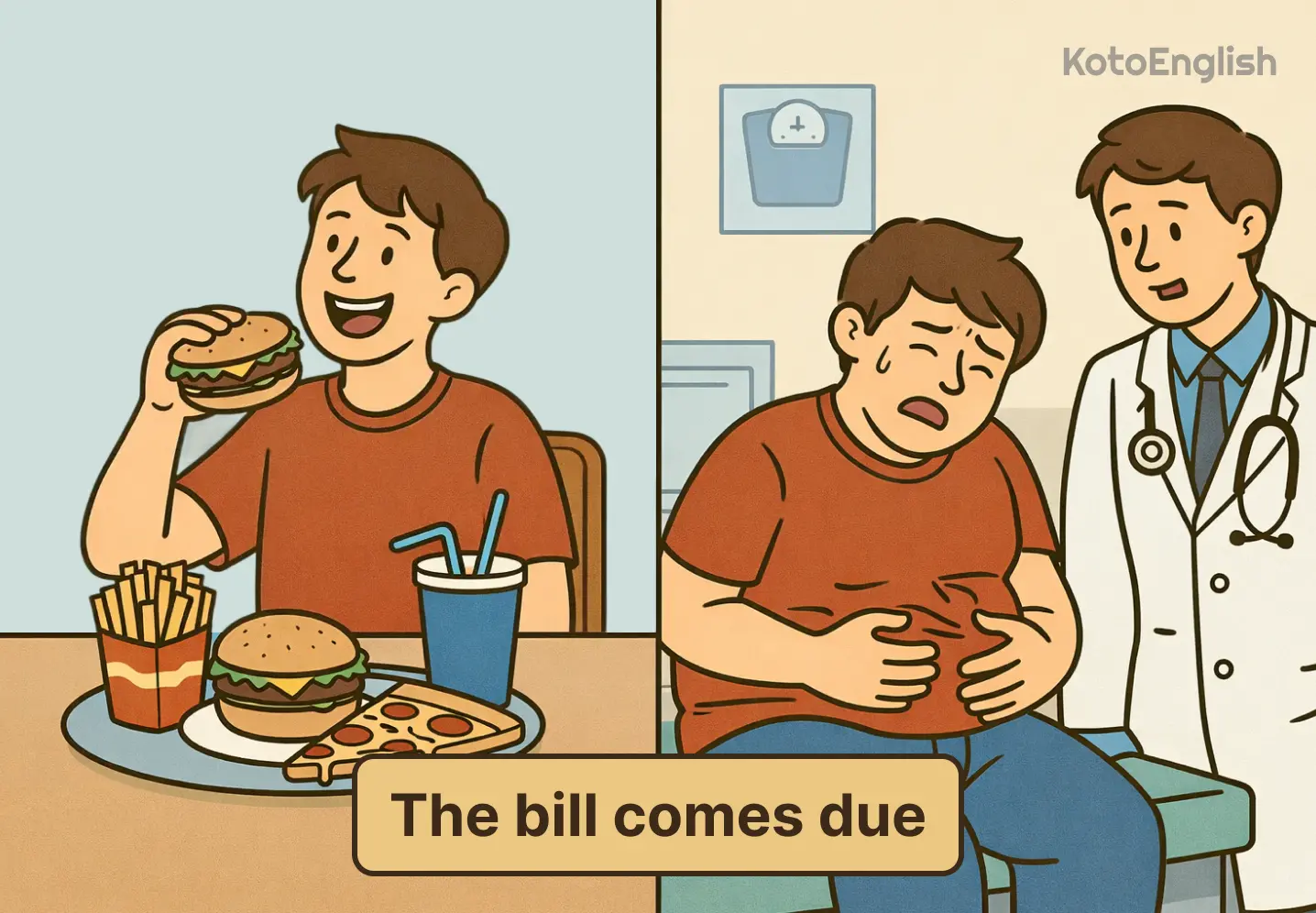
The bill comes due — figurative; consequences must be faced.
Years of overspending meanthe bill comes due sooner or later.
Test Your Knowledge of “Bill” Meaning
Practice with these questions to see how well you understand the word bill and its common uses.
Enjoy personalized learning!
“Bill” Word in Other Languages
See how to say “bill” in three widely spoken European languages.
| Language | Word for “Bill” |
|---|---|
 Spanish
 |
Factura |
 French
 |
Facture |
 German
 |
Rechnung |
Did You Know It? Fun Facts About “Bill”
Bills are part and parcel of everyday life, their presence can be felt from restaurants to utility companies, and they hold an important role as they reveal precisely the amount owed to each of them and for what service or product.
-
The oldest bills uncovered so far are from the ancient civilization of Mesopotamia.
They can be thought of as ancient bills, which marked the transactions and debts recorded on clay tablets by merchants. People then were obliged to pay for goods and services. -
Some utility bills can enumerate a plethora of items.
Current electricity or water bills might consist of detailed documents containing; usage charges, taxes, service fees, and discounts that require one to be very careful in checking. -
Restaurant bills can sometimes surprise you with hidden fees.
In some cases, the price of tips, service, or added taxes is already included; therefore, it is very important to check the bill before paying it.
Famous Quotes Featuring “Bill” in English
The “bill” is highly frequent in conversations about debts, payments, and court matters. Such references show the way philosophers and writers think about the presence of bills in everyday life.
— James Lendall Basford
Explanation: The quote suggests that if a person always has trouble paying their bills then probably he/she is spending their energy and focus on the less important things in life. The quotation indirectly conveys the requirement of being financially wise.
— Steven Wright
Explanation: This funny saying indicates that you will receive your bills almost immediately, faster than the time it takes for sending the money off to pay them.
— Milton Friedman
Explanation: Metaphorically put, the term “bill” here is used by Friedman to stress that man has to pay for everything in life sooner or later.”