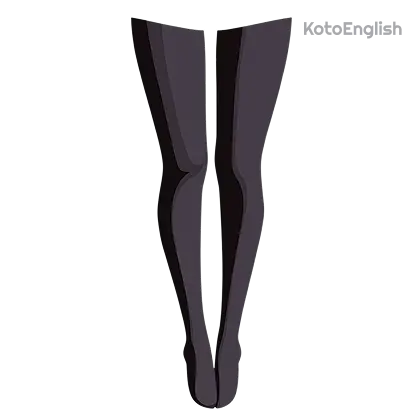

Tights (noun) — a piece of clothing made of thin, stretchy fabric that fits tightly over the legs and waist. Tights are usually worn by women or children under skirts, pants or dresses to keep warm or for fashion.
How to Pronounce “Tights”?
 Audio (UK):

 Audio (US):
Say t like in “tie,” then ights rhyming with “lights” or “nights.” Always use the plural form “tights.”
Level up your English with Koto!
Ways to Use “tights” in a Sentence
To define “tights,” take a look at how native speakers incorporate this word to describe their thoughts about clothing and getting dressed.
Synonyms for the Word “Tights”
Understanding alternatives to how to say “tights” will help you with the diversity of your vocabulary and distinguish between different types of legwear more accurately.
Related nouns: leggings stockings
Synonyms (contextual): pantyhose
Common collocations: black tights stretchy tights patterned tights
“Tights” Word Formation and Description in Context
Equip yourself with these practical word combinations to understand how collocations in English work. After taking a look at these examples, try to create something new.
With adjectives: thick tights warm tights ripped tights colourful tights
With verbs: wear tights put on tights tear tights buy tights
With nouns (noun + noun): tights color tights pattern winter tights dance tights
Idioms and Phrases with “Tights”
While “tights” in English don’t feature heavily in idioms, these clothing-related expressions will enhance your understanding of fashion and everyday language.
-
Thick woollen tights — warm, heavy tights made from wool, designed to keep the legs insulated and comfortable in cold weather.
She worethick woollen tights under her skirt to stay warm during the snowy morning. -
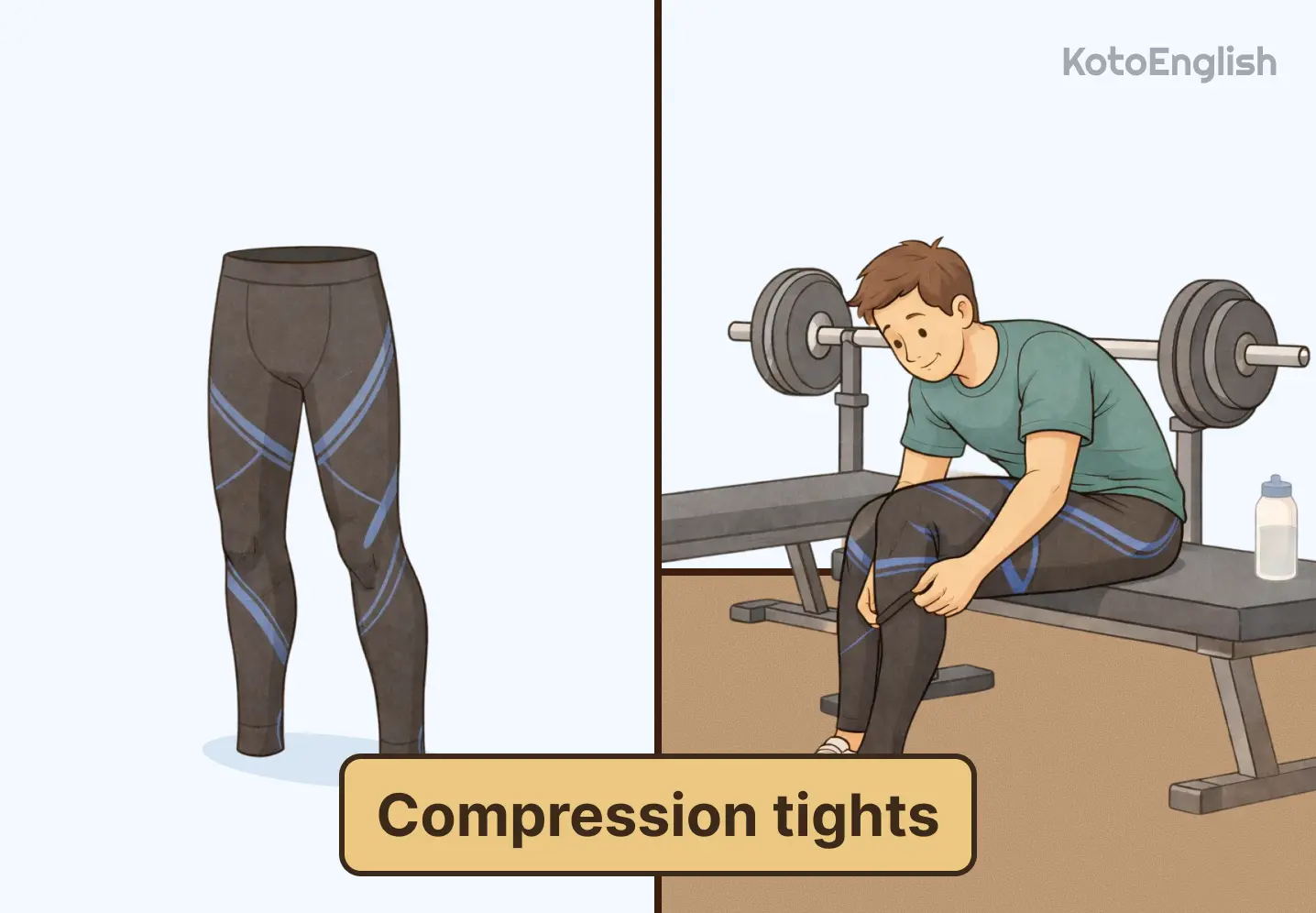
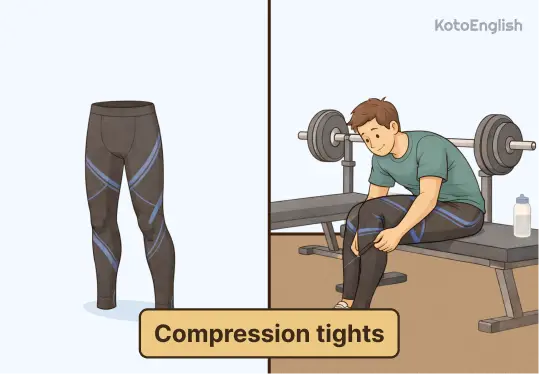
Compression tights — tight-fitting tights designed to apply gentle pressure to the legs, helping improve blood circulation and reduce muscle fatigue.
After her workout, Sarah changed intocompression tights to support her legs and recover faster.
-
Opaque tights — made from thick, non-transparent material that fully cover the legs and do not show the skin underneath.
Anna choseopaque tights to give her outfit a polished look and stay warm on a chilly day.
Test Your Knowledge of “Tights” Meaning: Quiz Time!
Assess your grasp of vocabulary, related expressions and phrases with “tights” through these practical exercises designed for learners.
Enjoy personalized learning!
“Tights” Word in Other Languages
Discover how to spell “tights” and pronounce this word correctly in other European languages such as German, French and Spanish.
| Language | Word for “Tights” |
|---|---|
 Spanish
 |
Medias |
 French
 |
Collants |
 German
 |
Strumpfhose |
Did You Know It? Fun Facts About “Tights”
“Tights” have evolved from practical undergarments to fashion statements, and these fascinating details reveal their surprising cultural journey.
-
Tights were originally men’s clothing.
During the Middle Ages and the Renaissance, tights known as “hose” were colorful and part of the daily dressing of men in Europe. Kings, princes, and ordinary men used to wear tights just to display their legs, which was an eye-catcher and a trend at that time. -
The miniskirt popularity boom made tights essential.
British fashion designer Mary Quant made the miniskirt trend in the 1960s and the tights turned out to be a must-have for women. The short skirts needed something underneath them for warmth and coverage, so tights became a fashion statement symbolizing rebellion and freedom. -
“Denier” measures tights thickness.
Tights with lower denier (15-40) are very thin and therefore, suitable only for warm weather, while those with higher denier (60-100+) are winter-friendly and thickly opaque. Every day tights are usually found in the range of 40-60 denier.
Quotes Featuring the Word “Tights”
Discover how different famous people refer to “tights” in their sayings, explaining their vision of everyday life and simple problems that are part of the routine of every person.
— Zooey Deschanel
Explanation: According to her, tights are usually made for a certain body type, which, in case of people with thin ankles, does not always fit. The statement emphasizes that clothes can sometimes appear to be an off-the-rack proposition even if they are used by others.
Explanation: The outfit along with the strong movement and the performance pressure turned the character into a tiring one for the actor. The statement shows that acting can sometimes be very much more exhausting than the audience perceives it.
— Sophie Ellis Bextor
Explanation: She is perceived by many as a glamorous and very stylish person; however, she considers herself very informal in her daily life. The “ladders in my tights” symbolize small, human flaws that make her more relatable to other people.