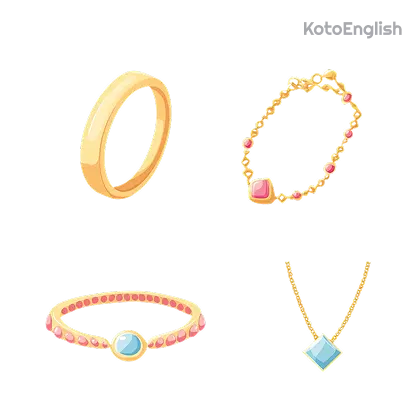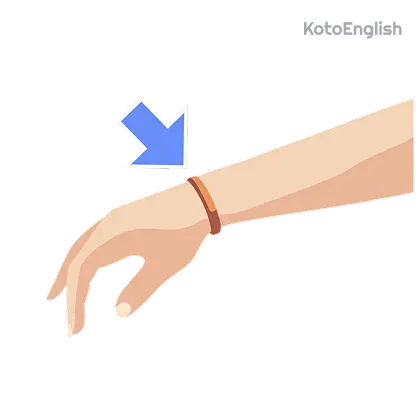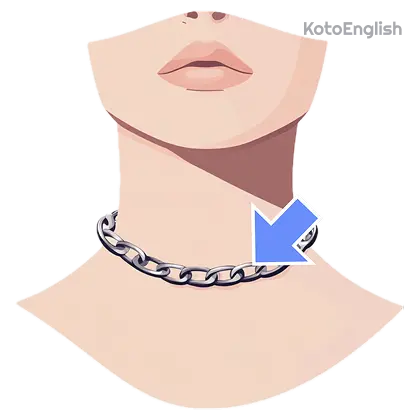
Chain (noun) — a piece of jewelry made of connected metal rings or links worn around the neck, wrist, or ankle as a fashion accessory, typically made from gold, silver, or other metals.
How to Pronounce “Chain”?
 Audio (UK):

 Audio (US):
Start with ch as in “chair,” then say ain like “rain” or “pain.” It rhymes with “train.”
Level up your English with Koto!
Ways to Use “Chain” in a Sentence
Define “chain” by looking at how people talk about chains in everyday situations involving fashion, jewelry shopping and personal style choices.
Synonyms for the Word “Chain”
While “chain” is specific, these related words will help you discuss jewelry and accessories with more variety and precision.
Related nouns: necklace jewelry accessory pendant
Synonyms (contextual): none it is a specific noun
Common collocations: gold chain silver chain chain necklace
“Chain” Word Formation and Description in Context
Master these combinations to learn how to say “chain” to talk about jewelry styles, materials and trends like a fashion-savvy native speaker would.
With adjectives: thin chain thick chain delicate chain chunky chain
With verbs: wear a chain buy a chain fix a chain polish a chain
With nouns (noun + noun): chain link chain style chain length chain clasp
Idioms and Phrases with “Chain”
Even though we are talking about this type of accessory, which is pretty straightforward at first, “chain” in English in idiomatic contexts has inspired expressions about connection, restriction and sequences that you’ll hear often.
-
Food chain — the natural system where organisms depend on each other for food; hierarchy in nature or society.
In the oceanfood chain , small fish eat plankton and bigger fish eat smaller fish. -
Ball and chain — (informal, often humorous) something that restricts your freedom.
He joked that his new job responsibilities were like aball and chain keeping him at the office. -
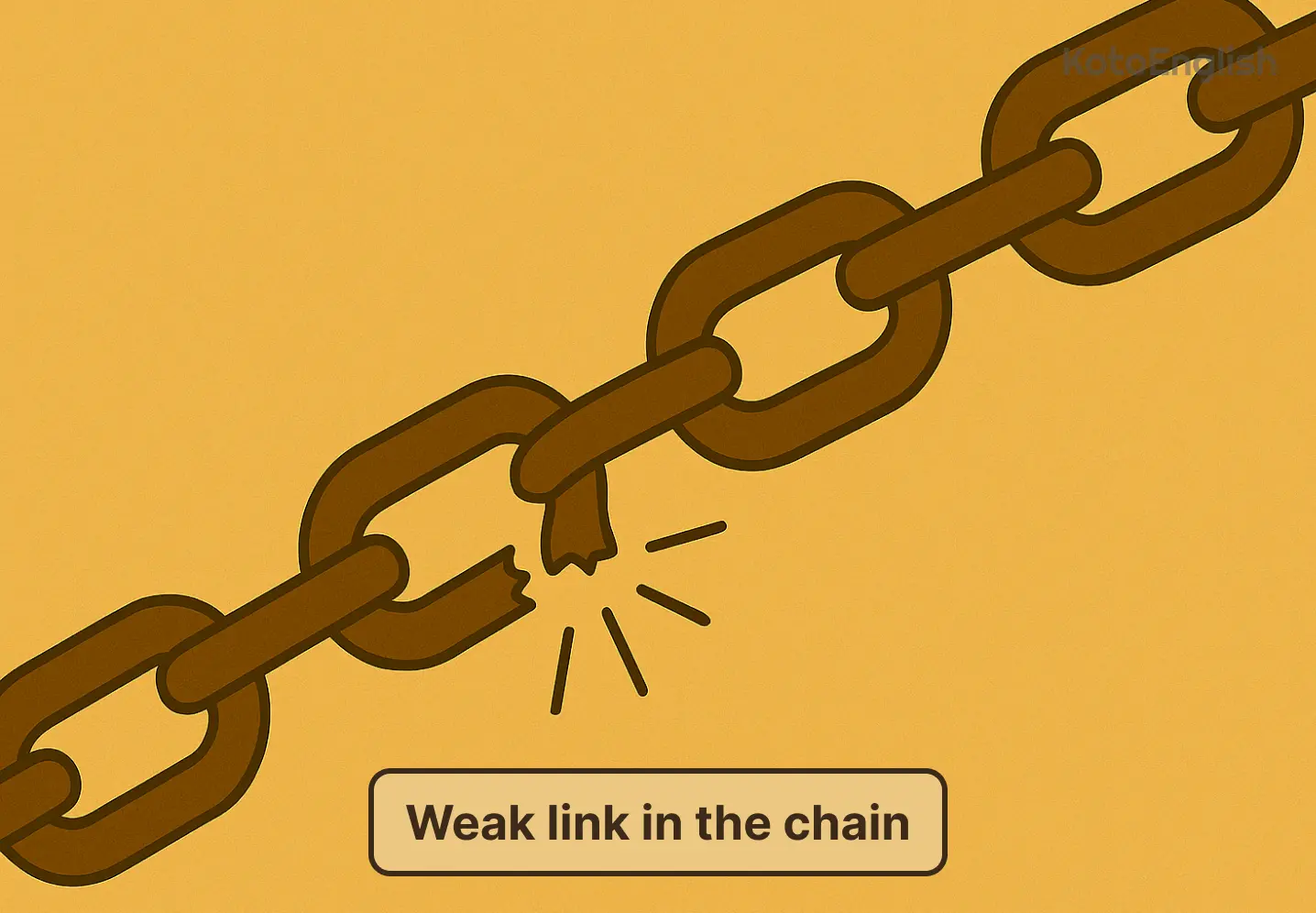
Weak link in the chain — the weakest part of a system that causes the whole thing to fail.
Our team’s defense was theweak link in the chain that cost us the championship.
-
Chain reaction — a series of events where each one causes the next, creating a domino effect.
One person laughing started achain reaction and soon the whole class was laughing.
Test Your Knowledge of “Chain” Meaning: Quiz Time!
Put your understanding to the test with these questions that assess both the literal and figurative meanings of this accessory item.
Enjoy personalized learning!
“Chain” Word in Other Languages
Enhance your multilingual fashion vocabulary by learning how to spell “chain” in these three languages.
| Language | Word for “Chain” |
|---|---|
 Spanish
 |
Cadena |
 French
 |
Chaîne |
 German
 |
Kette |
Did You Know It? Fun Facts About “Chain”
“Chain” jewelry has a rich history and surprising cultural significance that goes far beyond simple fashion statements.
-
Ancient Egyptians wore decorative chains to show their social status.
The Egyptians produced royal and richly decorated gold chains at around 2500 BCE, since they viewed gold as a material of the gods. A lot of the old chain-making methods are still applied by the jewellers of today. -
Chain styles have cultural meanings.
Cuban link chains, for instance, were recognized as a symbol of hip-hop culture, denoting success and opulence. In certain cultures, unique chain styles are handed over on occasions like graduations, birthdays, or religious ceremonies. -
Chain length matters for style.
A choker (14-16 inches), a princess (18 inches), a matinee (20-24 inches), an opera (28-36 inches) and a rope (over 36 inches). All of these different lengths create visual effects that are unique to each and they also complement different necklines and body types at the same time.
Quotes Featuring the Word “Chain”
Discover what cultural icons and thinkers have said about this item, both as literal jewelry and as powerful metaphors and phrases with “chain”.
Explanation: In order to be really free, you have to act in a way that at the same time secures and enhances the freedom of other people as well. You are not free if your actions are hurting or limiting others — freedom must be shared, respected and nurtured for everyone.
— Warren Buffett
Explanation: In order to warn about bad habits, well-known investor Mr. Warren Buffett turns to the analogy of the chain. Although it seems that harmful habits are like thin chains that are barely seen and felt at the beginning, they actually get more and more difficult to break.
— Rosa Luxemburg
Explanation: People who never ask themselves questions about their living conditions, who never seek to change the routine, or who are never ready to make a change in their lifestyle might not even be aware of how limited in choices or restricted they actually are.”