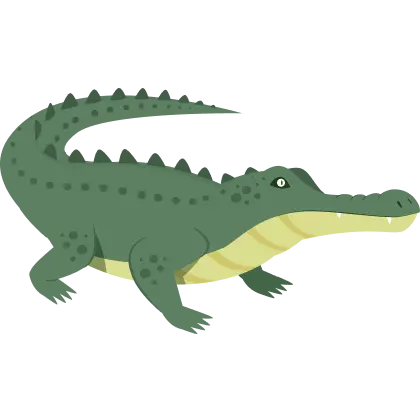
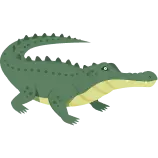
Crocodile (noun) — a large reptile living in the water of Africa, Asia, Australia, and the US. It has a long body and can swim very well.
How to Pronounce “Crocodile”?
 Audio (UK):

 Audio (US):
You need to break the word into three parts, so the first one is krɒk, like “rock,” then are uh and dail.
Level up your English with Koto!
Examples: How to Use “Crocodile” in a Sentence?
The “crocodile” description above is clear, but to learn it more, you need real-life examples, as this word is not one you can use in random situations.
What Are Synonyms for the Word “Crocodile”?
You know the meaning of “crocodile,” but using it in texts ten times is wild. Here, you will learn more terms to use instead of “crocodile” to make your saying more interesting.
Related nouns: alligator caimans reptile crocodilian
Synonyms (contextual): none, it is a specific noun
Common collocations: catch a crocodile fast crocodile a crocodile bites
“Crocodile” Word Formation and Description in Context
To understand “crocodile” in English, you need to see how this noun combines with other parts of speech to make whole phrases. Here are some of them:
With adjectives: hungry crocodile huge crocodile young crocodile
With verbs: crocodile swims crocodile bites
With nouns (noun + noun): crocodile roar crocodile size
Idioms and Phrases with “Crocodile”
Special sayings help you to learn what “crocodile” means in different contexts. Native speakers use them to add color to their speeches, and you can too.
-
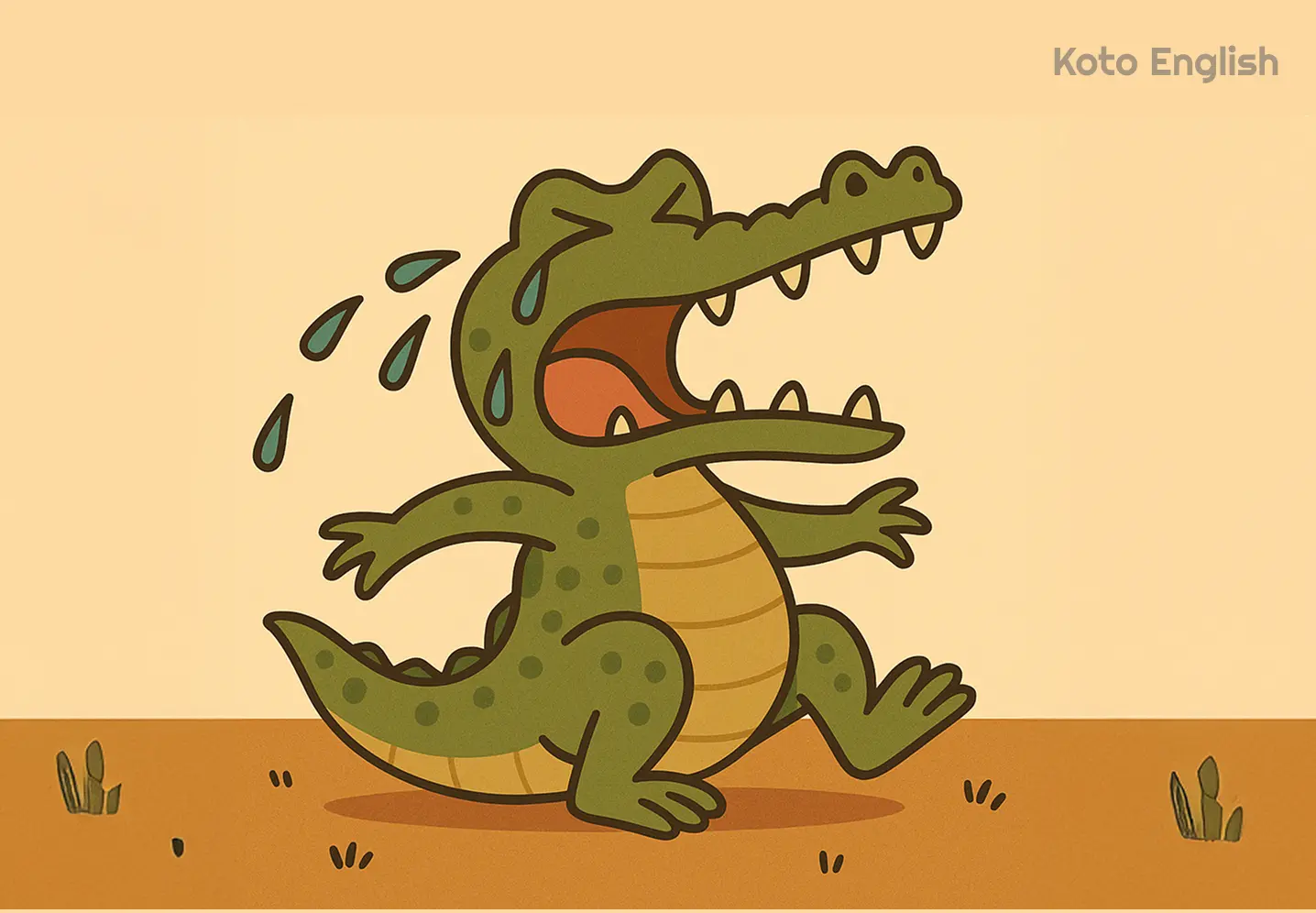
Crocodile tears — fake tears someone pushes to act like a victim and receive compassion.
We caught him in a lie, and he started to whine, but no one believed hiscrocodile tears .
-
In a while, crocodile — fun way of saying “goodbye” and “see you later.” It can be used in friendly conversations.
Thank you for your help!In a while, crocodile . See you. -
Swim with crocodiles — being in a dangerous situation, in mental and physical forms.
I like the film “Mission: Impossible.” The main character alwaysswims with crocodiles .
“Crocodile” Meaning Exercises: Test Your Knowledge
Let’s check how you got the term “crocodile” with our fun exercises! You can test what you remember about synonyms, idioms, and some facts.
Enjoy personalized learning!
“Crocodile” Word in Other Languages
Here, you will learn how to say “crocodile” in three world-famous languages and see how they are similar to the English variant you already know.
| Language | Word for “Crocodile” |
|---|---|
 Spanish
 |
Cocodrilo |
 French
 |
Crocodile |
 German
 |
Krokodil |
Did You Know It? Interesting Facts About Crocodiles
You know that crocodiles have large bodies, but what else? Here are some facts that will help you remember this word.
-
One of the largest crocodiles alive is Cassius.
An Australian saltwater crocodile has grown to 5.48m long, and it can live over 100 years and weigh over 1,000 kg. -
Crocodiles eat meat (a lot) and can add fruits to their diet.
Talking about those reptiles living in the wild, they consume over 2 kilograms of meat daily. However, they also like fruits due to their nutritional value. -
Crocodiles belong to the same group as dinosaurs.
They are not actually dinosaurs (sadly), but they are archosaurs, which allows us to think about them as reptiles that are close to those ancient animals.
Famous Quotes Featuring “Crocodile”
Check out how authors use “crocodile” in their books and cartoons. You will learn more about its meaning and variants to use in communication.
— Steve Irwin
Explanation: This quote tells us about the nature of people and animals, as the latter can not lie and their desires are clear.
— Gemma Merino
Explanation: This kid’s book tells a story about a crocodile who didn’t like to play in water or even swim, and he was upset about it. Turns out, he was a dragon, and dragons are not supposed to swim. It means people don’t need to try to fit where they are uncomfortable.
— Matshona Dhliwayo
Explanation: It is all about the risks, and you can understand it directly: until you are safe, don’t make fun of something that is dangerous.