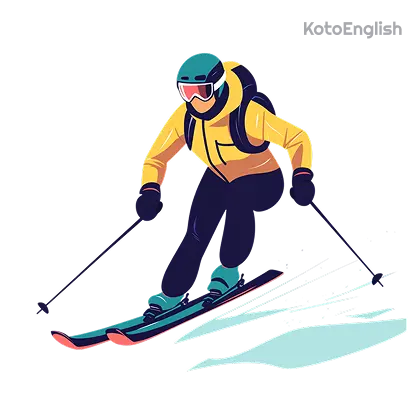
Skiing (noun) — a sport or activity of moving on snow with skis to enjoy, play a sport or even travel. It is a noun form of the verb to ski.
How to Pronounce “Skiing”?
 Audio (UK):

 Audio (US):
Extend the ski as skee, and attach a weak -ing. Be sure to pronounce both of the vowels, two syllables: ski-ing, not sking.
Level up your English with Koto!
Usage of “Skiing” in a Sentence
The definition of “skiing” will become clear to you after reading the following real-life examples:
“Skiing” Word Formation and Description in Context
You will make a “skiing” description rich using these collocations:
With adjectives: alpine skiing downhill skiing freestyle skiing
With verbs: go skiing enjoy skiing try skiing teach skiing
With nouns (noun + noun): skiing instructor skiing equipment skiing competition
Idioms and Popular Phrases with “Skiing”
“Skiing” in phrases and expressions often presupposes difficulties, balance, appropriating things, yet sometimes it is applied in the figurative sense of speed or effortlessness:
-
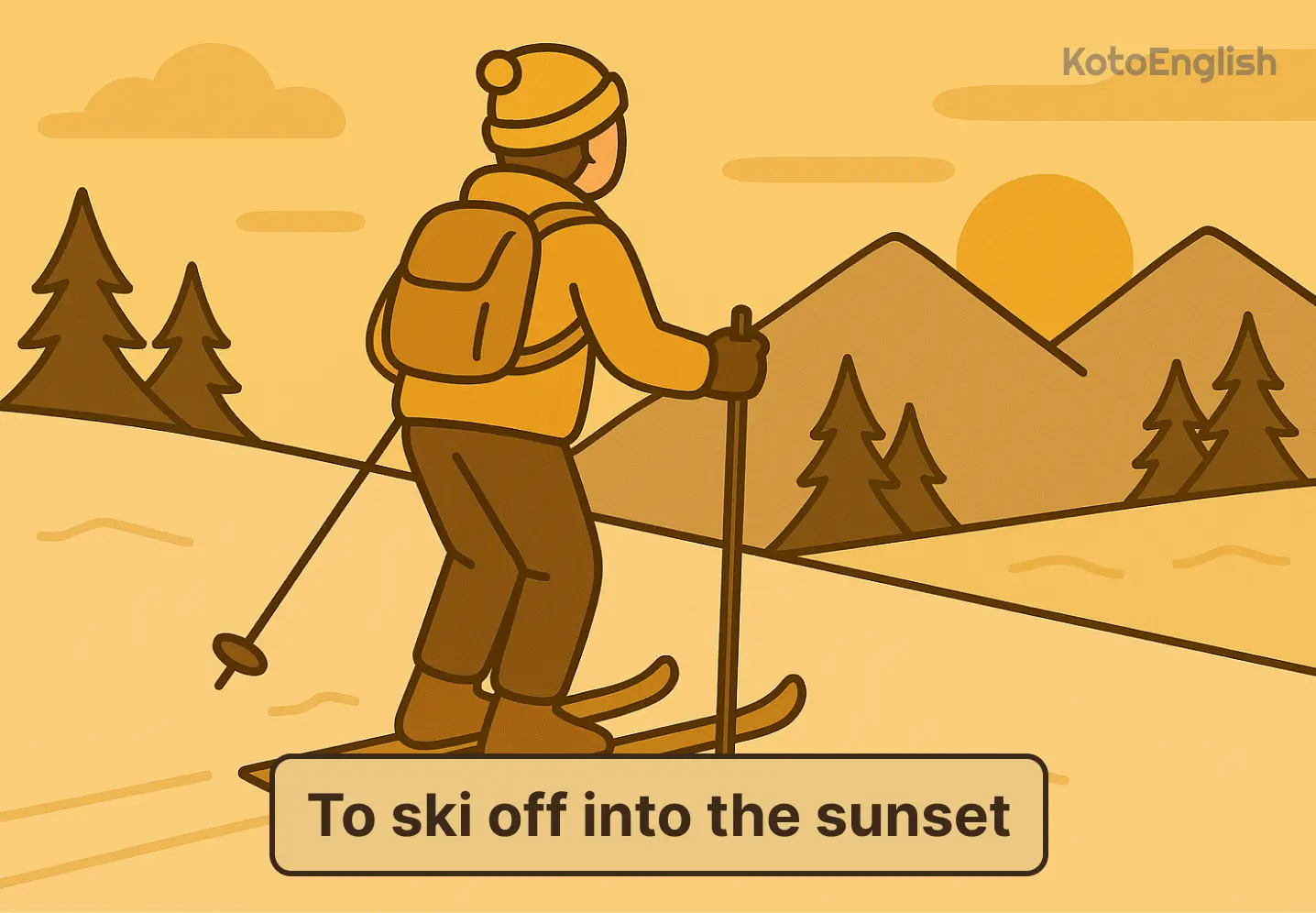
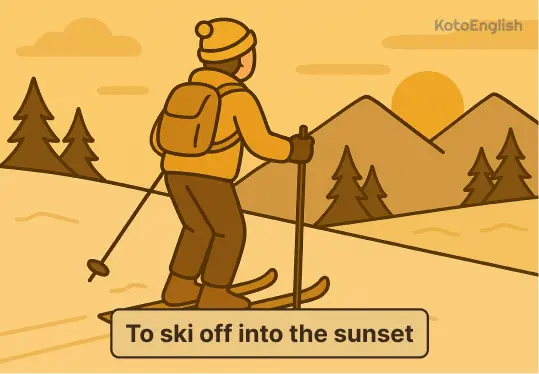
To ski off into the sunset is to leave something behind happily or to depart peacefully.
After retiring, he packed his bags andskied off into the sunset .
-
Cross-country skiing can also be figuratively used to mean gradual perseverance by going over difficulties.
Finishing that long project felt likecross-country skiing — slow, exhausting, but rewarding in the end. -
Doorstep skiing, at times, is used jokingly to mean easy access to anything that is delightful or luxurious.
Living by the beach feels likedoorstep skiing for surfers — you just step outside and dive into what you love. -
To hit the slopes means to go skiing, usually used in a cheerful or informal way.
Grab your gear — it’s time tohit the slopes !
Skiing Challenge: How Well Do You Understand the Word?
Ready for a fun “skiing” quiz? You should brush up on idioms, collocations and all types of common expressions before you begin.
Enjoy personalized learning!
“Skiing” Across Languages: Spellings and Sounds
Want to see how to say “skiing” in other countries? Check the table and repeat each pronunciation of each word.
| Language | Word for “Skiing” |
|---|---|
 Spanish
 |
Esquí |
 French
 |
Ski |
 German
 |
Skifahren |
Everything You Need to Know About Skiing – Fun Facts Edition
How fast can skiers go? When did skiing become part of the Olympics? Has skiing always been a sport, or did it start as transportation? Let’s check the answers.
-
The speed of the skiers is unbelievable.
In downhill skiing, professional skiers have reached about 150 km/h (approximately 93 mph) on steep routes. In a city, that is the speed at which most cars travel. -
The history of skiing in the Olympics is long.
The introduction of skiing in the Winter Olympics took place in 1924. At first, the only competition was open to men, but in 1952, women were also permitted to participate. In the modern Olympics, alpine, cross-country, freestyle, and ski jumping events are popular. -
Skiing was originally a means of transport.
Before it became a sport, people in snowy areas used skis to move over snowy surfaces and hunt during cold seasons. -
Skiing is enjoyed worldwide.
Every year, millions of tourists visit the slopes. In some countries, practically all children learn to ski at a young age. Although not everyone has experienced it, skiing is becoming more popular than many other outdoor activities.
Memorable Thoughts on Skiing
Few activities capture freedom as vividly as skiing. Let’s see how those who love the mountains describe the rush, beauty, and magic of this sport.
Explanation: A bit of humor never hurts. Every skier knows that joy and mishaps go hand in hand. Falling, laughing, and trying again — that’s part of the thrill.
— Cynthia Hand
Explanation: The speaker jokingly gives someone the green light to dive into exciting and even risky adventures. Mentioning activities like skiing and rock climbing, they say: go all in, have fun, and don’t hold back!
— Kelley Armstrong
Explanation: The conversation plays with cultural stereotypes and misconceptions. The boy’s careless comment shows how people mix identities when talking, and the quick correction creates a comic effect through timing and irony.