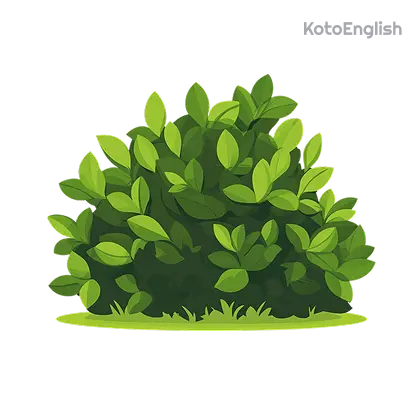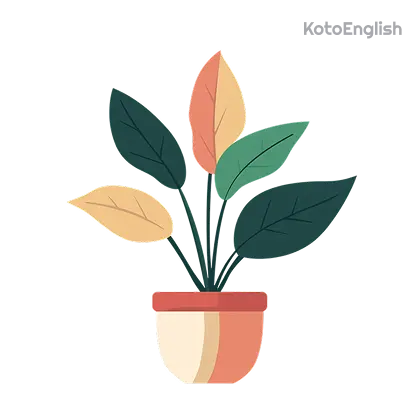
Plant (noun) — a living thing that grows in or on the soil and has leaves, stems, and roots most of the time. Plants may be of different types like flowers, trees, vegetables, or even herbs.
How to Pronounce “Plant”?
 Audio (UK):

 Audio (US):
The first vowel is short /æ/, like in “cat.” The final /nt/ is pronounced clearly, with a nasal n and released t.
Level up your English with Koto!
Examples: How to Use “Plant” in a Sentence
You may grasp the definition of “plant” clearer through examples taken from everyday conversations.
What Are Synonyms for the Word “Plant”?
The exact equivalents for “plant” are very few, but the words that are related to it indicate the various types or categories that plants belong to.
Related nouns: flower tree bush herb plant
Synonyms (contextual): none, it is a specific noun
Common word combinations: house plant garden plant indoor plant potted plant
“Plant” Word Formation and Description in Context
The description of “plant” may be altered based on the context in which it is used.
With adjectives: small plant tall plant flowering plant medicinal plant
With verbs: water the plant grow a plant plant seeds
With nouns (noun + noun): plant pot plant care plant leaves plant roots plant garden
Idioms and Phrases with “Plant”
What does “plant” mean in everyday language besides a living organism? It can represent an idea or action.
-
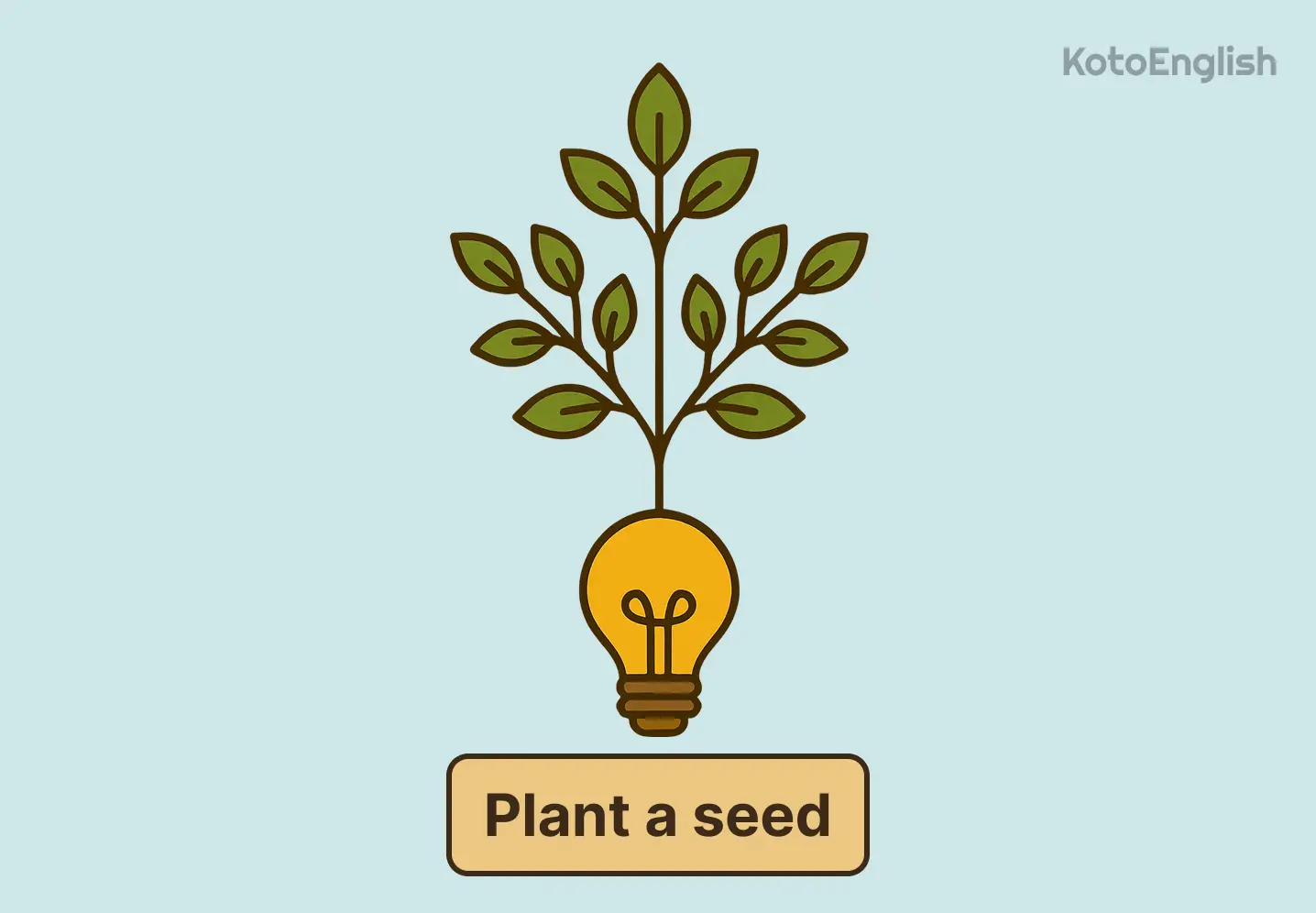
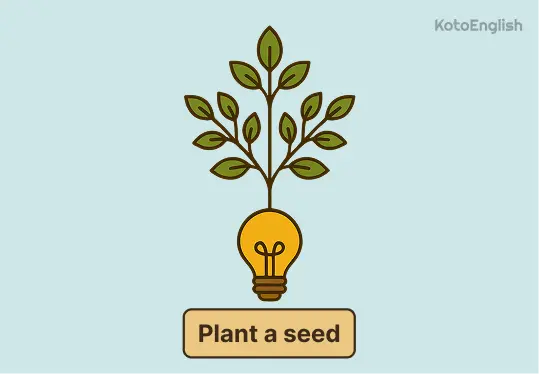
Plant a seed — to suggest an idea or start something that could grow later.
Sheplanted a seed about starting a new project, and now everyone is talking about it.
-
Plant a bomb / plant evidence — to secretly put something somewhere.
The police found out someoneplanted evidence at the scene. -
Plant your flag — to claim something or show ownership.
The companyplanted its flag in the new market last year.
Test Your Knowledge of “Plant” Meaning
Take a few minutes to complete this exercise and practice how to define a “plant” and use it correctly.
Enjoy personalized learning!
“Plant” Word in Other Languages
See how “plant” is said in different European languages and notice how it compares to English.
| Language | Word for “Plant” |
|---|---|
 Spanish
 |
Planta |
 French
 |
Plante |
 German
 |
Pflanze |
Did You Know It? Fun Facts About “Plants”
Although the dictionary definition of “plant” explains it as a living organism, plants can amaze us in ways that go far beyond this simple description, showing unusual growth, longevity, and even movement.
-
The oldest known plant is more than 400 million years old.
Fossils of primitive terrestrial plants indicate that plants were present on Earth long before the dinosaurs came into existence. These ancient plants contributed to the formation of the planet’s atmosphere. -
Extreme conditions are no problem for some plants.
The Welwitschia plant is a desert survivor in the Namib Desert, and it is also very long-lived. It can survive over 1,000 years and nearly no water in one of the driest places on Earth, which is practically its habitat. -
The tallest plant on earth is a tree that is more than 115 meters high.
The California coast redwood Hyperion tree is taller than a 35-story structure. It is thought to be more than 700 years old. -
Some plants can actually move more quickly than anticipated.
The Venus flytrap has a closing time of less than one second for its snap and therefore catches unsuspecting insects, which means that plants are not always as slow as we think.
Famous Quotes About “Plants”
Writers and thinkers often use the term “plant” to express life lessons and growth. Some of the most inspiring quotes come from those who celebrate nature and the beauty of the living world.
— Robert Louis Stevenson
Explanation: It means success should be measured by efforts and growth over time, not just immediate results.
— Christine Caine
Explanation: This makes use of “plant” as a metaphor — difficult times may really be a new beginning for growth or a change to come.
— Jonathan Haidt
Explanation: Hard times might be considered as the beginning of new growth or change, just as love and purpose are considered by people as the basic requirements to grow and thrive.