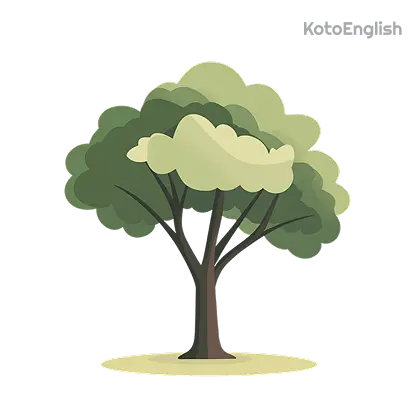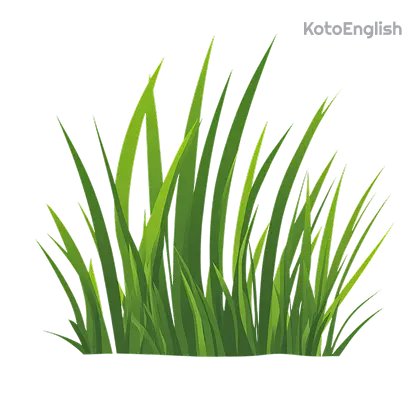

Leaf (noun) — the flat, green part of a plant or tree that grows from a stem or branch. Leaves help plants make nutrients for themselves from sunlight and give fresh air to the world.
How to Pronounce “Leaf”?
 Audio (UK):

 Audio (US):
Say leef, it rhymes with “beef.”
Level up your English with Koto!
Examples: How to Use “Leaf” in a Sentence
Watch how native speakers naturally include this word in their everyday conversations about nature, seasons, and the environment to learn more about the definition of “leaf”.
What Are Synonyms for the Word “Leaf”?
Although “leaf” is straightforward, exploring related vocabulary will help you describe nature more vividly in your writing and speaking.
Related nouns: vegetation branch plant tree flower
Synonyms (contextual): none, it is a specific noun
Common collocations: dry leaf autumn leaf big leaf
“Leaf” Word Formation and Description in Context
Build your nature vocabulary by learning a “leaf” in English and how it combines with other words to create rich, descriptive phrases about the natural world.
With adjectives: green leaf golden leaf crispy leaf delicate leaf
With verbs: pick a leaf collect leaves catch leaves blow leaves
With nouns (noun + noun): leaf pile leaf pattern leaf shape tea leaf
Idioms and Phrases with “Leaf”
Look at what “leaf” means in idiomatic contexts. Add these natural expressions to your English and sound more fluent when discussing change, beginnings and behavior.
-
Turn over a new leaf — to change your behavior and become a better person; to make a fresh start.
After failing his exams, Michael decided toturn over a new leaf and study harder. -
Take a leaf out of someone’s book — to copy someone’s behavior or do something the way they do it because they’re successful.
You shouldn’ttake a leaf out of Sarah’s book on the test and come up with your own answers. -
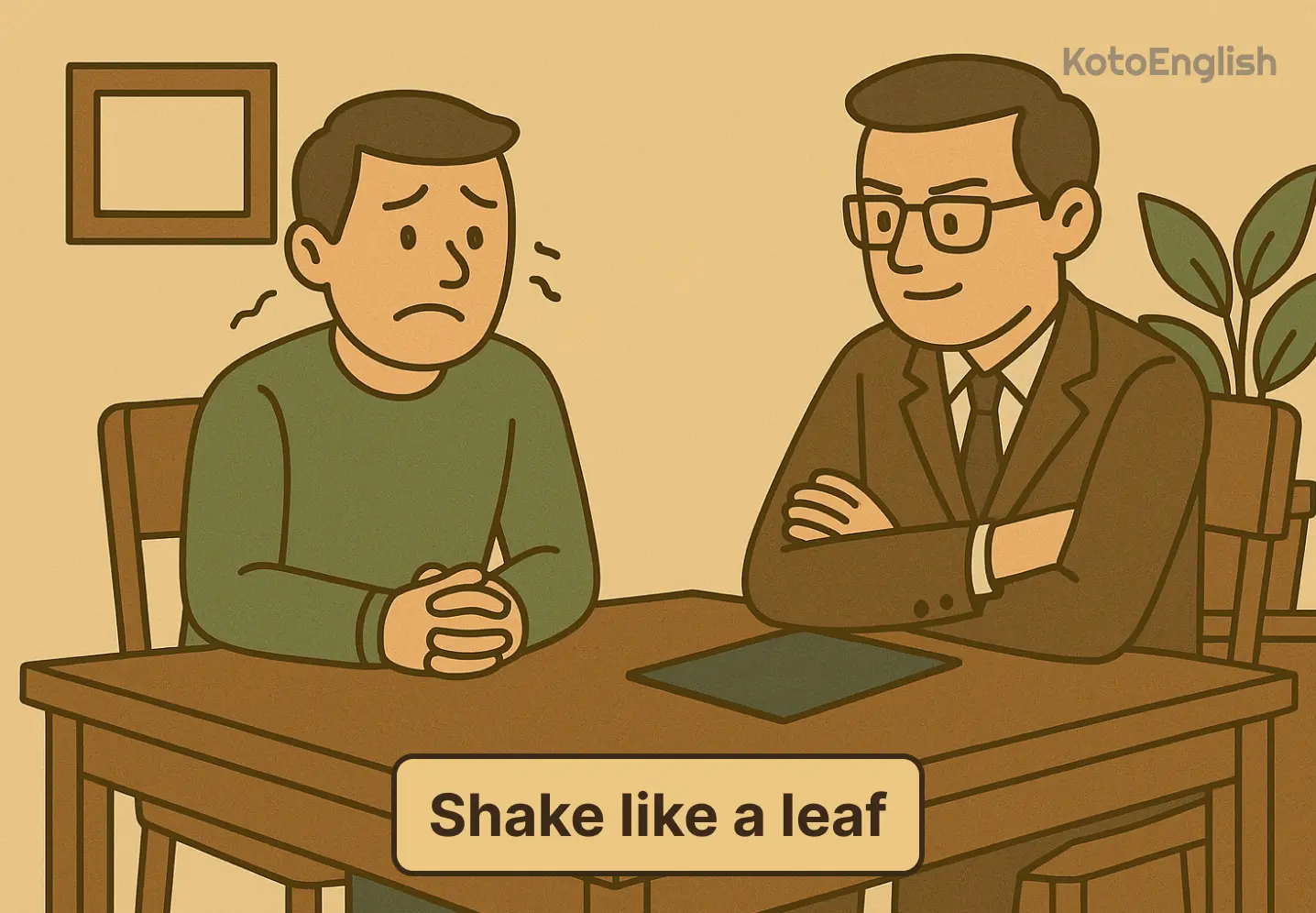
Shake like a leaf — to tremble with fear, cold, or nervousness.
Before my presentation, I wasshaking like a leaf because I was way too nervous.

-
Leaf through — to turn pages quickly while looking at something casually; to browse.
Ileafed through the magazine while waiting for my appointment.
Test Your Knowledge of “Leaf” Meaning
Put your learning into practice to define “leaf” with these interactive exercises designed to reinforce your understanding of this word and its usage.
Enjoy personalized learning!
“Leaf” Word in Other Languages
Discover how different cultures name this essential part of nature and practice your multilingual vocabulary skills.
| Language | Word for “Leaf” |
|---|---|
 Spanish
 |
Hoja |
 French
 |
Feuille |
 German
 |
Blatt |
Did You Know It? Fun Facts About “Jeans”
The “leaf” is more fascinating than it appears. Dive into these incredible facts about nature’s solar panels and their surprising abilities.
-
The world’s largest leaf.
The Raffia palm tree is the source of the world’s largest leaves, some growing up to 25 meters (82 feet) long and 3 meters (10 feet) wide. These enormous leaves are larger than many trees and are commonly used to make durable rooftops and baskets. -
Leaves influenced human inventions.
The structure of leaves inspired scientists to develop solar panels. By studying how leaves capture sunlight and convert it into energy through photosynthesis, researchers aim to improve clean energy technologies for the future. -
One tree can give away oxygen for two people.
A fully grown, mature tree can produce enough oxygen in one year to support two people. By absorbing carbon dioxide and releasing oxygen through their leaves, trees play a vital role in sustaining life and fighting climate change. -
Autumn leaves do not change color — they reveal it.
In spring and summer, green chlorophyll masks yellow and orange pigments. As days grow shorter and colder in autumn, chlorophyll breaks down, revealing the colors that were present all along.
Famous Quotes About “Leaf”
Learn how poets, writers, and thinkers have used leaves as powerful symbols for life, change and connection to nature.
— Albert Schweitzer
Explanation: Schweitzer states that to be truly human, you must show great concern for your surroundings, even if the problems are not of your making and the triumphs are not of your sharing.
— Emily Brontë
Explanation: Brontë expresses her delight in nature, particularly in the soft sway of autumn leaves falling down. The leaf turns out to be a tiny message of joy and indicates that you can spot beauty and even tranquility in uncomplicated, peaceful moments.
— Socrates
Explanation: Philosofer visualizes human existence as a dewdrop lying on a leaf — small, weak, and ephemeral. He proposes that life is something fleeting and fragile, thus teaching us to appreciate our time and to live consciously and with intention.