

Lake (noun) — a large area of water surrounded by land from all sides, usually bigger and deeper than a pond. It can be natural or made by people and it often collects water from rivers or rain. Lakes are common places for swimming, fishing and enjoying nature.
How to Pronounce “Lake”?
 Audio (UK):

 Audio (US):
Say lei + k, it rhymes with “make” and “cake.” The vowel sound is long, like saying the letter a.
Level up your English with Koto!
Ways to Use “Lake” in a Sentence
Define “lake” through the common use of this word in sentences, where the speaker is sharing different details about certain things.
Synonyms for the Word “Lake”
Understanding the different ways to refer to a “lake” can help expand your vocabulary and improve your writing or speaking.
Related nouns: pond river ocean sea reservoir
Synonyms (contextual): none, it is a specific noun
Common collocations: freshwater lake small lake artificial lake
“Lake” Word Formation and Description in Context
Learn how to say “lake” combined with different parts of speech such as nouns, verbs and adjectives, to create meaningful collocations and sentences.
With adjectives: deep lake calm lake frozen lake crystal-clear lake
With verbs: swim in a lake cross a lake look at the lake fish in a lake
With nouns (noun + noun): lake water lake house lake shore lake view
Idioms and Phrases with “Lake”
Discover more about the “lake” meaning that is not direct but more idiomatic. This will make your written and spoken English more interesting and natural.
-
Go jump in a lake — an impolite way to tell someone to go away because they are annoying you.
When he asked me for money again, I told him togo jump in a lake . -
Mountain lake — a lake located in a mountainous area, often surrounded by nature and inner peace.
We spent our vacation at amountain lake , enjoying the fresh air and quiet surroundings. -
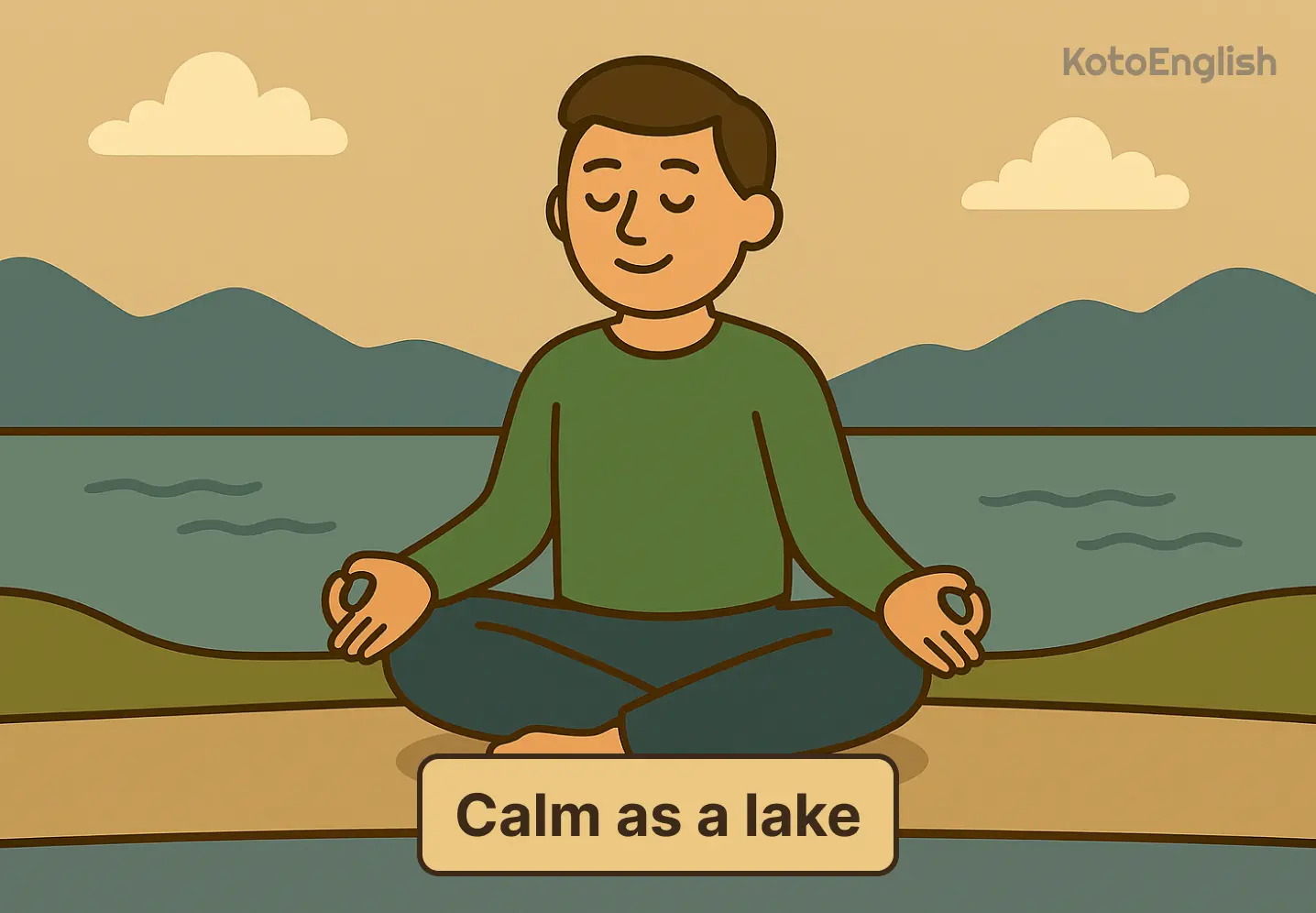
Calm as a lake — used to describe someone or something that is very calm, peaceful, or untroubled, similar to the still surface of a lake.
Despite the chaos in the office, Jane remainedcalm as a lake , handling every problem with ease.
Test Your Knowledge of “Lake” Meaning: Quiz Time!
Check your language skills and understanding of “lake” with this intellectual game. Stay calm and focus on each task!
Enjoy personalized learning!
“Lake” Word in Other Languages
Discover how to spell “lake” and pronounce it in French, German and Spanish.
| Language | Word for “Lake” |
|---|---|
 Spanish
 |
Lago |
 French
 |
Lac |
 German
 |
See |
Did You Know It? Fun Facts About “Lake”
Lakes are more than just calm stretches of water — they hide fascinating surprises beneath their surfaces. Read these interesting details to broaden your horizons.
-
Some lakes “boil” without fire.
Geothermal lakes such as New Zealand’s Frying Pan Lake are very hot because of volcanic activity below the ground. The heat causes the formation of steam and bubbling water, thereby creating an illusion of a boiling lake. -
Some lakes are pink!
The pink color of Lake Hillier in Australia is due to the presence of certain algae and bacteria which produce pink pigments. Even the removal of water from the lake does not change its pink color. Other pink lakes are also found in different parts of the world such as in Spain and Senegal. -
The largest lake is actually a sea.
The Caspian Sea, though named so, is the largest lake in the world surrounded entirely by land. It stretches approximately 371,000 square kilometers and lies between five different countries. -
Some lakes can disappear and return.
In some regions, “seasonal” or “intermittent” lakes fill up during rainy periods and shrink or vanish in dry seasons, showing how strongly lakes can depend on climate and underground water systems.
Quotes Featuring the Word “Lake”
You already know some of the phrases with “lake,” so it’s time to look at how this word found its place among the famous quotations so you can refer to them if the situation fits.
Explanation: Johnny Depp is portraying a very straightforward, tranquil picture of getting old. He is dreaming of a life with no stress, full of quiet moments and nature. His main aim is to be happy, not rich or famous. The “lake” stands for the peacefulness and purity of spirit.
— Percy Ross
Explanation: He is showing the strength of gathering. When small actions or gifts are joined together, they can reach the size of a mountain. It puts stress on patience, determination, and the greatness of the small, continuous actions.
— Muhammad Ali
Explanation: The boxer is pointing out the common value found in the diversity of mankind. The analogy made here is that just like different water bodies have the same essence, different religions may have different practices but share the same underlying truth and respect.