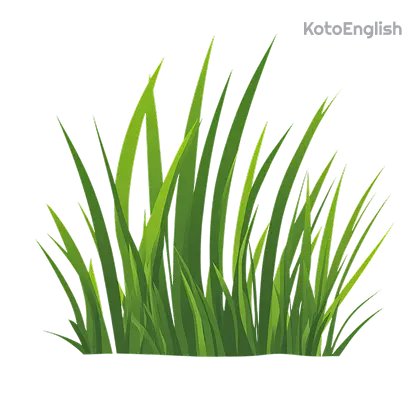
Grass (noun) — a soft, green plant that grows all over the ground. Cows and sheep love to eat it, and children like to play or lie on it. Grass makes parks and gardens look fresh, green and alive.
How to Pronounce “Grass”?
 Audio (UK):

 Audio (US):
Say gr + ahss with a longer a sound like in “father.”
Level up your English with Koto!
Ways to Use “Grass” in a Sentence
Define “grass” by looking at these examples of typical usage of this word in a context.
Synonyms for the Word “Grass”
“Grass” is a term that we use daily even without realizing it. Understanding its related nouns and typical collocations will assist you in selecting the appropriate term when depicting natural landscapes.
Related nouns: field
Synonyms (contextual): none, it is a specific noun
Common collocations: green grass tall grass fresh grass
“Grass” Word Formation and Description in Context
Learn how to say “grass” in combination with different parts of speech and try to create similar collocations on your own.
With adjectives: wet grass dry grass green grass artificial grass
With verbs: cut grass water grass plant grass mow grass
With nouns (noun + noun): grass field grass seed grass stain
Idioms and Phrases with “Grass”
Discover the “grass” meaning in different idiomatic contexts where this everyday word often hides playful or symbolic messages. These expressions show how language can turn simple ideas into vivid imagery.
-
The grass is always greener on the other side — other people’s situations always seem better than your own, even though they may not be.
She quit her job thinking the new one would be perfect, butthe grass is always greener on the other side . -
Don’t let the grass grow under your feet — don’t waste time; act quickly and decisively.
If you want that apartment, start working hard,don’t let the grass grow under your feet !
-
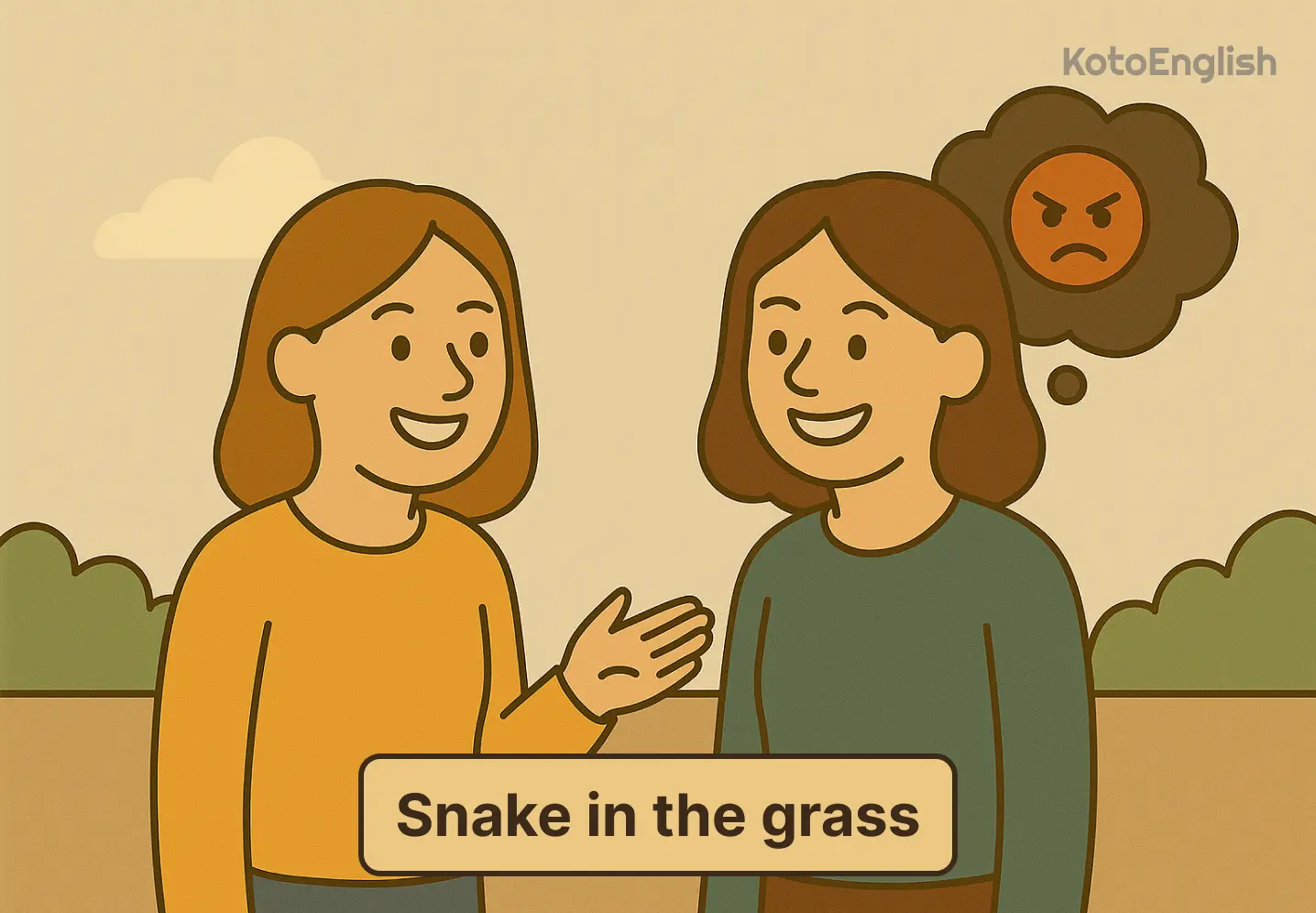
Snake in the grass — a person who pretends to be your friend but is actually dishonest or dangerous.
Be careful trusting him with secrets — Peter is asnake in the grass . -
Put out to grass — to retire someone, often implying they are too old to work anymore.
After 40 years at the company, theyput him out to grass with a small pension. -
To touch some grass — a modern slang term telling someone to disconnect from the internet and engage with the real world.
You needto touch some grass after this 12-hour video game session.
Test Your Knowledge of “Grass” Meaning: Quiz Time!
Check how well you understand this word and common phrases with it. Go through this intellectual game and see on what level you remember all the material.
Enjoy personalized learning!
“Grass” Word in Other Languages
Learn how to spell “grass” and its pronunciation in different European languages.
| Language | Word for “Grass” |
|---|---|
 Spanish
 |
Hierba / Césped |
 French
 |
Herbe |
 German
 |
Gras |
Did You Know It? Fun Facts About “Grass”
“Grass” is a very ordinary thing that we all know and see, but there are a lot of different interesting details that come with this word. Discover them and share with your friends.
-
The fastest-growing type of grass is bamboo.
The world record for fastest-growing plant is held by bamboo, which is purely a grass. Some varieties can reach an incredible height of up to 91 centimeters (36 inches) in one day. If you are really observant, you can actually see the process of growth. -
Grass existed with dinosaurs.
Grass came into existence around 55 million years before the dinosaurs went extinct. However, fossil discoveries suggest that some grass species might have coexisted with dinosaurs. One way or the other, grass had a profound impact on Earth’s ecosystems and climate. -
Americans spend billions on lawns annually.
Americans spend around $40 billion per year on grass lawns, including mowing, watering, fertilizing and pest control. The lawn care industry is enormous, and the average American is said to spend about 70 hours a year maintaining their garden. -
Grass plays a key role in preventing soil erosion.
Dense grass roots help hold soil in place, reduce erosion caused by wind and rain, and improve water absorption, making grasslands important for environmental stability.
Quotes Featuring the Word “Grass”
Look how phrases with “grass” reveal deeper truths about life, showing how something ordinary can carry extraordinary meaning. Read the quotations below to see how different people find something truly beautiful in everyday things and enjoy it.
Explanation: The American poet Walt Whitman says grass is nothing less than a cosmic phenomenon. He proposes that the least, most usual features of nature are just as wonderful and deserving of admiration as the stars in the night sky.
— Robert Fulghum
Explanation: Author Robert Fulghum challenges the famous idiom by suggesting that success and happiness come from nurturing what you have rather than envying others. If you take care of your own situation (water your own grass), it will flourish.
— Cher
Explanation: Singer Cher uses grass breaking through hard cement as a metaphor for the persistence of love. Just as grass is strong enough to grow through barriers, true love can overcome obstacles and difficulties that seem impossible.