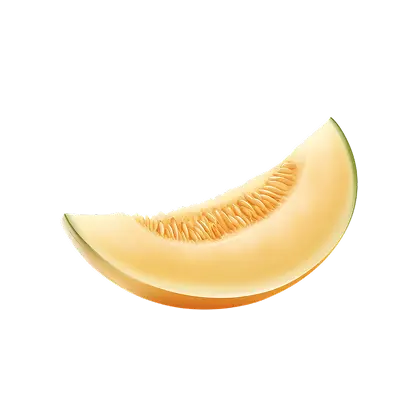

Melon (noun) — A large, round or oval fruit with a hard rind, sweet, juicy flesh, and many seeds, typically eaten raw. Melons are often used in cooking to add a refreshing sweetness to fruit salads, cold soups, and desserts.
The plant of the gourd family (Cucurbitaceae) that produces this fruit.
How to Pronounce “Melon”?
 Audio (UK):

 Audio (US):
for melon pronunciation: To pronounce “melon” correctly, say “MEL-uhn”, stressing the first syllable like “bell” and softening the second like the “un” in “button.”
Level up your English with Koto!
Examples: How to Use “Melon” in a Sentence?
For a lot of us, this word is associated with something sweet and refreshing, so how do we use it?
What Are Synonyms for the Word “Melon”?
If you want to define “melon” and have some synonymous expressions for it, you’ll find out that this is a hard task, but there are still some things you can use:
Related nouns: fruit gourd
Synonyms (contextual): none (melon is a specific noun)
Common collocations: sweet melon fresh melon ripe melon melon juice slice of melon melon flavor
“Melon” Word Formation and Description in Context
“Melon” is pretty exciting in lexical terms because you can make up a lot of interesting stuff by combining it with other words:
With adjectives: green melon tasty melon heavy melon big melon
With verbs: slice a melon peel a melon pick a melon eat a melon
With nouns (noun + noun): melon ice cream melon seed melon farmer melon patch
Idioms and Phrases with “Melon”
This word shows up in different phrases, sayings, and idioms, emphasizing different expressions and being not just a honey-sweet fruit that we all know:
-
Off your melon — informal idiom meaning “crazy” or “mad.” The phrase originates from slang, where “melon” stands for “head.”
You’re off yourmelon if you think you can finish all that work by tomorrow! -
The melon head — a colloquial, somewhat playful insult implying someone has a big or empty head.
Only amelon head would forget their keys three days in a row. -
Use your melon — in this case, “melon” is a humorous term for the head or brain. It’s a lighthearted way to say “think carefully” or “use your brain.”
If you want to solve this puzzle, you’ll need to use yourmelon .
Test Your Knowledge of Melon Meaning – Quiz Time!
Get ready to jump into a playful challenge where words, colors, and taste blend perfectly — this melon quiz is as refreshing as an ice cream on a hot summer day.
Enjoy personalized learning!
“Melon” Word in Other Languages
Look at how you spell “melon” and listen to it in different languages.
| Language | Word for “Melon” |
|---|---|
 Spanish
 |
Melón |
 French
 |
Melon |
 German
 |
Melone |
Did You Know It? Fun Facts About “Melon”
Take a look at the interesting information about this fruit outside of being sweet and round:
-
Melons are the cousins of cucumbers.
They belong to the gourd family Cucurbitaceae, meaning they are cousins of cucumbers, pumpkins and squashes, a real chip off the old block in the world of garden plants. -
Melon is around 90% water.
So, it is a true thirst quencher on hot days, providing a rejuvenating snack for that matter. -
Some melons tend to grow huge.
The biggest melon ever recorded is a giant cantaloupe (muskmelon) grown by Llorenç Soler Adrover (Spain). It weighed 31.446 kg (69 lb 5.28 oz) and it is a true heavyweight champion. — According to the Guinness Book of Records. -
Since time immemorial, melons have been grown in ancient Egypt.
Seeds were even found in the tomb of King Tutankhamun, proving that the meaning of melon was high and it was already a thing thousands of years ago. -
The Yubari King melon from Japan is a luxury fruit.
It is so precious that two went for a reported $45,000 at an auction-house price to set a few salaries! In other words, it costs a pretty penny and it is worthy of being treated like the crown jewels of the fruit world. -
Melons could either be sweet or savory.
Although usually consumed as fruits, they are sometimes used in soups, salads and even pickles in some cultures, proving that there is more to them than just one trick on the plate.
Famous Quotes Featuring “Melon”
During the timespan, the “melon” became not only the usual guest of shelves in your local markets but also a hero of different sayings to showcase the most unusual things.
— Barbara Streisand
Explanation: This quotation suggests that success is being able to enjoy life’s pleasures without limitation and to savor what truly delights.
— Greg Brown
Explanation: The lyrics capture the essence of life as something deeply fulfilling yet inherently chaotic, where sweetness and mess go hand in hand.
— Ralph Waldo Emerson
Explanation: Beauty is a pure and joyful communion with nature, being nourished both spiritually and physically by its warmth and vitality, as mentioned in the citation.