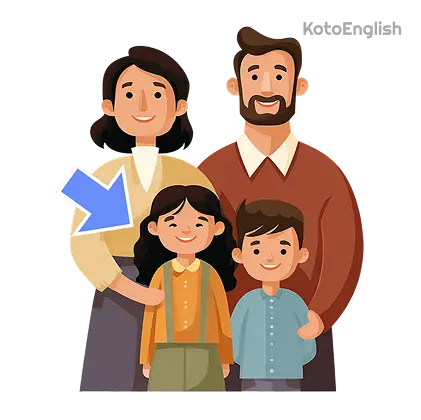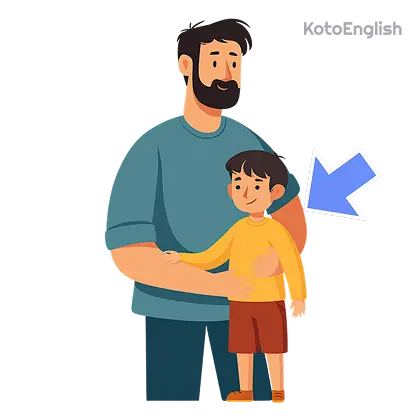
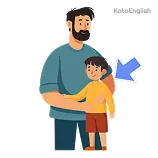
Son (noun) — a boy or a man who is born to a mother and a father, often used to describe family relationships and to show who someone belongs to in a family.
How to Pronounce “Son”?
 Audio (UK):

 Audio (US):
Sounds exactly like “sun.” One syllable with a short u sound in the middle. Don’t confuse the spelling with the pronunciation.
Level up your English with Koto!
Examples: How to Use “Son” in a Sentence?
Define “son” by taking a look at these examples of how native speakers typically use this word to share certain information.
What Are Synonyms for the Word “Son”?
Learn “son” synonyms and other related words to make your English more advanced and your written and spoken text more fluent.
Related nouns: family sister brother daughter
Synonyms (contextual): boy kid
Common collocations: youngest son only son adopted son
“Son” Word Formation and Description in Context
Discover all the possible variations of how to combine this word with other parts of speech like nouns, verbs and adjectives to create meaningful language units in form of collocations on your own.
With adjectives: oldest son grown-up son teenage son beloved son
With verbs: raise a son have a son name a son love a son
With nouns (noun + noun): son image son legacy son duties
Idioms and Phrases with “Son”
The meaning of “sister” is quite understandable, so we invite you to discover what other points you can share while using this word in different idiomatic contexts. Look at these phrases and read the examples of correct usage.
-
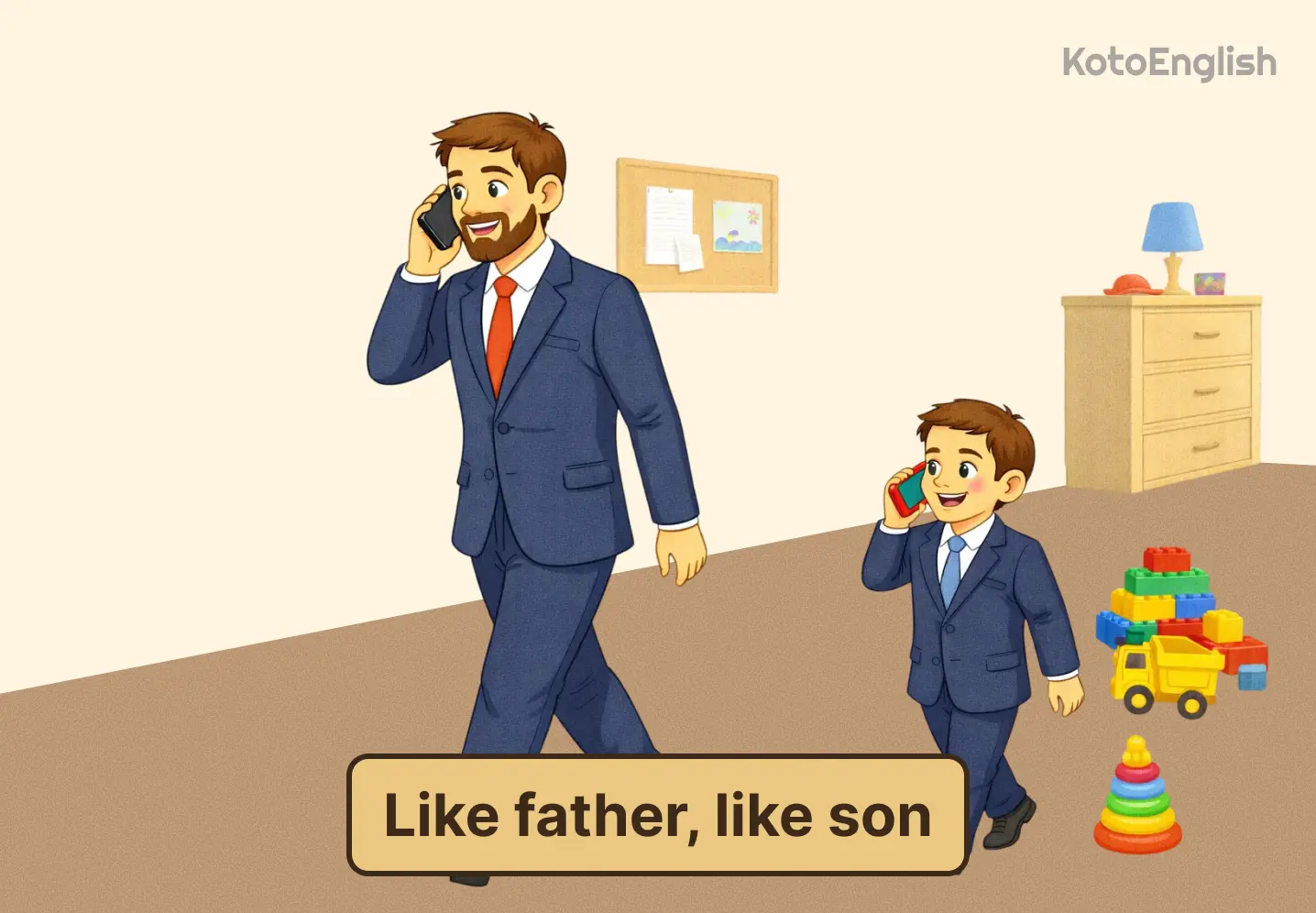
Like father, like son — a son behaves or looks similar to his father; traits pass from one generation to the next.
Tom became a carpenter at 19, just like his dad. That’s what we call,like father, like son !
-
Favorite son — a man who is especially admired in his hometown or region and someone who brings pride to their community.
The senator returned to his state as afavorite son after winning the national election. -
Son of a gun — (informal) an exclamation of surprise or admiration and used to describe a mischievous but likable person.
Thatson of a gun actually won the lottery twice in one year! -
Prodigal son — someone who leaves home, wastes money or opportunities, then returns seeking forgiveness.
After years of bad decisions, theprodigal son came back to ask his parents for help. -
Son-in-law — the husband of one’s daughter.
We invited ourson-in-law to join the family dinner this weekend.
Test Your Knowledge of “Son” Meaning: Quiz Time!
Check your understanding of what “son” means by completing this quick intellectual game. Take your time and complete every task, since practice makes everything perfect and easier!
Enjoy personalized learning!
“Son” Word in Other Languages
Learn how you spell “son” in French, German and Spanish. Listen and repeat!
| Language | Word for “Son” |
|---|---|
 Spanish
 |
Hijo |
 French
 |
Fils |
 German
 |
Sohn |
Did You Know It? Fun Facts About “Son”
We are done with the “son” description, so take a look at these related, surprising details to uncover the historical significance of this word and how the traditions were shaped all this time.
-
“Son” appears in thousands of surnames.
In the past, names that ended with the suffix “-son” had the literal meaning of “son of” a certain person. For instance, Johnson signified the meaning “son of John.” Today, this naming scheme is still present in the Nordic regions through names like Eriksson and Johansson. -
Some cultures historically preferred sons.
In the past, male offspring were the ones who continued the family line and received the inheritance. This was the case in several nations and led to very pronounced gender discrimination. -
The word comes from Old English.
The term “son” comes from the Old English word “sunu,” which is traced back to the Old Germanic and Indo-European languages. Almost all the languages of Europe have words for son with a similar phonetic structure, which indicates the family term’s antiquity. -
Royal sons have special titles.
Specific titles are given to the sons of kings in monarchies. The firstborn son of the monarch in Britain is, by tradition, the Prince of Wales. Other royal sons, depending on their birth order and the country’s customs, are dubbed dukes, earls, or princes.
Famous Quotes About “Son”
Read these famous sayings and think whether you agree or disagree with them. Reflect on which of your thoughts are common with quotations and details you would like to change.
— Irish proverb
Explanation: The traditional proverb implies that usually sons after getting married transfer their prime attachment to their wives, whereas daughters keep the strongest bond with their parents all their life. It reveals the ancient cultural norms regarding family relations.
— Charles Wadsworth
Explanation: This funny remark showcases that the son of every generation opposes his father, however, the same rebellion comes from his own son later. The pattern of disagreement and finally comprehension goes on forever.
Explanation: The statement illustrates the concept whereby one generation suffers hardships merely for the sake of the next enjoying freedom and advancing in their studies. Adams believes that peace and intellectual growth are the rewards of the hard labor of former generations.