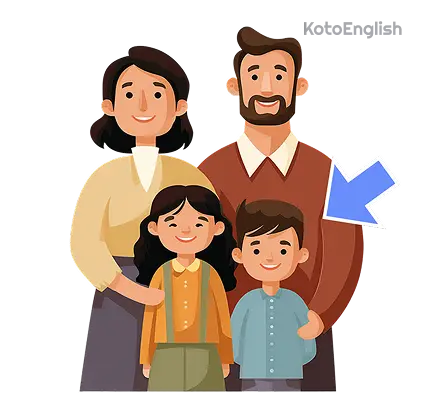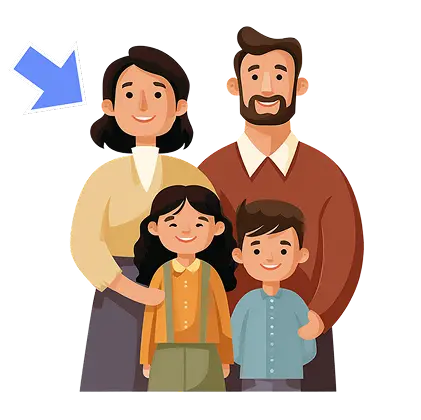

Parents (noun) — the biological or adoptive mother and father of a child, or caretakers who raise and are responsible for a child. Parents often give love, advice, protection, and support as a whole.
How to Pronounce “Parents”
 Audio (UK):

 Audio (US):
First say par like “part,” then a soft ə, and finish with nts — PAR-ənts.
Level up your English with Koto!
How to Use “Parents” in a Sentence
Some simple sentence examples demonstrate native speakers using “parents” in everyday situations.
What Are Synonyms for the Word “Parents”?
Brotherhood can be hard to explain, so you may need some “brother” synonyms to express the concept better.
Related nouns: mom and dad guardians family
Synonyms (contextual): caregivers
Common collocations: loving parents strict parents single parents parents’ advice
“Parents” Word Formation and Description in Context
When looking at associations with the “parents,” English shows that it describes care, authority, and support.
With adjectives: caring parents patient parents proud parents attentive parents
With verbs: thank parents trust parents follow parents understand parents
With nouns (noun + noun): parents’ expectations parents’ support parents’ opinion
Idioms and Interesting Phrases with “Parents”
The notion around “parents” often includes terms referring to leadership, care, and responsibility in an individual’s family life.
-
Under your parents’ roof — living in your parents’ home and following their rules.
While he livesunder his parents’ roof , he respects their rules. -
Parents’ blessing — approval or support from one’s parents.
They waited for theirparents’ blessing before getting married. -
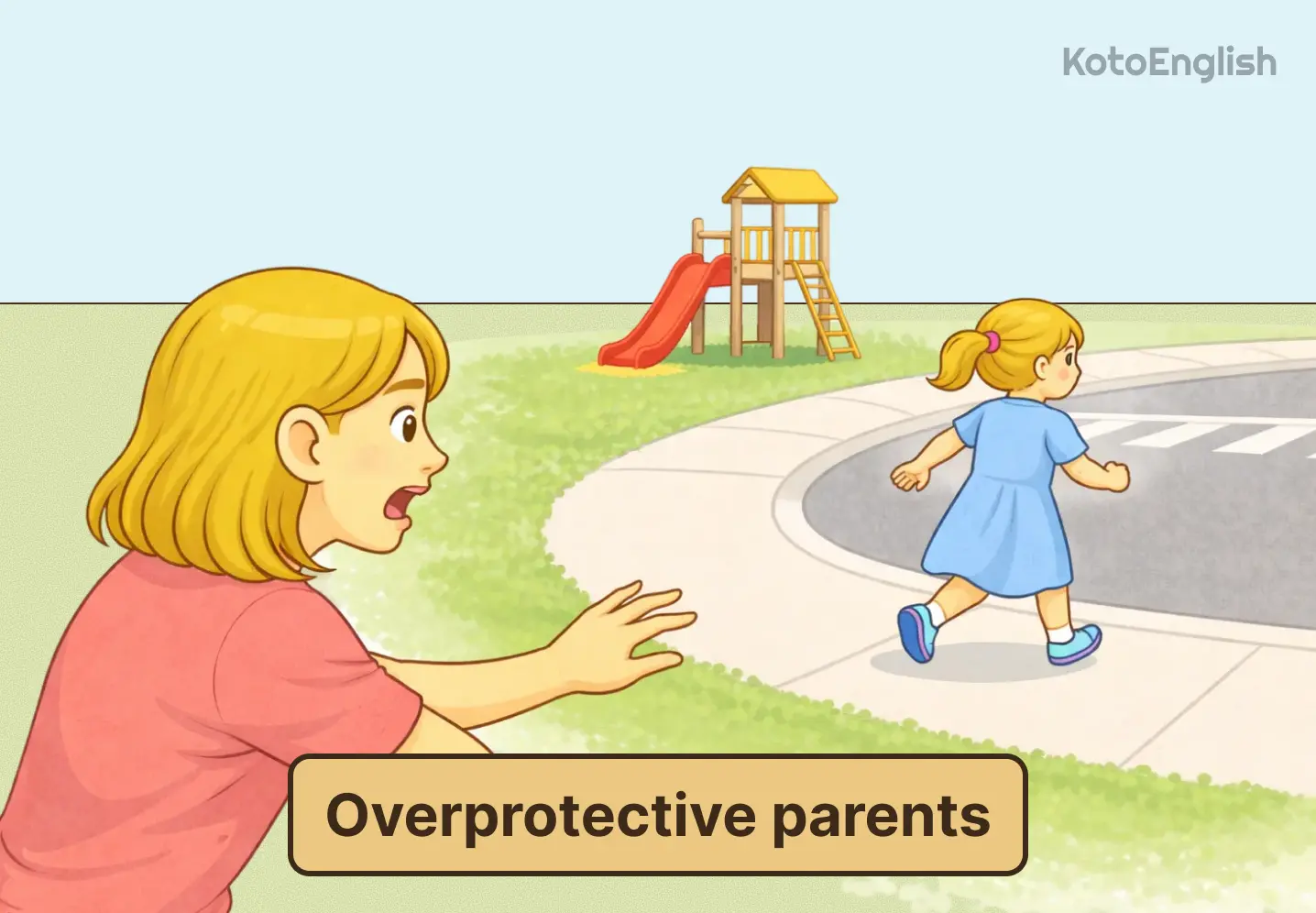
Overprotective parents — parents who worry too much about their children.
Herparents are overprotective , so she rarely goes out alone.
-
Single parents — a mother or father raising a child alone.
Manysingle parents balance work and family life successfully. -
Strict parents — parents who strongly control behavior and rules.
Hisstrict parents limit his screen time. -
Supportive parents — parents who encourage and help their children.
Supportive parents help children believe in themselves.
Test Your Knowledge of “Parents” Meaning
Take a moment to reflect on this simple task on this term and see how well you define “parents.”
Enjoy personalized learning!
“Parents” Word in Other Languages
People in all parts of the world can have different ways of representing the word “parents” to show the universal worth held by family members.
| Language | Word for “Parents” |
|---|---|
 Spanish
 |
Padres |
 French
 |
Parents |
 German
 |
Eltern |
Did You Know It? Fun Facts About “Parents”
Parents are the most influential people in the life of an individual and the world recognizes them in its own different ways.
-
All cultures recognize parental love in some form or another.
Besides the basic needs that parents cover, there are also the needs of guiding and parenting that parents fulfill. -
Parents’ Day is a tradition that has been kept in many parts of the world.
Though the dates may come out differently, the idea behind this day is to express gratitude to both mothers and fathers for their love and commitment. -
The term “parent” has its roots in Latin.
The contemporary English term is originally derived from the Latin term parēns (plural parentes). This Latin term is derived from the present participle verb parere, meaning “to give birth,” ”to bring forth,” or “to produce.” -
The responsibilities of parents have gone through a transformation process.
In earlier times, mothers and fathers had rigidly defined roles, which were generally divided among work, home, and child-rearing. In modern society, the trend has moved towards equal sharing of duties among parents regarding household, career, and caregiving.
Famous Quotes Featuring “Parents” in English
Read this collection of meaningful quotes where “parents” express love, wisdom, and influence.
— Henry Ward Beecher
Explanation: This saying suggests that often it is when one becomes a parent oneself that one comes to a better understanding of the love that one’s parents had for one.
— Plato
Explanation: The quotation of Plato, as given, argues that power and wealth could be inherited from one’s parents, but the value for respect and other notions remains a better legacy.
— Ann Brashares
Explanation: According to this quote, a parent’s love is without conditions for their child, while others must earn theirs.