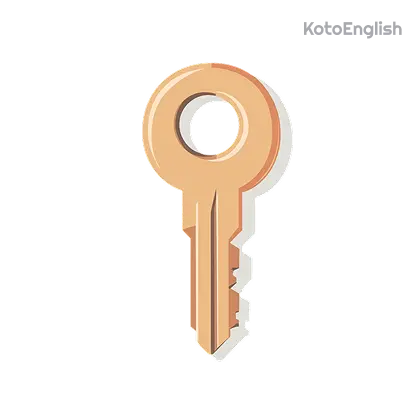
Key (noun) — a small metal object with a specific shape that fits into lock, allowing you to open or close doors, start vehicles or access locked places, essential for security and controlling entry to homes, cars and buildings.
How to Pronounce “Key”?
 Audio (UK):

 Audio (US):
Pronounce w sound more clearly by emitting a short i, as in “win.” Add the n then use no very strong d, and finally pronounce ow, as in “go.”
Level up your English with Koto!
Examples: How to Use “Key” in a Sentence?
To define “key” take a look at these practical examples of how this word is typically used in different contexts. Read carefully and create something similar on your own.
What Are Synonyms for the Word “Key”?
There aren’t many “key” synonyms, because of the specifics of this word, but still you can familiarize yourself with related terms, which can make your written and spoken text more interesting and descriptive.
Related nouns: lock keychain keyring access card
Synonyms (contextual): none, it’s a specific noun
Common collocations: house key spare key car key
“Key” Word Formation and Description in Context
Learn more about meaningful collocations by discovering how to combine this word with nouns, verbs and adjectives.
With adjectives: lost key small key old key metal key
With verbs: find a key lose keys copy a key turn the key
With nouns (noun + noun): key ring key chain key holder key copy
Idioms and Phrases with “Key”
The meaning of “key” is very straightforward most of the time, but on the other hand, this word is very common among different English phrases, idioms and sayings. Read them and remember to further implement them into your active vocabulary.
-
The key to success — the most important factor or method for achieving something.
Hard work and persistence are thekeys to success in any career. -
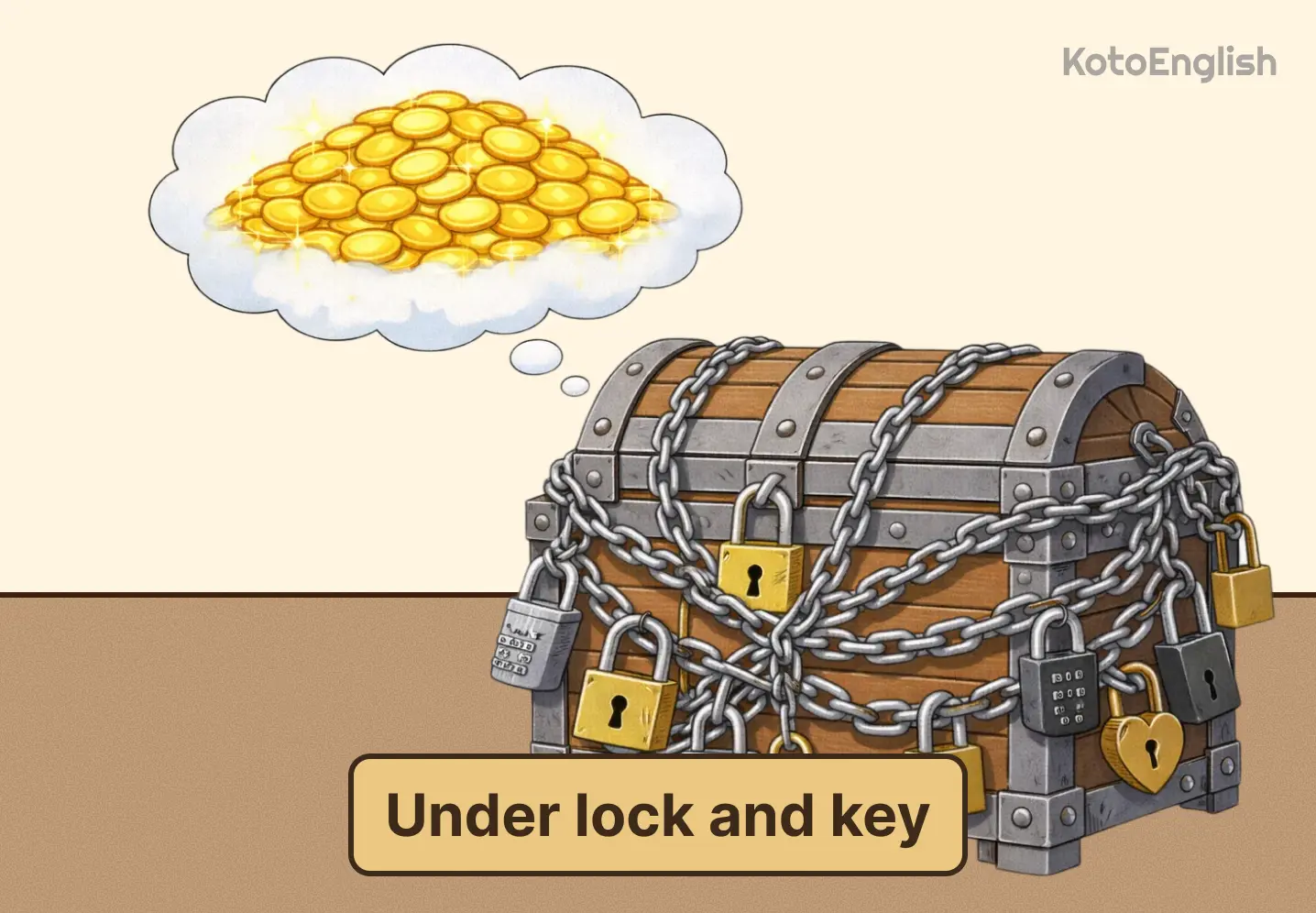
Under lock and key — securely locked away; safely stored or imprisoned.
Keep your passport and valuablesunder lock and key when traveling.
-
Key player — an essential person in a team, organization, or situation or generally someone very important.
Sam is akey player on our basketball team. We can’t win without him! -
Turn the key — start a vehicle; also means to make something operational or successful.
Justturn the key and the engine will start immediately. -
Throw away the key — to imprison someone permanently or to lock something up and never access it again.
For that serious crime, they should lock him up andthrow away the key .
Test Your Knowledge of “Key” Meaning: Quiz Time!
Check your understanding of what “key” means with our interactive, intellectual game. Applying your knowledge in practice is crucial for the development of your English skills.
Enjoy personalized learning!
“Key” Word in Other Languages
Discover how you spell “key” and pronounce it correctly in other languages such as German, French and Spanish.
| Language | Word for “Key” |
|---|---|
 Spanish
 |
Llave |
 French
 |
Clé |
 German
 |
Schlüssel |
Did You Know It? Fun Facts About “Key”
You already know the “key” description, so we invite you to learn some interesting details connected with this everyday item. Discover the history behind it and the surprising facts that you may have never heard of.
-
Keys are over 6,000 years old.
The initial key and lock system was created by the ancient Egyptians around 4000 BCE. These early pin-tumbler locks were operated with large wooden keys, sometimes more than two feet long. -
Most people carry 5–7 keys daily.
Research shows that the average person carries between five and seven keys on a keychain, including house, car and office keys. Many people even keep “mystery keys” whose locks they can no longer remember. -
Locksmiths can make keys from photos.
Skilled locksmiths can sometimes create working keys from clear photos that show the cuts and grooves. This security risk means you should avoid posting images of your keys on social media. -
Bump keys can open most locks.
A bump key is a specially cut key that can unlock many pin-tumbler locks using a simple technique. Because of this vulnerability, many homeowners choose bump-proof or high-security locks.
Famous Quotes About “Key”
Read these quotations where people present “keys” in a different light and emphasize their importance. Think about whether you agree with them or not and why?
Explanation: The scientist George Washington Carver, who was born as a slave, interpreted education as a decisive instrument to gain freedom and to get the most out of life. By using the main metaphor, he states that knowledge is the key to opening the doors of possibilities.
Explanation: This quote implies that immortality lies not within living forever but within making a lasting impact upon this world through actions and achievements meant to last into eternity as memories and history that we create.
— William Shatner
Explanation: Shatner specifically points out that the key both for creative endeavors and for the will to live is vitality and enthusiasm, clearly indicating that without the quality of energy, neither creativity nor purpose can survive long enough for one to be provided with something of value.