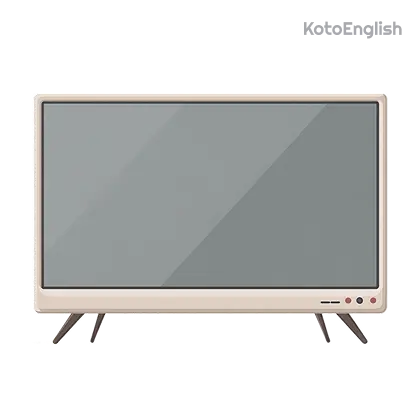

Television (noun) — a system of broadcasting moving pictures and sound through electronic signals, providing entertainment, news and information through programs and shows; the industry and medium of creating and transmitting visual content for mass audiences.
How to Pronounce “Television”?
 Audio (UK):

 Audio (US):
Say TEL-uh-vizh-ən, with stress on the first syllable TEL and a soft zh sound in the middle, like in “vision.” Many people shorten it to “TV” (tee-vee) in casual conversation.
Level up your English with Koto!
Examples: How to Use “Television” in a Sentence?
To define “television,” take a look at how this word is typically used by native speakers.
What Are Synonyms for the Word “Television”?
There are not so many “television” synonyms, but still, we have a bunch of related words to this term that will enrich your vocabulary and make your English more complete.
Related nouns: broadcasting media programming entertainment
Synonyms (contextual): TV the small screen
Common collocations: network television cable television daytime television
“Television” Word Formation and Description in Context
Since you know the “television” description, it is time to combine this word with other parts of speech to create meaningful collocations.
With adjectives: live television reality television commercial television
With verbs: work in television appear on television broadcast on television
With nouns (noun + noun): television industry television program television series
Idioms and Phrases with “Television”
“Television” in English is pretty straightforward, but there are some interesting phrases that cover various idiomatic meanings. Take a look at them and remember!
-
Television primetime — the evening hours when television viewership is highest; the most important broadcasting time slot.
Networks save their best shows for thetelevision primetime when advertising rates are highest. -
Trial by television — when a legal case or public issue is judged and influenced by media coverage rather than in a courtroom.
The politician felt condemned bytrial by television before the court even reached a verdict. -
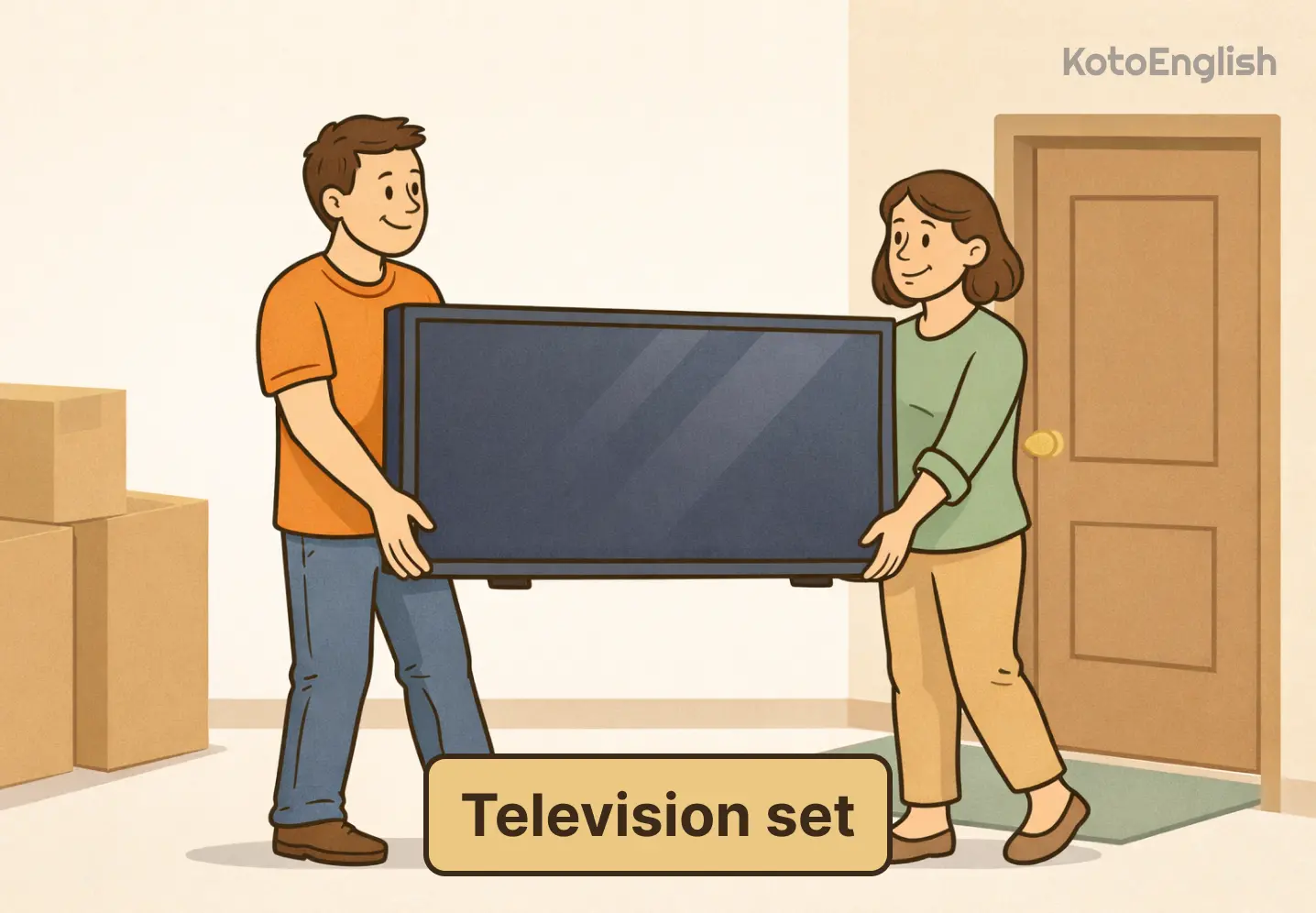
Television set — an electronic device for receiving and displaying TV broadcasts.
They bought a newtelevision set to watch the game in high definition.
Test Your Knowledge of “Television” Meaning
Check how well you understand the description of “television” with this interactive quiz. Take your time and answer all the questions.
Enjoy personalized learning!
“Television” Word in Other Languages
Curious how to spell “television” in Spanish, German and French? Here are three common European translations of this term.
| Language | Word for “Television” |
|---|---|
 Spanish
 |
Televisión |
 French
 |
Télévision |
 German
 |
Fernsehen |
Did You Know It? Fun Facts About “Television”
Over the years, “television” has been the most significant medium through which the society’s transformation took place in a dramatic manner. The cultural impact and the evolution of “television” can be seen through these facts!
-
Television news shaped modern politics.
The 1960 Kennedy–Nixon debate, the first televised presidential debate, highlighted the power of visual image. TV viewers favored Kennedy, while radio listeners preferred Nixon, showing that appearance can outweigh content, which led politicians to rely on image consultants. -
The “golden age” of television changed storytelling.
Shows like The Sopranos, Breaking Bad and Game of Thrones elevated TV storytelling to cinematic quality. The series can develop complex characters and long-term storylines across multiple seasons, creating audience attachment that a two-hour film cannot achieve. -
Television advertising drives consumer culture.
Television ads have a remarkable impact on consumer habits and society, especially since the 1950s. The engaging character of TV commercials still draws huge investments from businesses into billions because of its potential to lead to sales and establish brand visibility.
Famous Quotes About “Television”
Discover the opinions expressed by individuals from the broadcasting industry, music world and celebrities about the enduring impact that “television” continues to have on society and culture.
— Steve Allen
Explanation: This quote celebrates radio’s unique power to engage the imagination, while television provides everything visually, requiring less mental participation.
Explanation: John Lennon’s citation claims that if humans’ common values were given priority over the pleasures of the flesh and materialism/purchasing, then peace would be possible.
— Jimmy Buffett
Explanation: Jimmy Buffett supports this view through his comparison of the past, driven by less technology and the present filled with media consumption that constantly distracts people from making connections and being reflective.