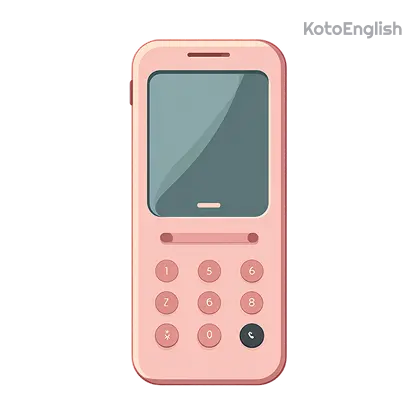
Phone (noun) — a device through which one can communicate by voice with other users, send messages, or have access to apps and the internet. Various kinds of phones exist: cellular, wireless, and fixed.
How to Pronounce “Phone”
 Audio (UK):

 Audio (US):
First, pronounce the f clearly, then move into the long o as in “go,” and finally pronounce the n softly. Concentrate on pronouncing it as one continuous sound.
Level up your English with Koto!
Use of “Phone” in a Sentence: Examples
The ability to see “phone” in daily life situations will allow you to easily remember the word and use it naturally in your speech.
What Are Synonyms for the Word “Phone”
Over-dependence on one and the same word may lead to a monotonous language. Use of different words not only prevents confusion but also makes the interaction more interesting.
Related nouns: mobile device call
Synonyms (contextual): handset cell phone smartphone
Common collocations: answer the phone call on the phone mobile phone
“Phone” Word Formation: Patterns and Examples
Daily practice helps learners to produce clear and simple sentences suitable for everyday communication.
With adjectives: old phone new phone mobile phone
With verbs: answer the phone call on the phone charge the phone
With nouns (noun + noun): phone call phone number phone charger
Idioms and Phrases with “Phone”
What do you think about going through some daily language examples that have the word “phone” in them?
-
On the phone — talking to someone using a phone.
I spent an houron the phone with my friend yesterday. -
Phone in — to contribute, report, or participate by phone.
Listeners canphone in their questions during the live broadcast. -
Phone up — British English, to call someone on the phone.
I’llphone up my brother later to check on him. -
Over the phone — something done using a phone rather than in person.
We arranged the appointmentover the phone . -
Give someone a phone call — to call someone using a phone.
I need togive my teachera phone call about the homework. -
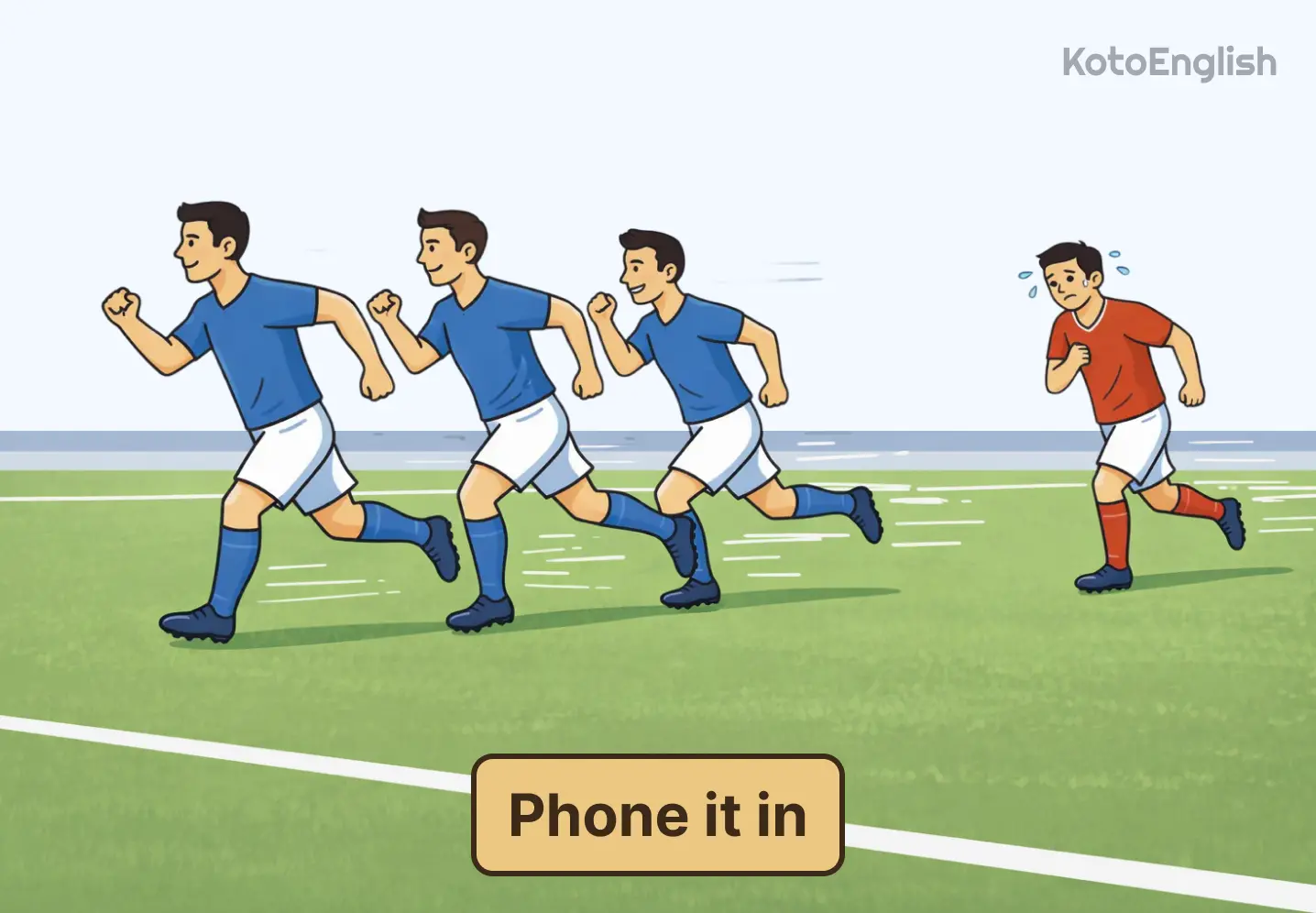
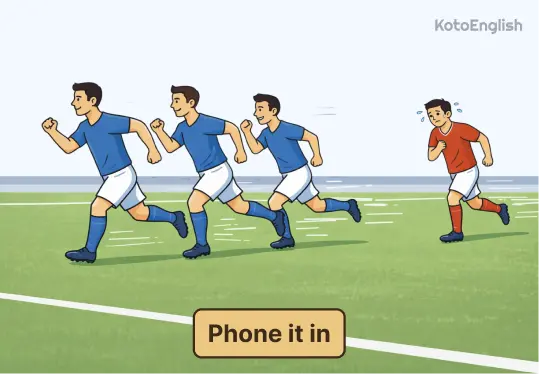
Phone it in — to do something without much effort, sometimes remotely by phone.
The actorphoned in his lines during the rehearsal and seemed distracted.
“Phone” Meaning: Exercises for Practice
The moment for practice has come! Validate your comprehension of the definition of “phone” through these beginner-friendly activities.
Enjoy personalized learning!
“Phone” Word in Other Languages
Are you wondering what the word for “phone” is in other languages? Here’s a basic guide.
| Language | Word for “Phone” |
|---|---|
 Spanish
 |
Teléfono |
 French
 |
Téléphone |
 German
 |
Telefon |
Did You Know These Facts About “Phone”?
In order to better define a “phone” and remember it with greater ease, let us present to you these amazing facts from the history of telephones and their application!
-
The first telephone was patented in 1876.
A patent was granted to Alexander Graham Bell in the year 1876 for his telephone invention, thereby modern voice communication technology was born. -
The first mobile phone call was made in 1973.
On April 3, 1973, Martin Cooper made the first call on a mobile handset, proving that it was possible to speak wirelessly and be in motion at the same time. -
Early mobile phones were massive and weighty.
The very first mobile phones, such as the Motorola DynaTAC which were sold in the market could not be carried easily since they were over 2.5 pounds in weight (that is about 1.1 kg) and the battery required several hours of charging, yet they paved the way for the sleek cell phones of today. -
Phones are the world’s largest means of connecting people.
More than half the world’s population uses mobile phones now, which means mobile phones have entered our lives and become very important tools. Moreover, there are people who check their phones or use them 20 to 30 times every day on average.
Inspiring Quotes Featuring “Phone” in English
Mobile devices have entirely repositioned the process of connecting, sharing, and communicating among people. The philosophers and inventors have been quotable when it comes to this gadget’s impact, and the quotes, like any other enduring ideas, are destined to be remembered for a long time.
— Fran Lebowitz
Explanation: The witty remark points out the ease of using cell phones for conversations with people without undergoing the formalities of being present and talking to them personally.
— Mitch Albom
Explanation: Mitch shows that the phone is an instrument for communication in such significant occasions, and it does so by putting us in the same emotional moods as the others.
— Haruki Murakami
Explanation: Murakami points out that phones are useful and helpful, yet they can distract us or cause problems — a thoughtful observation about modern life.