
Puppy (noun) — a young dog, typically from birth to about one year old, characterized by playful energy, curiosity, soft fur and the need for training, often more active and affectionate than adult dogs. Plural form of this word is “puppies.”
How to Pronounce “Puppy”?
 Audio (UK):

 Audio (US):
Say PUP-ee with two syllables. Stress the first syllable PUP (rhymes with “cup”), then add a short ee sound like in transcription /i/.
Level up your English with Koto!
Using “Puppy” in a Sentence: Examples
This adorable word is essential for any dog lover, so let’s make sure you can define a “puppy” perfectly when talking about these lovable creatures!
Synonyms for the Word “Puppy”
While “puppy” is a word with one specific meaning, these alternatives and related terms will bring variety into your talks.
Related nouns: dog cat kitten
Synonyms (contextual): pup doggy
Common collocations: young puppy newborn puppy rescue puppy
“Puppy” Word Formation and Common Uses
Boost your English by understanding how to say “puppy” in combination with various parts of speech to create new, meaningful collocations on your own.
With adjectives: playful puppy energetic puppy adorable puppy mischievous puppy
With verbs: raise a puppy train a puppy adopt a puppy walk a puppy
With nouns (noun + noun): puppy training puppy food puppy mill puppy love
Idioms and Phrases with “Puppy”
These expressions capture the meaning of “puppy” as well as youthful enthusiasm, innocent affection and the irresistible charm in everyday language.
-
Puppy love — an innocent, temporary romantic attraction, especially between young teenagers.
Their relationship is justpuppy love . It won’t last long. -
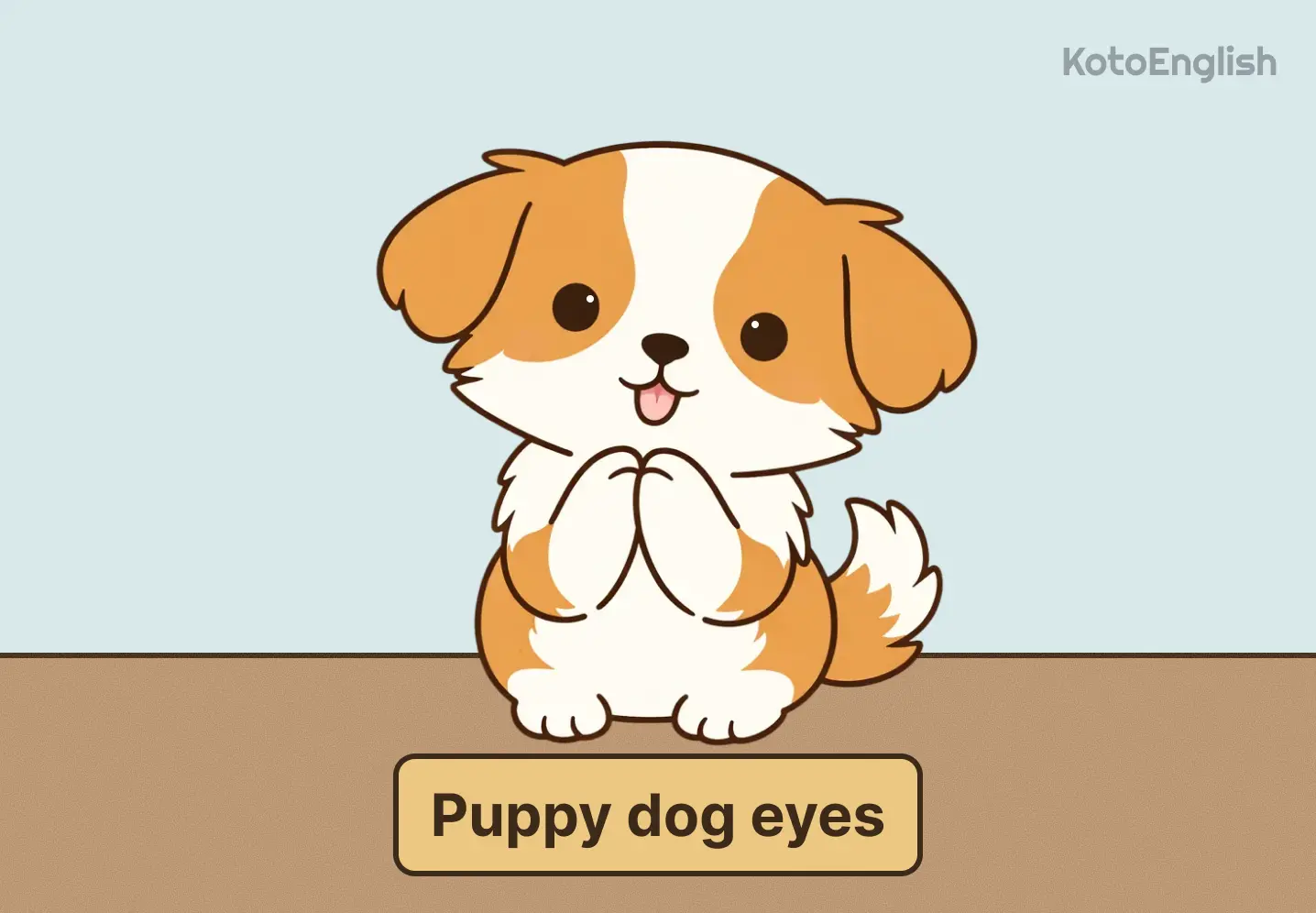
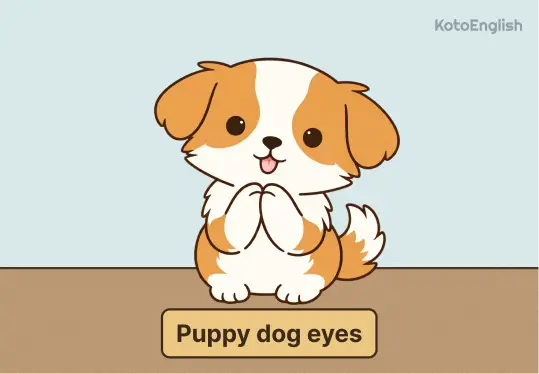
Puppy dog eyes — a sad, pleading facial expression used to get what you want, looking adorable to gain sympathy.
She gave mepuppy dog eyes until I agreed to let her borrow my car.
-
Follow someone like a puppy — to follow someone around constantly, be very attached and dependent.
My little brotherfollows me aroundlike a puppy wherever I go.
“Puppy” Meaning: Exercises for Practice
Now it’s your turn to demonstrate what you’ve learned. Complete these exercises to solidify your vocabulary mastery!
Enjoy personalized learning!
“Puppy” Word in Other Languages
Learn how to spell “puppy” properly in German, French and Spanish as well as pronounce it to broaden your linguistic horizons.
| Language | Word for “Puppy” |
|---|---|
 Spanish
 |
Cachorro |
 French
 |
Chiot |
 German
 |
Welpe |
Let’s Explore Fun Facts About “Puppy”
Puppies are not only adorable but they are also astonishing animals that go through different developmental phases and have surprising abilities that are still being investigated by science!
-
Puppies are born deaf, blind and toothless.
For the first 10-14 days, their eyes won’t open and their ears won’t function. Also, they have no teeth. They will depend on their mother for everything: warmth, food and safety during this period and only touch and smell will be their senses. -
The “puppy phase” determines adult behavior.
The essential time of socialization for puppies is the 3-14 week period. Normally, puppies meeting various humans, animals and having different experiences with sounds and places during the early stage grow up to be friendly and sure of themselves as adults. -
Puppies can start learning commands at 7-8 weeks.
During this time, their brains are very open to new experiences and thus positive reinforcement training is highly effective. Yet, that training should be done in short periods (5-10 minutes) because of the puppies’ limited attention spans.
Memorable Quotes with the Word “Puppy”
Take note of the experiences and opinions that have been expressed by these people regarding the “puppies” and the happiness that they so easily spread among people.
Explanation: The quote, in its simplicity, points out that the main happiness of life lies in the very basic and straightforward sources. Instant happiness is caused by the warmth, softness and unconditional love that come from a puppy.
— Gene Hill
Explanation: The author Gene Hill disputes the old saying “money can’t buy happiness” by emphasizing that getting a puppy (which is not free) is a source of great happiness. The saying is light-hearted, but it admits that dogs give their owners real joy and friendship.
— Judy Desmond
Explanation: The factors like puppies’ pure enthusiasm, unending love and dependency for care are capable of turning people’s sorrow or grief into something positive by giving them a reason to live, a friend and love that is not conditioned even in hard situations.