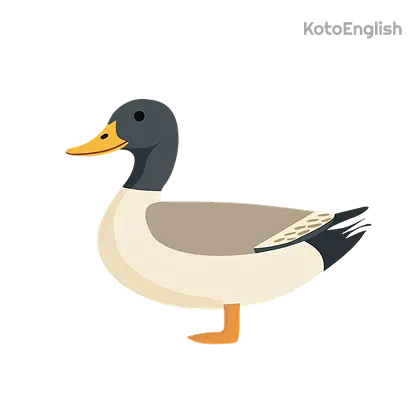
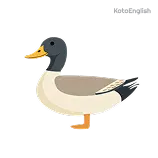
Duck (noun) — a waterbird with a broad, flat beak, webbed feet for swimming, waterproof feathers and a waddling walk, living near ponds, lakes and rivers and raised as a domestic animal on farms, known for quacking sounds and diving for food underwater.
How to Pronounce “Duck”?
 Audio (UK):

 Audio (US):
Say d + uck, it rhymes with “luck,” “truck,” and “stuck.” It’s a short, one-syllable word with a sharp ending.
Level up your English with Koto!
Examples: How to Use “Duck” in a Sentence?
Now observe these genuine examples to define “duck” where farmers, park visitors, nature lovers and families discuss these birds in their outdoor and indoor experiences.
What Are Synonyms for the Word “Duck”?
There aren’t a lot of synonymous expressions to this word but knowing the existing related terms will help you sound more natural and increase the capacity of your vocabulary.
Related nouns: animal drake duckling bird
Synonyms (contextual): none, it is a specific noun
Common collocations: wild duck big duck baby duck
“Duck” Word Formation and Description in Context
Master how to say “duck” through these word combinations to describe these animals and their behaviors in a natural way, as though you were an experienced nature enthusiast or native speaker yourself!
With adjectives: yellow duck swimming duck wooden duck white duck
With verbs: feed ducks watch ducks hunt ducks raise ducks
With nouns (noun + noun): duck pond duck feather duck egg duck call
Idioms and Phrases with “Duck”
The “duck” meaning has inspired many vivid English expressions. Adding these to your vocabulary will make you sound more fluent and natural!
-
Like water off a duck’s back — having no effect or not bothering someone at all.
Criticism rolls off himlike water off a duck’s back since he never gets upset. -
Sitting duck — someone vulnerable to attack or criticism, basically an easy target.
Without any preparation, you’ll be asitting duck in that debate. -
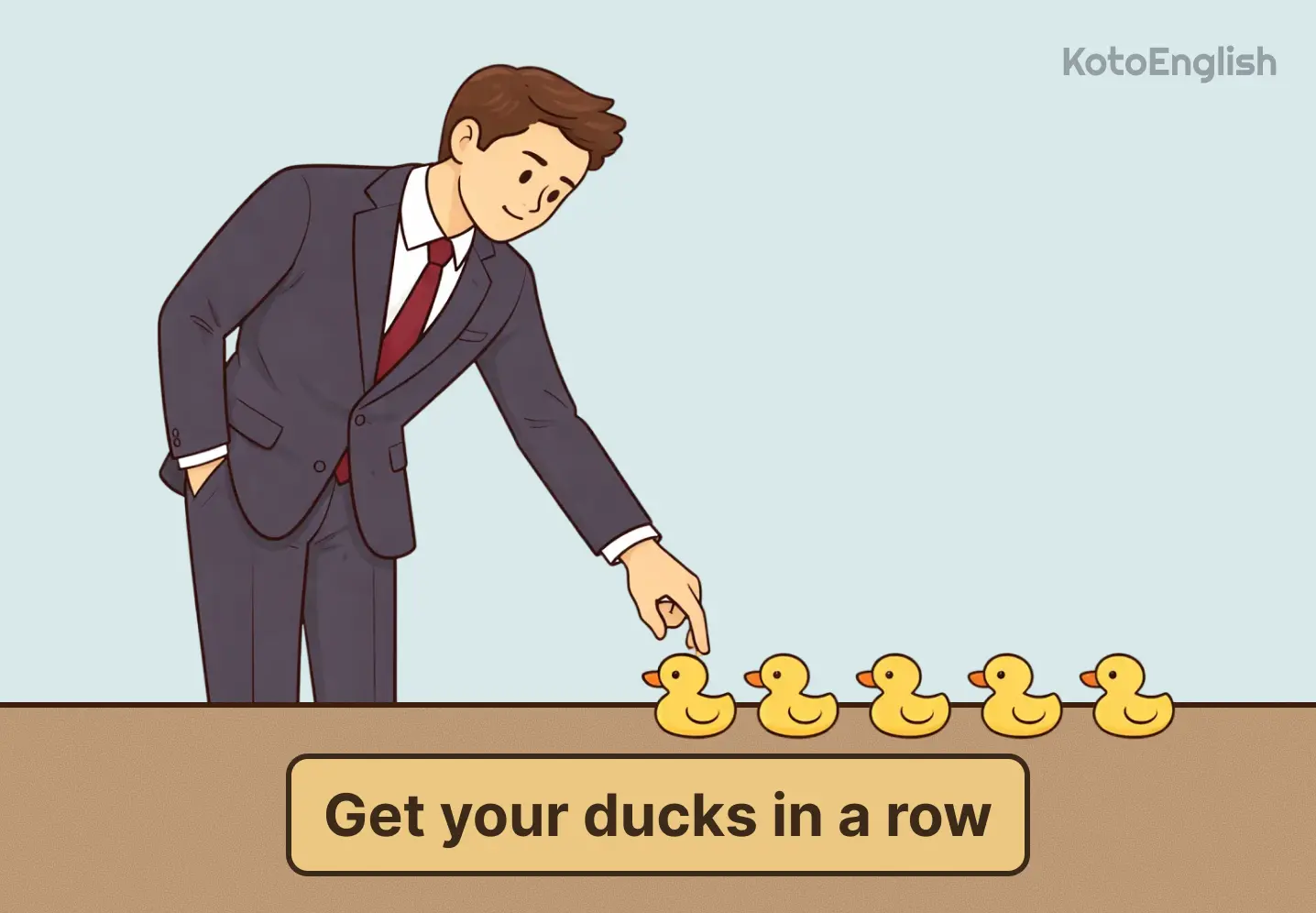
Get your ducks in a row — to prepare and arrange things systematically and properly.
Before starting your business, make sure youget all your ducks in a row .
-
Duck out — to avoid responsibility or a situation.
Adamducked out of the meeting early to avoid the difficult discussion.
Test Your Knowledge of “Duck” Meaning: Quiz Time!
Take a look at the amount of knowledge you have acquired regarding the “duck” and verify if you can appropriately use these phrases, as well as the term itself, in the right context.
Enjoy personalized learning!
“Duck” Word in Other Languages
Discover how to spell “duck” in different languages to boost your linguistic skills.
| Language | Word for “Duck” |
|---|---|
 Spanish
 |
Pato |
 French
 |
Canard |
 German
 |
Ente |
Discover Fun Facts About “Duck”
Unique abilities and distinguishing characteristics make ducks more interesting than they first appear. Read these interesting details and share them with your friends and family!
-
Ducks sleep with one eye open.
The ducks that are on the outer edge of the group monitor the surroundings by keeping one eye open for potential attacks, whereas the ducks in the center can take restful sleeps with their eyes shut, thus forming an automatic protection system. -
Duck feathers are completely waterproof.
Ducks possess a unique gland located close to their tails that secretes oil which they apply to their feathers during grooming. This oil layer protects the feathers from water penetration to the extent that ducks can float and swim without getting wet at all. -
Ducklings can swim immediately after hatching.
On their first day, mother ducks take their newly hatched ducklings to water and the little ones rely on instinct to swim and dive. Such early freedom is beneficial for the little ones as they can survive in the dangerous water environments. -
Male ducks don’t quack.
Male ducks (drakes) produce varying, gentler noises that can be likened to whistles, grunts, or raspy sounds. The vocal difference plays a major role in the communication among ducks and in the recognition of individuals within groups, most especially during the breeding period.
Quotes Featuring the Word “Duck”
Listen to what writers, philosophers and famous people in general have said about these creatures and the life lessons “duck” in English teaches us!
Explanation: He uses duck behavior as a metaphor for appearing composed while working hard behind the scenes. Ducks look graceful gliding across water, but beneath the surface their feet paddle frantically.
— Ellen Swallow Richards
Explanation: The essence of this quotation is that keeping a good self-image and having faith in your abilities will make it hard for critics to reach you or hurt you. Just as water does not stick to a duck’s feathers, criticism does not affect a person who is emotionally strong and stable.
— Ken Blanchard
Explanation: This saying guides us to steer clear of making meaningless noise and instead look for a greater purpose and impact. It draws a line between superficial compliance and the pursuit of a broader vision, personal development and quality.