

Cat (noun) — a small, furry domestic animal with whiskers, sharp claws and a long tail, often kept as a pet, known for hunting mice, sleeping frequently and being independent yet affectionate with their owners.
How to Pronounce “Cat”?
 Audio (UK):

 Audio (US):
Say c with a hard k sound, then add et like in “hat.” It’s a short, simple one-syllable word.
Level up your English with Koto!
Examples: How to Use “Cat” in a Sentence
Define “cat” by understanding how people incorporate this word into daily conversations about pets, animals and their experiences with these popular companions. Listen and repeat.
What Are Synonyms for the Word “Cat”?
Learn the related vocabulary to this word and as a result expand the flexibility of your written and spoken English.
Related nouns: pet animal
Synonyms (contextual): kitten kitty
Common collocations: photo a cat stray cat house cat
“Cat” Word Formation and Description in Context
Expand your ability to describe different things by combining “cat” with adjectives, verbs and nouns in natural, everyday expressions.
With adjectives: fluffy cat lazy cat orange cat wild cat
With verbs: feed a cat adopt a cat pet a cat train a cat
With nouns (noun + noun): cat food cat owner cat behavior cat person
Idioms and Phrases with “Cat”
“Cats” have inspired countless English expressions that native speakers use regularly — learn these to sound more natural and fluent!
-
Curiosity killed the cat — being too curious or nosy can lead to trouble or danger.
Don’t ask too many questions about his personal life —curiosity killed the cat . -
Let the cat out of the bag — to accidentally reveal a secret, to tell information that was supposed to be hidden.
Ilet the cat out of the bag about the surprise party when I mentioned the decorations. -
Like herding cats — trying to control or organize something that’s nearly impossible.
Getting all my roommates to clean the apartment islike herding cats . -
Cat got your tongue? — used when someone is unusually quiet or won’t answer.
You haven’t said a word all evening —cat got your tongue ? -
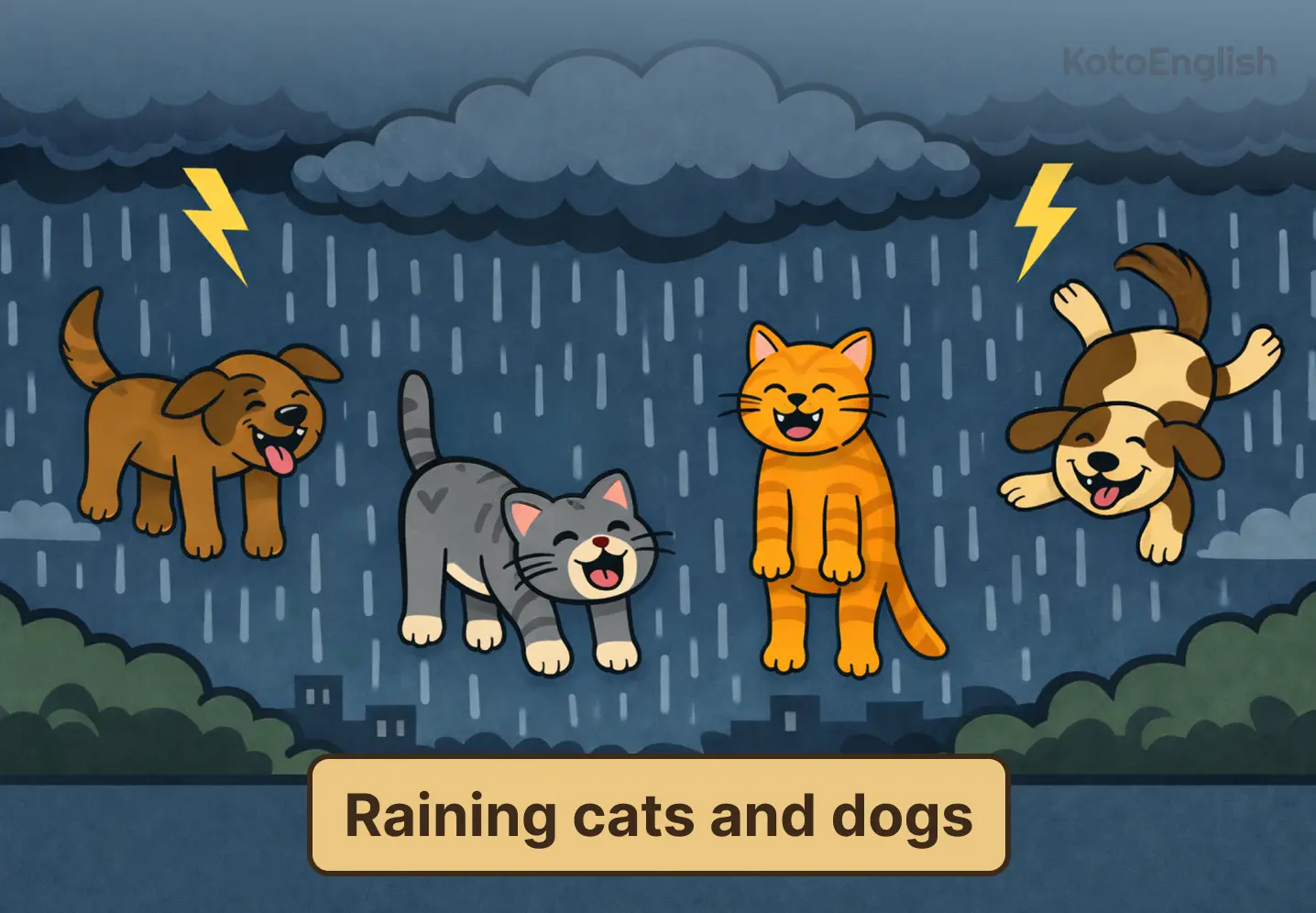
Raining cats and dogs — raining very heavily.
We can’t go to the park now. It’sraining cats and dogs outside!
Test Your Knowledge of “Application” Meaning
Check how well you’ve learned phrases, descriptions and idiomatic meanings with these fun and practical questions!
Enjoy personalized learning!
“Cat” Word in Other Languages
Learn what people call these beloved furry companions in Spanish, French and German-speaking countries worldwide. Listen to how to say “cat” and pronounce it and repeat.
| Language | Word for “Cat” |
|---|---|
 Spanish
 |
Gato |
 French
 |
Chat |
 German
 |
Katze |
Did You Know It? Fun Facts About “Cat”
“Cats” are more mysterious and remarkable than most people realize — these details will change how you see these common pets!
-
Cats sleep 12-16 hours per day.
It is estimated that cats sleep for around 70% of their lives, which indicates that a 9-year-old cat has already lived only three years of its life awake. Sleeping a lot is an evolutionary trait; wild cats used this habit to conserve energy between hunts and domestic cats keep this instinct. -
Cats can’t taste sweetness.
Cats, unlike humans and dogs, do not possess taste receptors that detect sweetness. It is the opinion of scientists that cats lost this power since they were pure meat-eaters and thus never had to distinguish sugar. That is why cats do not care about sweet treats at all. -
Ancient Egyptians worshipped cats.
In ancient Egypt, cats were revered as divine creatures linked to the deity Bastet. Even the accidental killing of a cat would lead to the death penalty. Egyptian households would grieve for their dead pet cats by shaving their eyebrows and mummifying the cats for the afterlife. -
A cat’s purr has healing properties.
Scientists have revealed that this sound vibrates at such a frequency (25-150 Hz) that it heals bones and tissues. These vibrations can result in pain relief, lessening of dyspnea (breathing difficulty). This could be a reason for the lower risk of heart attack and stroke in cat owners.
Famous Quotes Featuring “Application” in English
Explore what writers, thinkers and famous figures in general have said about “cats” and their unique relationships with humans.
Explanation: The well-known psychoanalyst Sigmund Freud, mostly recognized for his work in human psychology, was a lover of cats. The citation implies that the support, comfort and pleasure cats bring have real worth and play an important role in human welfare.
— Terry Pratchett
Explanation: This statement completely reflects the independent and proud characters of cats and their demand for people to be at their service instead of the other way around.
— Mary Bly
Explanation: Dogs, to their nature, want to be pleasing and are very obedient, whereas cats, in contrast, are more liberated and interact with humans only on their own terms, thereby demonstrating their selfish nature.