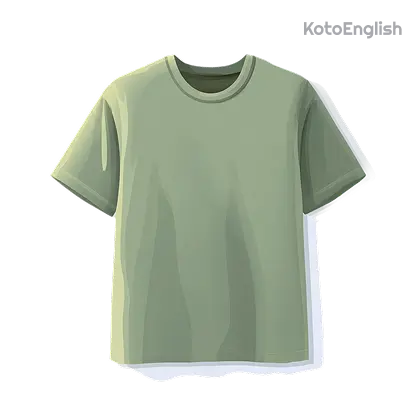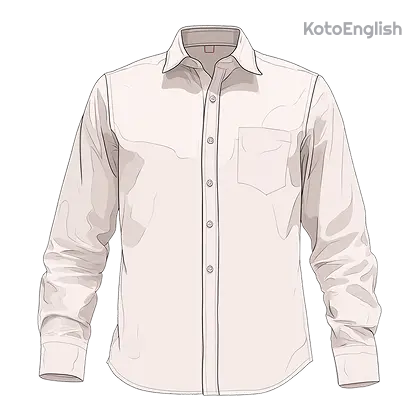
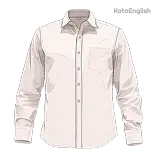
Shirt (noun) — it is a kind of clothing which conceals the upper part of the body and normally has sleeves and a collar, and in some cases may have buttons to secure it.
How to Pronounce “Shirt”?
 Audio (UK):

 Audio (US):
It should start with sh sound as in “she,” then er (mid vowel) as in “her” and finally a sharp t.
Level up your English with Koto!
Examples: How to Use “Shirt” in a Sentence?
A shirt is an item we may wear everyday and the following illustrations show how it takes up various situations of life.
What Are Synonyms for the Word “Shirt”?
There are a few simple words you can use instead of “shirt,” depending on the type of clothes you mean.
Related nouns: clothes top T-shirt uniform
Synonyms (contextual): top T-shirt
Common collocations: clean shirt white shirt school shirt
“Shirt” Word Formation and Description in Context
Words used together with “shirt” help show its colour, style, or the action someone does with it.
With adjectives: new shirt blue shirt long-sleeve shirt
With verbs: wear a shirt put on a shirt take off a shirt wash a shirt
With nouns (noun + noun): shirt pocket shirt button shirt collar shirt size
Idioms and Phrases with “Shirt”
What “shirt” means in idioms usually connects to strong emotions or situations where someone loses or protects something important. The plain speech also has the daily expressions that follow.
-
Lose your shirt — means lose all your money.
Jack invested in a bad idea and almostlost his shirt . -
Keep your shirt on — a term used to calm a person down and not express anger.
Keep your shirt on , we will fix the problem. -
Keep your shirt on — a term used to calm a person down and not express anger.
Keep your shirt on , we will fix the problem. -
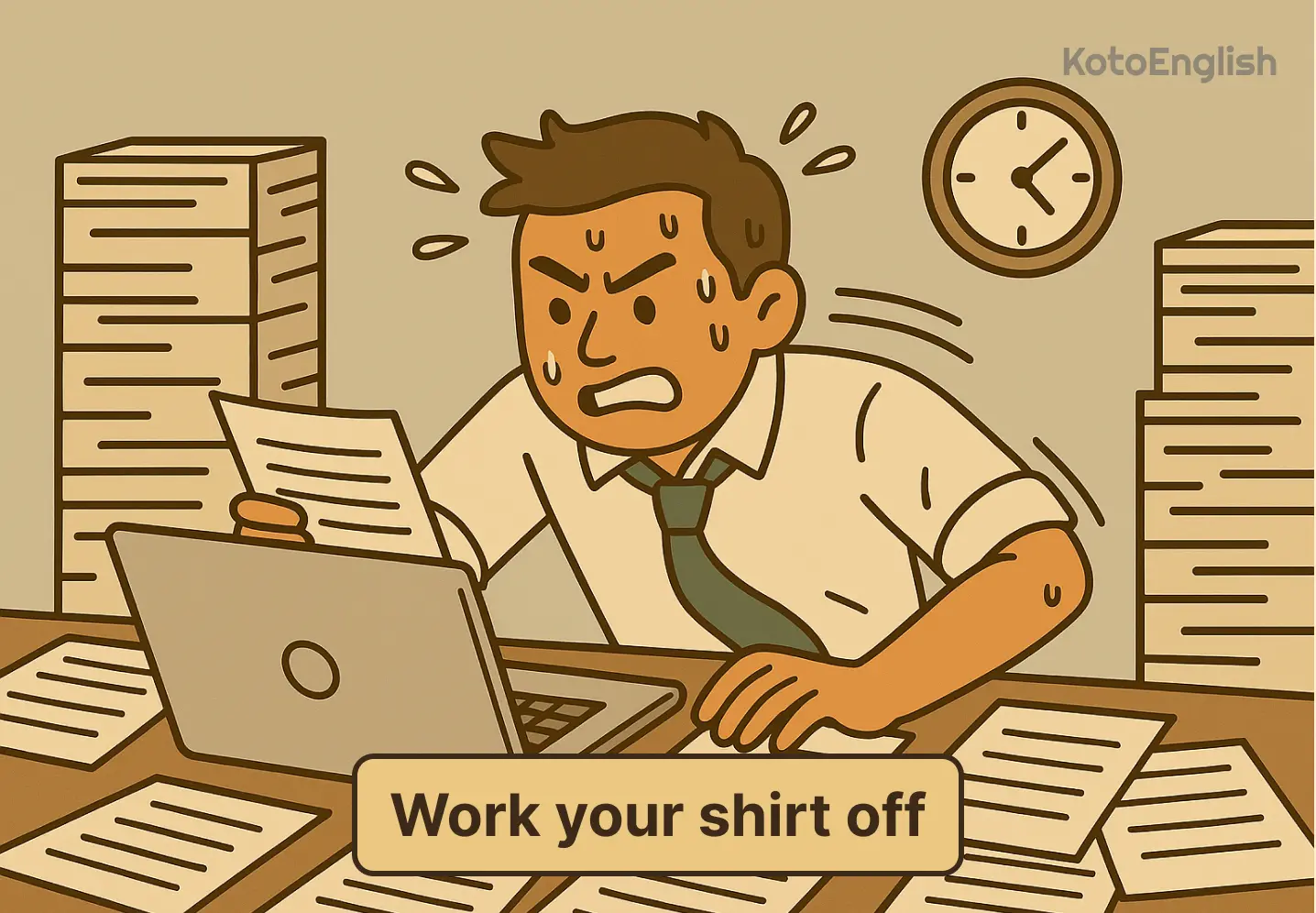
Sweat your shirt or work your shirt off — to work till the point of exhaustion.
Sheworked her shirt off to finish the project.
Test Your Knowledge of “Shirt” Meaning
You can have fun exercising to see how well you understand the meaning of a “shirt.”
Enjoy personalized learning!
“Shirt” Word in Other Languages
How to say “shirt” in other popular languages? The words may differ, but they all mean a top worn on the upper body.
| Language | Word for “Shirt” |
|---|---|
 Spanish
 |
Camisa |
 French
 |
Chemise |
 German
 |
Hemd |
Did You Know It? Fun Facts About “Shirt”
Have you ever asked yourself where shirts came from, why polos have collars, or which shirts made history? Read on to learn more.
-
The buttoned shirt is relatively modern.
Buttons became popular in Europe around the 13th century. They changed shirts from simple pullovers into tailored clothing that fit the body better. -
Polo shirts were inspired by sports.
The first wearers thereof were tennis and polo players. The collars served as protection for their necks from the sun while playing. -
At a certain point, white shirts became a sign of social class.
Only rich people were able to afford washing frequently and using fine linen constantly. Wearing white was a way to show off one’s prestige and social standing. -
The Oxford shirt has a rich heritage.
It came from Scotland and gradually took over the whole world. Nowadays, it is considered as suitable for both casual and business occasions. -
Famous shirts make up the history.
James Dean’s white t-shirt and Michael Jackson’s sequin shirt became the icons of their eras. They reveal how a shirt can be a marker of a cultural moment.
Famous Quotes Featuring “Shirt”
The unassuming shirt has been a source of thoughts, metaphors, and even advice. Remarkable quotes that contain it are:
— Charles de Gaulle
Explanation: This quote uses the word shirt in a series to describe sacrifice and how individuals can be increasingly giving in the struggle or the cause.
— Harvey Mackay
Explanation: It is a metaphor about being wary of risky promises. A caution not to trust the person who is offering you some help or generosity when he or she is in need of the simplest necessities.
— Francis Picabia
Explanation: Just as we alternate our shirts to be always fresh and clean, Picabia suggests we should let our thoughts progress — renew ideas often to stay creative.