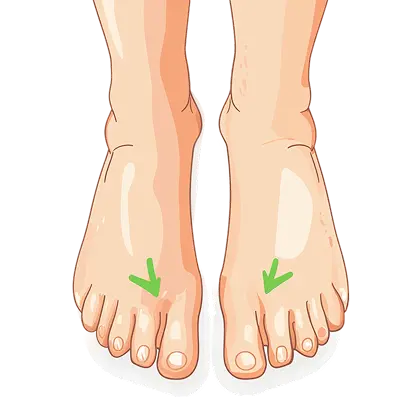
Toe (noun) — one of the five toes that are at the end of your foot. It makes you walk, run or jump without falling or stumbling. Talking about health and sport, toes come to mind and remind us how vital they are in our lives.
How to Pronounce “Toe”
 Audio (UK):

 Audio (US):
the word starts with a soft t and then the long o and concludes with a plain and simple ending.
Level up your English with Koto!
Examples: How to Use “Toe” in a Sentence
You’ll understand “toe” best when looking at real-life scenarios: balancing while running, feeling cold floors, or wiggling toes after a long day.
What Are Synonyms for the Word “Toe”?
One who tries to define a “toe” soon finds it all around him: in sports commentary, in health advice, or in a casual conversation. The synonyms are as follows to make your language fresh.
Related nouns: digit appendage
Synonyms (contextual): none, it’s a specific noun
Common collocations: stub a toe wiggle your toes paint your toes
“Toe” Word Formation and Description in Context
The more words that are associated with the “toe” definition will help you change your language to suit the occasion, like wiggling toes by the beach or having a medical check-up.
With adjectives: big toe little toe injured toe cold toes wiggly toes
With verbs: stub a toe bend your toe stretch your toes tap your toes
With nouns (noun + noun): toenail toe ring toe joint toe sock
Idioms and Phrases with “Toe”
In case the plain words are boring, you can boost your writing or studies by adding emotion to your stories or essays using the “toe” idioms.
-
Keep on your toes — to remain alert and watchful and ready to act in response to change or challenge.
Working in customer servicekeeps you on your toes all day. -
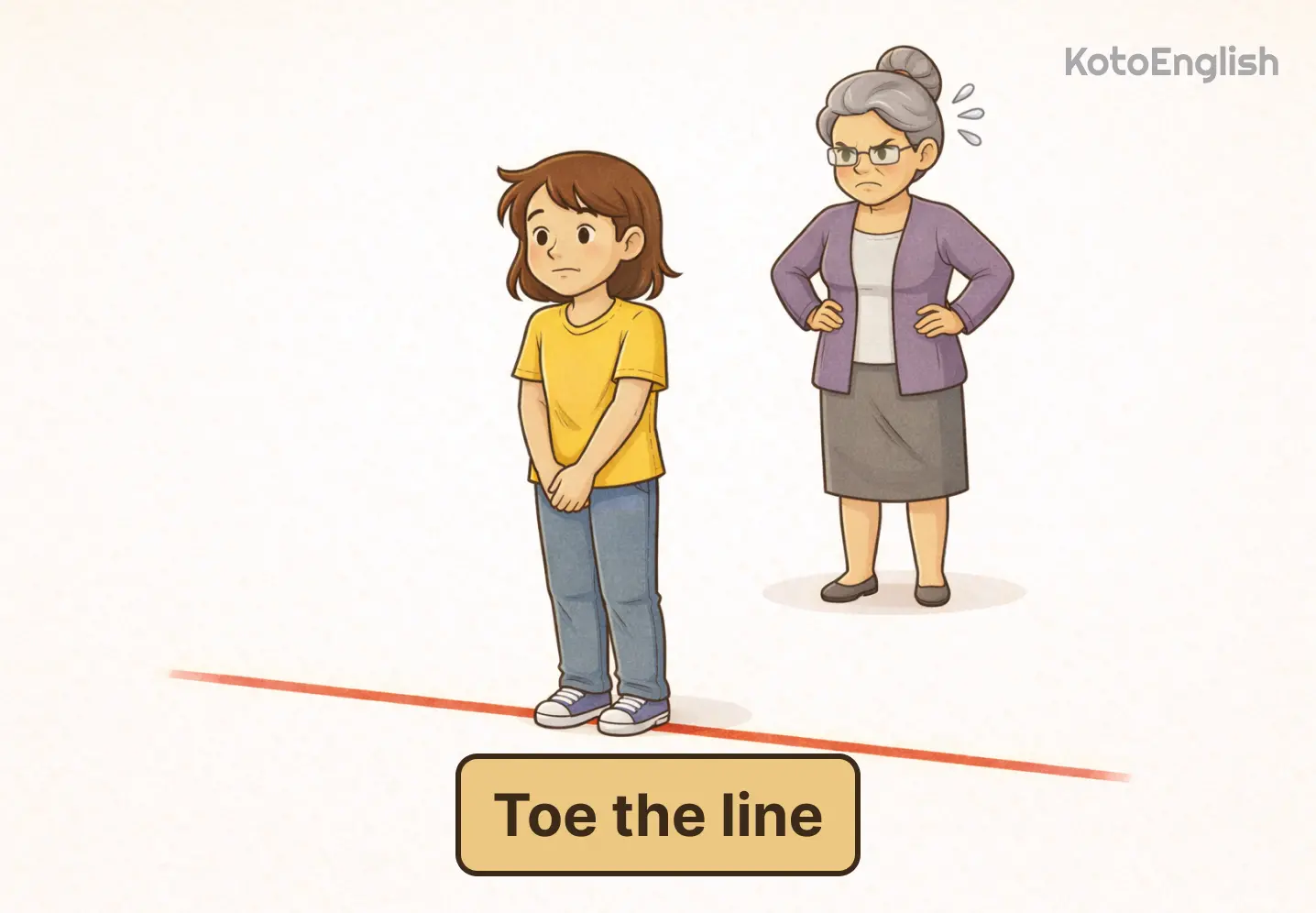
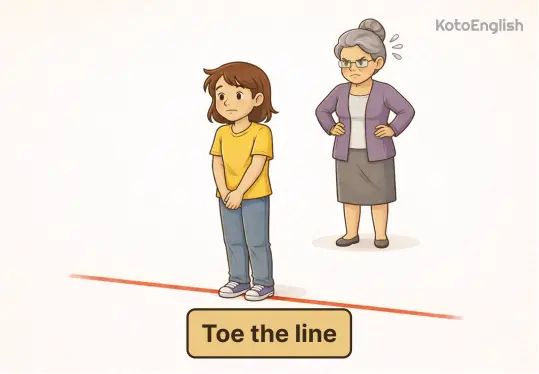
Toe the line — do as you are told or pay respect to authority (especially when you are against your will).
Politicians tend totoe the partyline , even when privately they do not agree with some issues.
-
Dip your toe in — to taste something new with care or at first a little.
Idipped a toe in cooking classes and then enrolled in a full course. -
Step on someone’s toes — to insult or to interfere with the position or business of someone.
The new actor did not want tostep on the toes of the director during the rehearsal.
Challenge Yourself: The “Toe” Word Quiz
Since you understood the “toe” meaning, now it is time to exercise your brain muscles with a challenge.
Enjoy personalized learning!
“Toe” Word in Other Languages
Comparing a word across different languages can give you a better understanding of its English usage.
| Language | Word for “Toe” |
|---|---|
 Spanish
 |
Dedo del pie |
 French
 |
Orteil |
 German
 |
Zeh |
Toe Tales: Curious Facts About Your Foot Digits
Toes are important foot parts that are often ignored. There are some incredible facts to examine.
-
The big toe plays a very important role in walking and running.
It supports a maximum of 50% of your body weight when push-off occurs, and it is therefore the most significant toe in terms of movement. Its loss or damage can have important implications for balance. -
Some individuals have additional toes or polydactyly.
Polydactyly is an infrequent birth defect in which a person is born with more than five toes on a foot. There was a time when additional toes were viewed as either lucky or abnormal. -
Your toes are able to communicate with your brain in unusual ways.
Each toe contains numerous nerve endings that assist your brain in feeling pressure, balance, and movement and are therefore critical in activities such as yoga, dancing, or even standing on one foot. -
Toenails grow slower than fingernails.
Toenails grow at an average rate of 1.6 mm/month, and fingernails at nearly twice that rate. This slower growth helps protect toes from repeated pressure and impact. -
Some cultures decorate toes for celebration or fashion.
Decorating toes with rings, henna, or nail art shows that these small digits can be both useful and expressive.
Interesting Quotes About “Toe”
These quotes clarify what a “toe” is and highlight how it functions in literal, idiomatic, and creative expressions.
— Charles Kettering
Explanation: The saying underlines the benefits of stepping forward and taking chances. Mistakes may happen, but they lead to growth, making it a lesson for students to embrace challenges.
— Roger Clemens
Explanation: In this case, toe the rubber means a baseball pitcher stepping out on the pitcher’s mound. Another detail that can be transferred to students passing their exams or making presentations, mentioned by Clemens, is the uniformity and attention that these situations require.
— Zac Efron
Explanation: Efron promotes openness and rapid thinking. This is required among pupils, where they have to be creative and resourceful in problem-solving.