What does the phrasal verb “put” mean?
The core meaning of phrasal verbs with “put” is reflected in the idea of making a change, which involves placing, directing, shaping, or affecting. When linked with a particle (commonly a preposition), it has several predictable meaning groups.
Below, you’ll see the main meaning and usage patterns learners meet most often.
|
Aspect |
When to use |
Examples |
|---|---|---|
|
Placement or movement |
The phrasal verbs are typically used when someone physically sets down, retrieves, organizes or relocates an object. |
|
|
Impact on people or situations |
You use them when talking about judgment, pressure, tolerance, or experiences that affect people socially or emotionally. |
|
|
Ideas and communication |
These verbs are related to expressing ideas, making suggestions, and shaping opinions. |
|
|
Separation, removal, or delay |
This is used when something is delayed, postponed, or removed from use. |
|
Some phrasal verbs have one meaning, like “put forth” while others, “put down” and “put on” can have 3-4 connotations based on context.
List of phrasal verbs with “put”
Sentences including these phrases will enable you to describe others’ feelings and common daily situations easily, as well as help you understand native speakers.
Here are some common expressions that we’re going to be discussing today:
- Put away
- Put aside
- Put across
- Put back
- Put down
- Put down as
- Put down for
- Put forward
- Put forth
- Put up
- Put up to
- Put up with
- Put up a front
- Put in
- Put into
- Put in for
- Put into practice
- Put on
- Put off
- Put out
- Put over
- Put (it) past
- Put together
- Put towards
- Put through
Keep reading to learn English online through meanings, examples in context, and audio recordings.
Put away
The meaning of the phrasal verb depends on whether it refers to money or physical items.
- To put something in a place where it usually belongs.
- To save for later.
Put aside
You use put aside when you separate something mentally or physically.
- To save something for future use.
- To stop focusing on something or ignore it temporarily.
Put across
This phrasal verb with put focuses on how effectively thoughts and ideas are communicated.
Put back
Put back is suitable to use when something is moved to its previous time or position.
- To return something to its proper place.
- To delay a planned event to a later time.
Put down
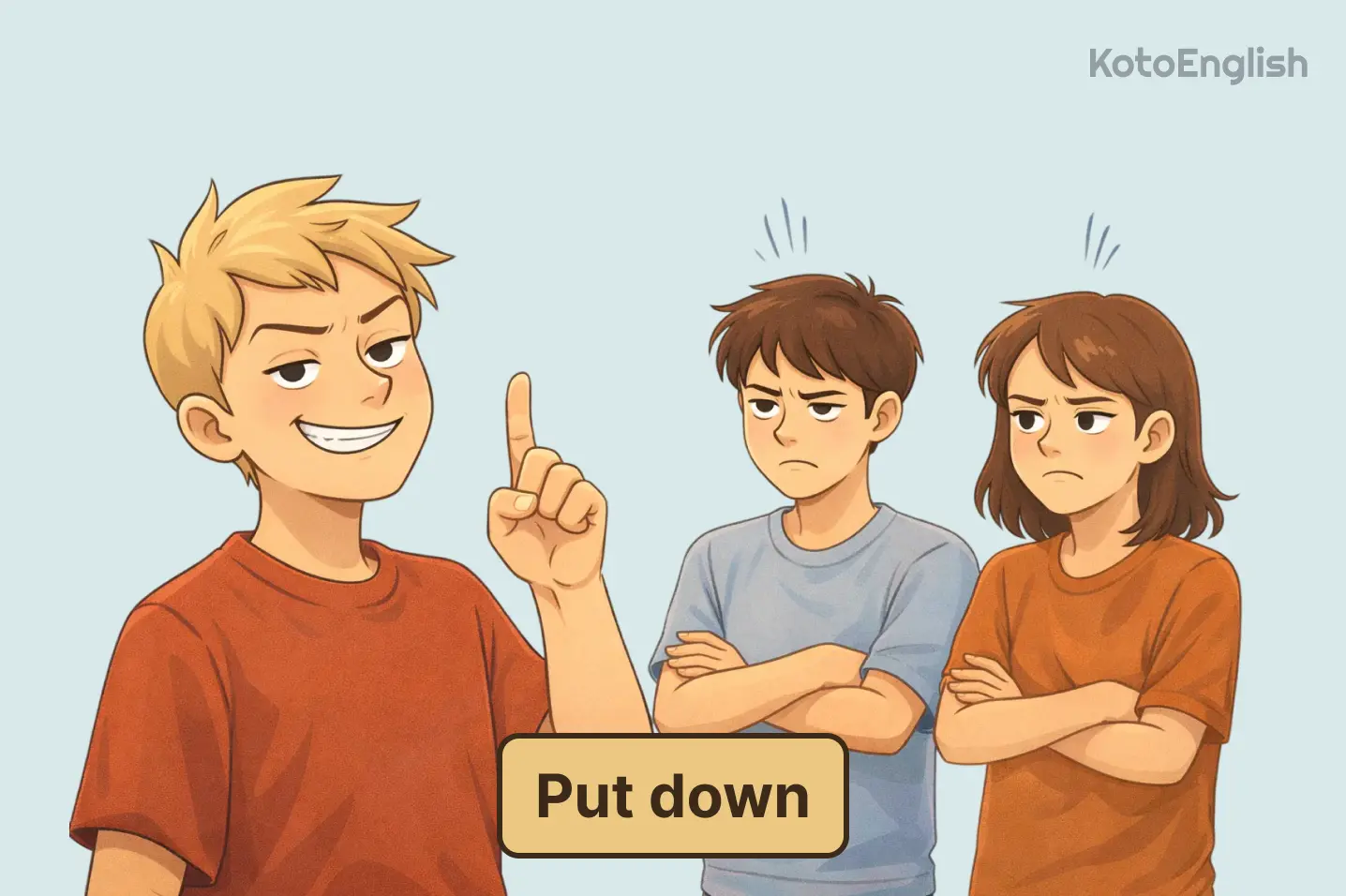
This phrasal verb shows how an action can be developed into a negative social meaning.
- To place something onto the surface, usually the floor.
- To insult or make someone feel criticized.
- To euthanize an animal due to poor health or old age.
Put down as
It means to categorize or assume something about another person, without full information.
Put down for
It is used in organizational situations when you need to sign someone up or register.
Put forward
It is used in formal contexts, especially when discussing proposals or candidates.
- To suggest or propose a plan or idea.
- To recommend someone as a candidate for something (job position, promotion).
Put forth
Similar to “put forward,” this phrasal verb is used in cases when someone presents opinions or arguments.
Put up
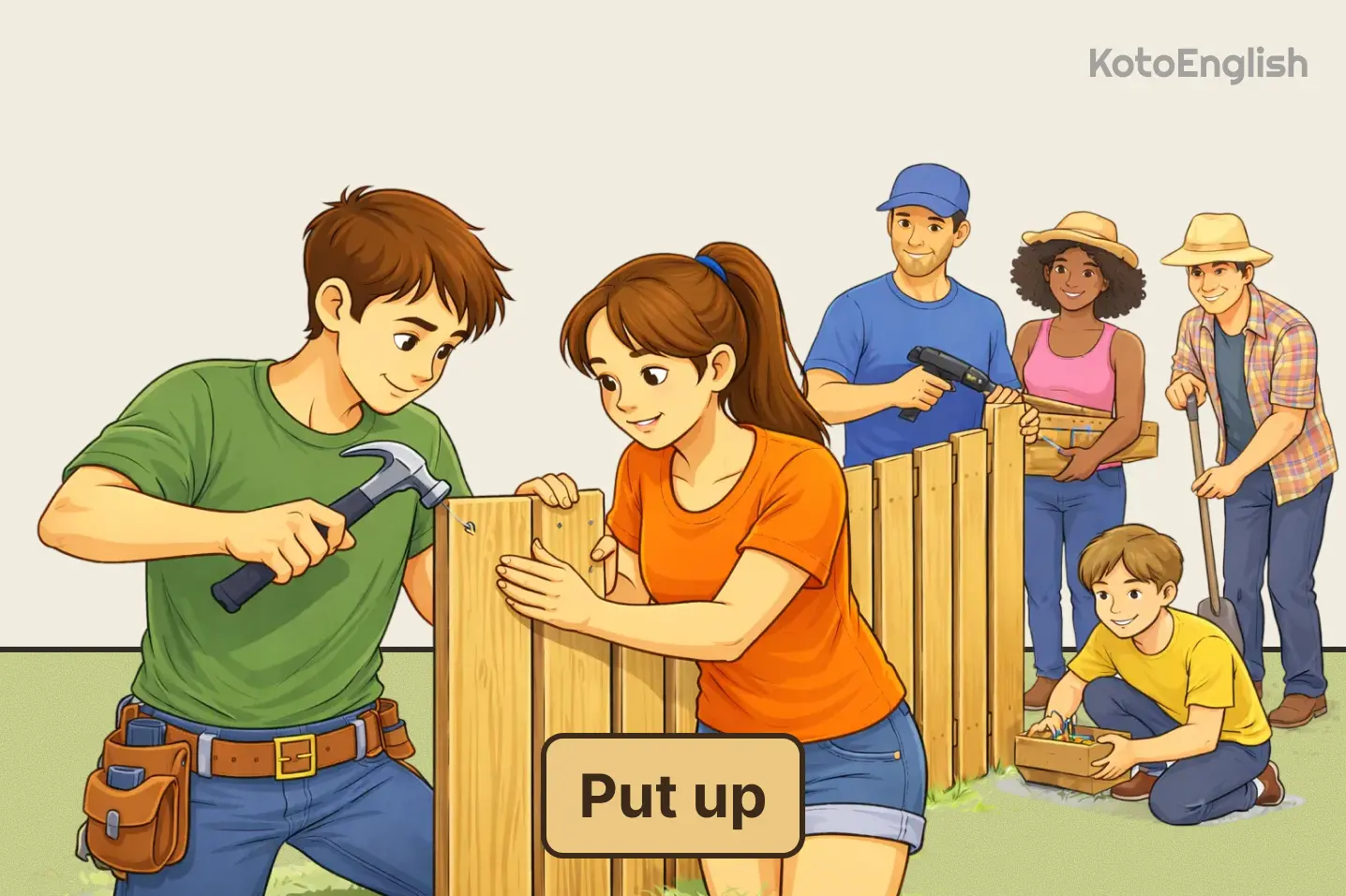
It is associated with situations when you prepare, raise, or build something. There is also an adjective, put-up (used with a hyphen), which means something that has been prepared beforehand in secret.
- To raise something.
- To put up is to build something.
- To show a certain level of resistance.
Put up to
It is used to describe the influence of one person over another’s actions.
Put up with
This phrasal verb is useful for describing a situation in which you need to tolerate or accept a situation or person you find unpleasant.
Put up a front
It is used in context when someone needs to hide their true feelings.
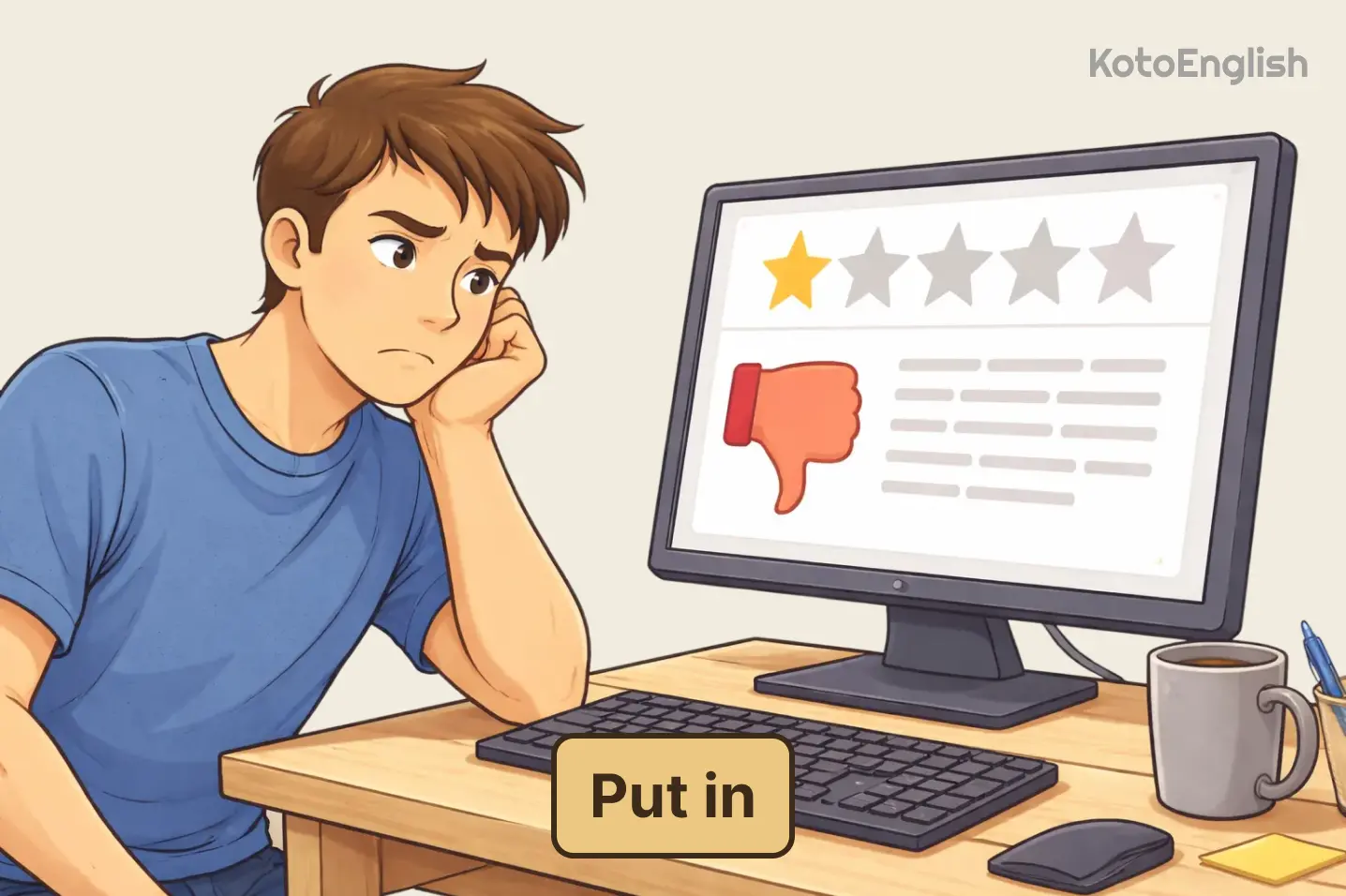
Put in
This phrase is common when you add content, effort, or information to something.
- To include something or place it in a particular spot.
- To put time and effort into achieving a desired result.
- To submit a request or apply for something.

Put into
This phrase helps highlight the direction in which efforts and resources are directed.
Put in for
You use put in for when you want to make an official or formal request to do something.
Put into practice
“Put into practice” means to apply advice, ideas, or a plan in an actual situation.
Put on
You can use this phrase when adding something temporarily to a situation or yourself.
- To cover the body with a piece of clothing, jewelry, make-up, etc.
- To make a machine or a device start working.
- To gain weight
- To pretend
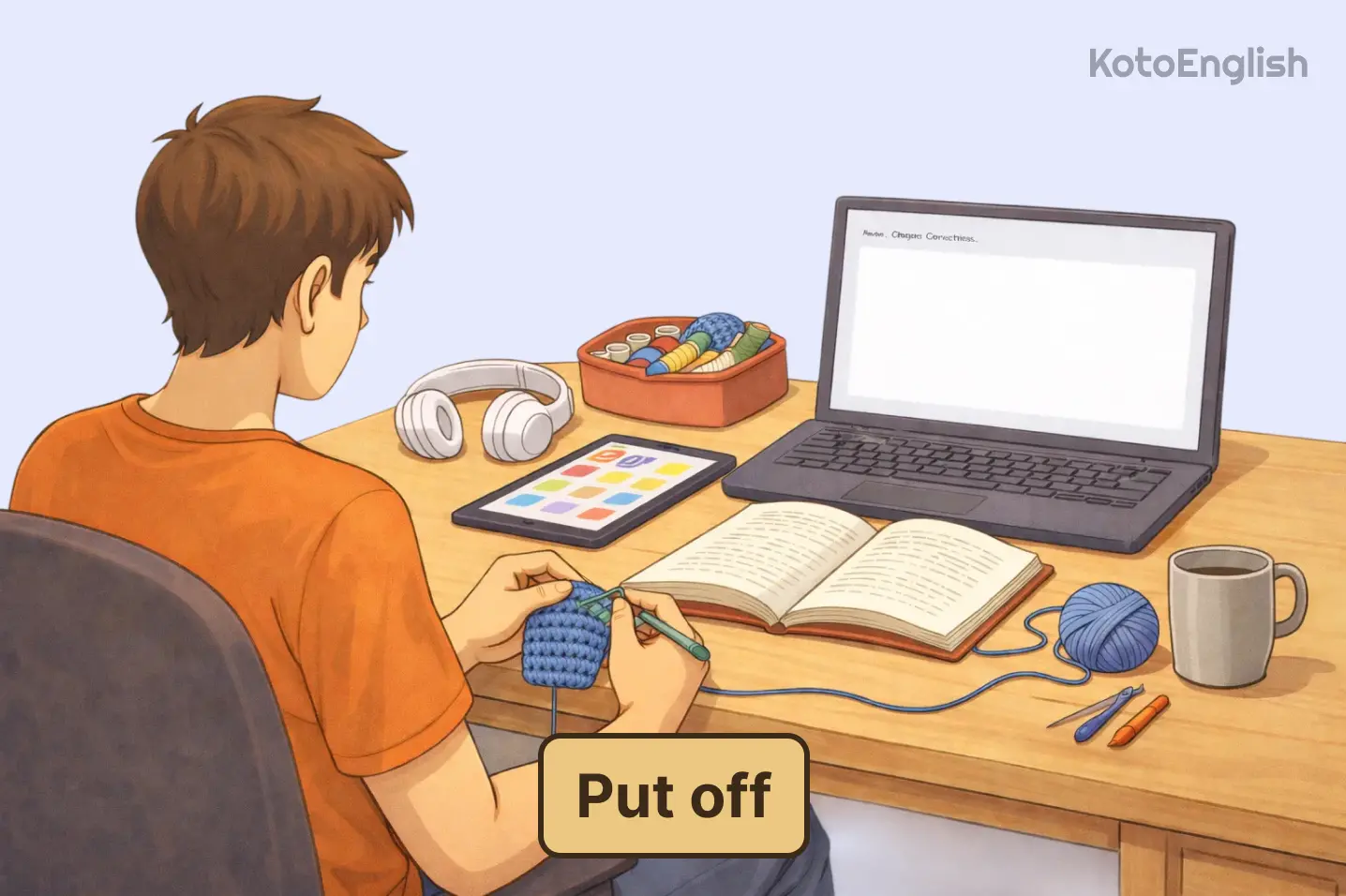
Put off
It means to delay or hold back something for a later time, especially because you don’t want to do it.
Put out
This phrasal verb is used when describing something that is stopped, made public, or delivered as a result.
- To extinguish something.
- To publish something officially.
- To cause trouble or inconvenience to someone.
- To produce work or efforts.
Put over
It is frequently used when talking about how clearly an idea is expressed, similar to the phrasal verb “put across.”
Put (it) past
“Put it past” means to believe someone is capable of doing something.
Put together
It refers to combining separate parts into a whole.
- To assemble pieces in the appropriate places to make something work.
- To gather a group of people for a certain purpose.
Put towards
It is used to assign money to a specific goal.
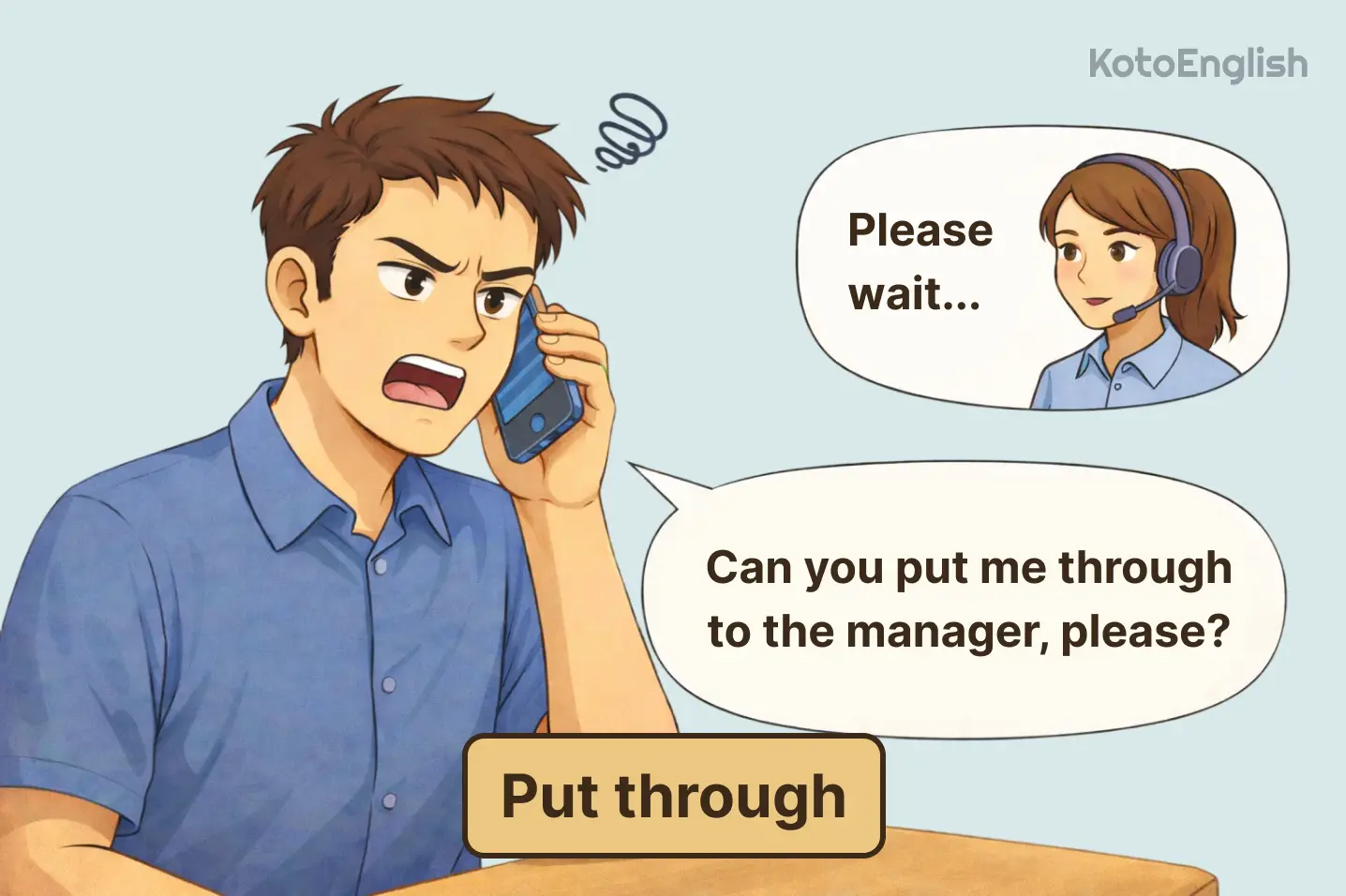
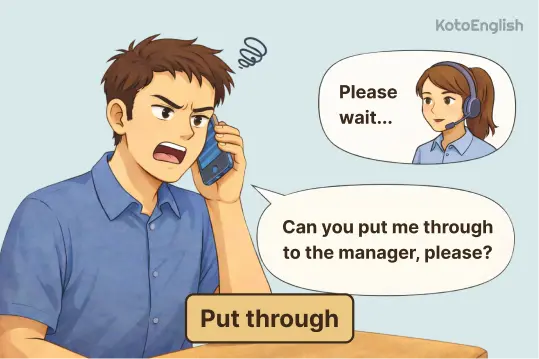
Put through
This phrasal verb is used in scenarios involving connections and experiences.
- To force someone to experience an unpleasant situation.
- To make a call and reach the other person.
Look past
This particular phrase is used when you ignore something negative or superficial in order to focus on what is more important.
Grammar rules for phrasal verbs with “put”
When using “put” phrasal verbs, word order dictates meaning and accuracy. If objects are situated incorrectly, people may become confused and sentences may sound unnatural, though you may be conveying your intended message correctly.
Separable vs. inseparable phrasal verbs
Most combinations let the object split them apart, but a few have to stay together. Knowing which form you’re using can prevent awkward phrasing and help you sound confident:
In the table below, you will find common examples of verbs that are typically used together or are separated by a noun/noun phrase:
|
Separable |
Inseparable |
|---|---|
|
|
|
|
|
|
|
|
|
|
|
|
|
|
|
The best strategy is to learn how to use phrasal verbs with “put” instead of playing a guessing game, as there are no patterns that can help you predict which ones can be divided.
Using pronouns with “put”
When pronouns replace objects, placement is strict. For the separable verbs, the pronouns must go between put and the particle.
Example:
For the inseparable verbs, the pronouns go after the complete phrase.
Example:
Nouns offer flexibility with separable verbs, as you can see in this example: “put the decision off” = “put off the decision.”
Common mistakes with phrasal verbs using “put”
To use these words confidently, you need to invest your time, and before it happens, blunders are going to arise frequently. Below, you’ll find popular misconceptions about phrasal verbs that will help you better memorize the rules.
Using particles inconsistently
Some students assume that the verbs’ meanings revolve around “put,” using different particles with it that don’t belong, especially in situations where the single word is enough.
|
She put down the key on the shelf.
|
She put the key on the shelf.
|
|
He put up the book on the table.
|
He put the book on the table.
|
Misunderstanding “put in” and “put into”
These verbs are tricky even for experienced learners, as both relate to effort. While “put in” focuses on contribution, “put into” emphasizes direction and what the effort is aimed at.
|
She put into a lot of hours at work.
|
She put in a lot of hours at work.
|
|
He put in savings opening a restaurant.
|
He put his savings into opening a restaurant.
|
Forgetting about objects
Adding an object to a transitive verb is essential, as it sounds incomplete without it.
|
Please put away after dinner.
|
Please put the dishes away after dinner.
|
|
She put off until next week.
|
She put the lesson off until next week.
|
Practice section: test your knowledge
Discover how well you understand the meaning of “put” phrasal verbs by passing these exercises and checking your answers after completion.
Summary
The goal of every student who wants to learn English is to speak like a native speaker. Phrasal verbs are the kind of instrument that allows us to construct sentences in a way that sounds the most natural. This is why it’s important to make an effort to learn all the different types of them, like phrasal verbs with “take”, for instance.
Be sure to practice your English daily and put effort into learning new words and phrases!
Frequently asked questions (FAQs)
No. Most words can be separated, but a few must go together. Words such as “put up with,” “put in for,” “put down as,” must not be separated. You can write “put the report together” or “put together the report,” but you must write “put up with the noise,” not
“put the noise up with.”
“Put off” means to delay something. “Put aside” relates to saving something, generally money and/or time; in some instances, it refers to forgetting one’s emotions and/or troubles.
Organize them by meanings instead of memorizing them randomly. Learn physical actions first (put away, put down, put back), then time-related verbs (put off, put forward), then emotional or social verbs (put up with, put down). Always use verbs within full sentences instead of isolating them.
Most of these verbs are neutral and may be used in everyday conversation and writing. Others occur in professional contexts but sound less formal than alternatives (“tolerate” rather than “put up with,” “postpone” rather than “put off”).