Common meanings of “get” in English phrasal verbs
“Get” stands as one of the most frequent verbs utilized in the English language. Every day, native speakers make use of it by hundreds of occurrences in their conversations.
The very same verb can have entirely opposite meanings in a phrasal verb with the word “get” depending on the particle that comes after it.
Here are the main categories revealing various meanings behind the common definition of “get”:
- Obtain/receive: You acquire something, like an object or information.
- Become or change state: You describe a condition or feeling.
- Understand or realize something: You comprehend an idea, a joke, phrase’s meaning.
- Arrive/reach: You get to some place, time, action.
- Avoid: You need to escape something negative: an emotion, danger, etc.
The core point of understanding these phrases is context and lots of samples, so further, we will consider them in real-world sentences that you can see in movies, podcasts, books and articles when learning English.
Most common phrasal verbs with “get”
Today, we want to introduce you to 30 phrasal verbs with “get.” These are very common phrases in English. Understanding and incorporating them will make your speech seem more approachable.
Here are the 30 phrases that we’re going to be discussing:
- Get around
- Get about
- Get across
- Get ahead (of)
- Get after
- Get along (with)
- Get at
- Get away
- Get away with
- Get back
- Get back at
- Get behind
- Get in
- Get into
- Get in on (something)
- Get by
- Get it together
- Get it over with
- Get over
- Get through
- Get taken in
- Get out
- Get to
- Get used to
- Get up
- Get down
- Get together
- Get off
- Get on
- Get rid of
We will stop and talk about the meaning of each phrasal verb, as well as give some examples of how to use them in conversation.
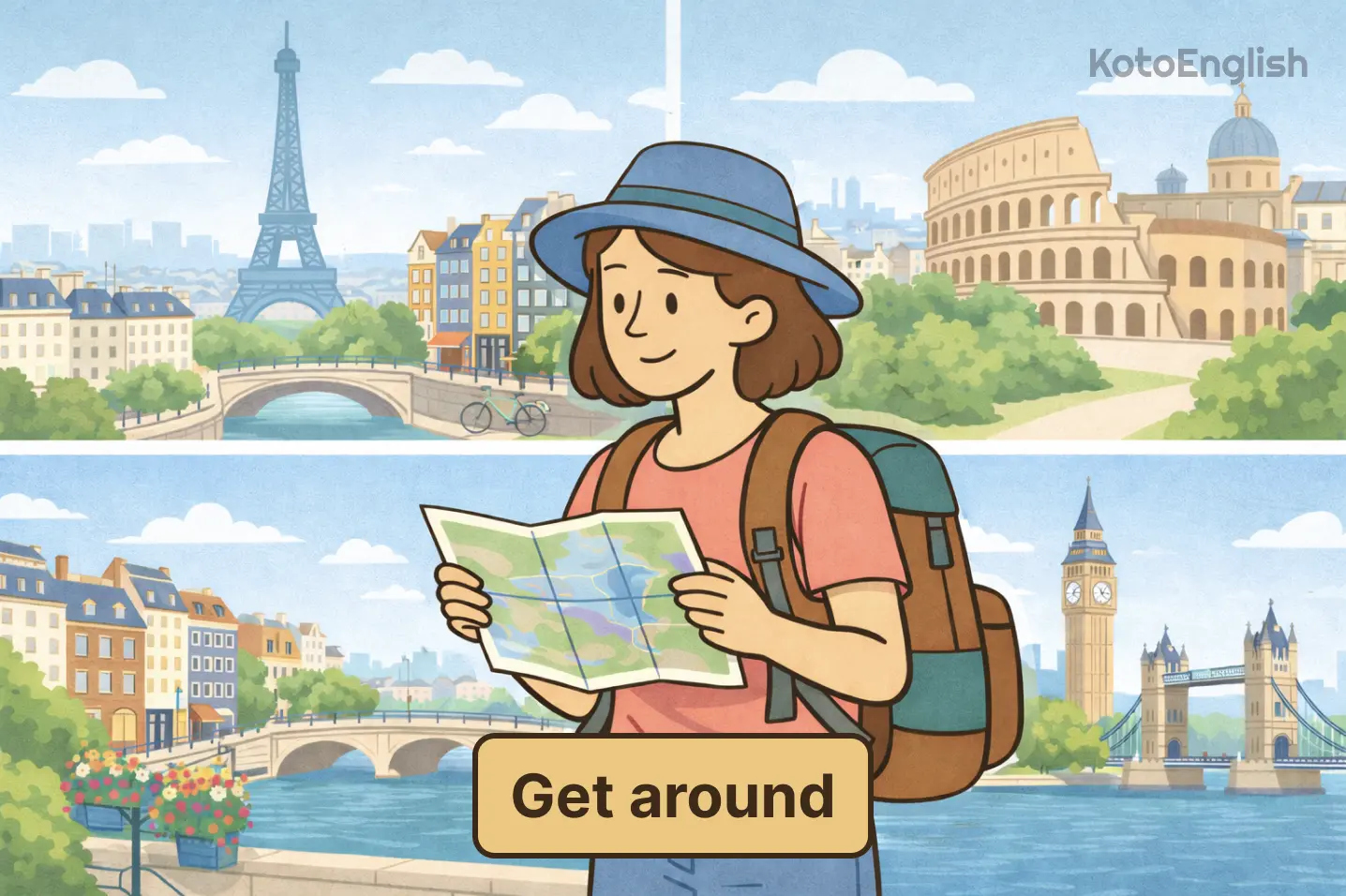
Get around
The first phrase on our list had two meanings depending on if it is followed by a location or not.
- Travel or move from one place to another:
- Finding a way of dealing with or avoiding a problem:
Get about
Similar to the previous phrasal verb with the word “get,” getting about also means moving from one place to another but it has a difference explained below.
- To move around or travel from place to place:
- To become widely known:
Get across
To get across means to make something clear or make someone understand what you’re trying to communicate successfully.
Get ahead (of)
This is one of the phrasal verbs with the word “get” that has two definitions that will enhance your English.
- To make progress or achieve something:
- To deal with something before it becomes an issue:
Get after
“To get after” is defined as intensely pursuing something or someone in order to correct a fault.
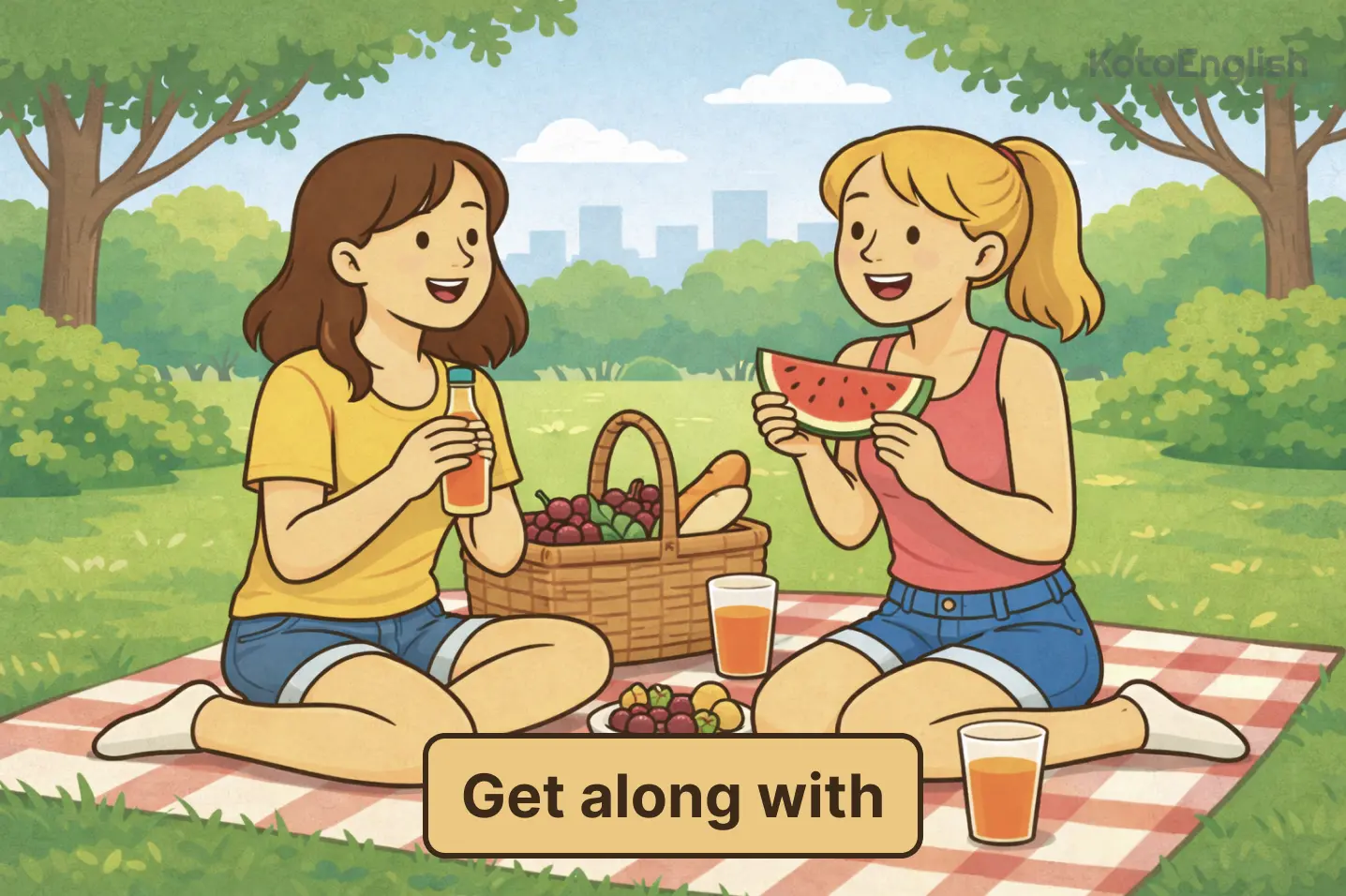
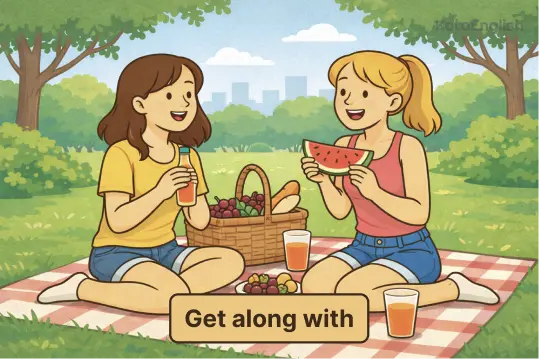
Get along (with)
To get along with someone means being on good terms or in a friendly relationship with somebody.
Get at
To get at someone means indirectly suggesting or criticizing someone repeatedly in an unfair manner.
Get away
To get away is one of the more interesting and diverse phrasal verbs with “get,” shows in sentences below.
- To leave a place:
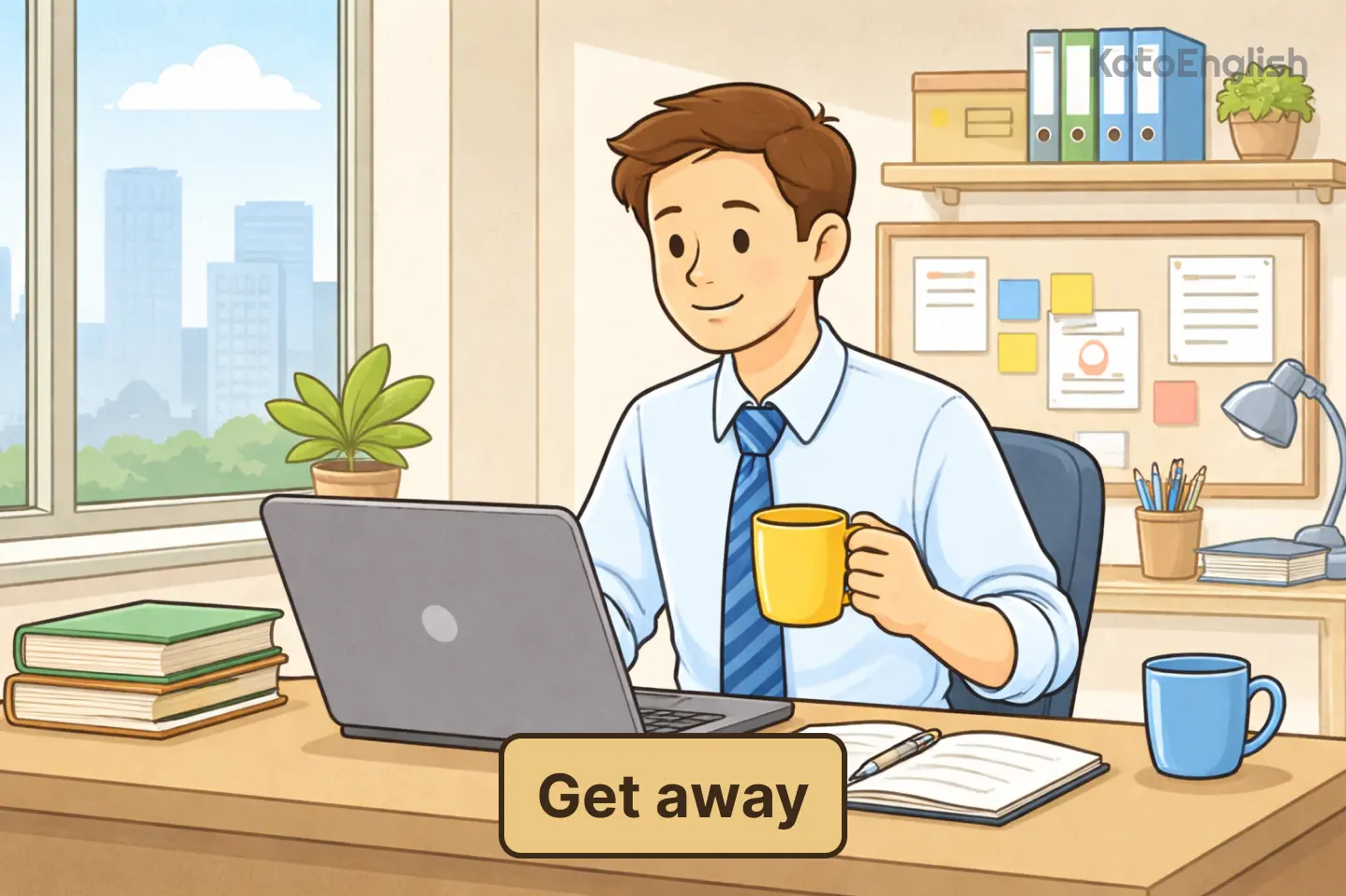
- To go away somewhere for a long period of time:
Get away with
Interestingly, to get away with something has a completely different meaning from previous phrasal verb with “get.”
Get back
This phrase has differentiating meanings whether you add “to” or not.
- To return from some place:
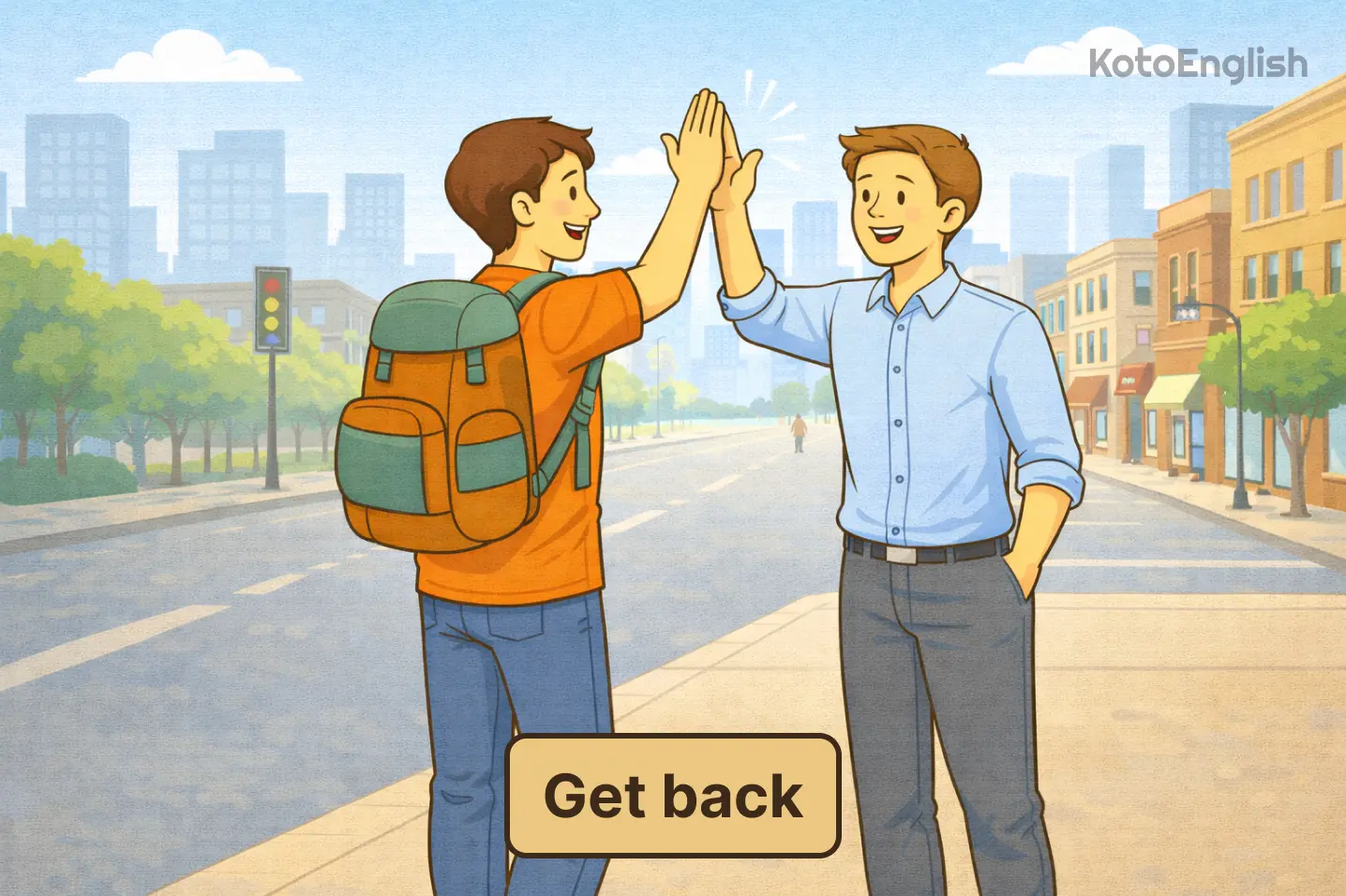
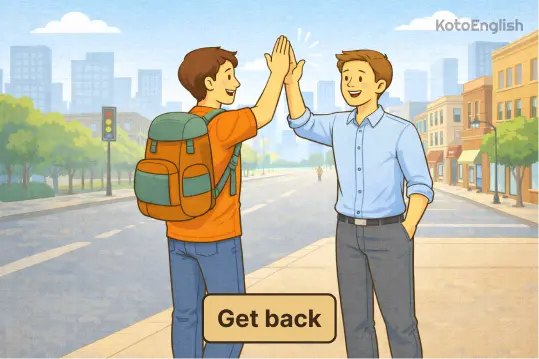
- To follow up or respond:
Get back at
To get back at someone is defined as doing something unpleasant to a person who has treated you badly before.
Get behind
Another example of “get” in a sentence depends on the context you are talking about.
- To be delayed or fall behind:
- To support someone or something:
Get in
One of the most common “get” phrasal verbs, most people use it on an everyday basis. It simply means successfully entering a place.
Get into
To get into something means becoming interested or involved in a new activity. Getting into can also mean entering some kind of situation.
Get in on (something)
Similar to get into, but a less common phrasal verb. It refers to taking part in an ongoing activity with a goal of getting some kind of advantage from it.
Get by
To get by means to live in a situation where you have just enough resources, such as money, to make ends meet and carry on.
Get it together
To get it together is a very interesting phrasal verb, as it refers to making a decision to take positive actions in your life in order to start living more sensibly.
Get over
To get over something means recovering or feeling better after something unpleasant has happened to you.
Get it over with
To get it over with means completing an unpleasant task in order to not worry about it in the future.
Get through
Get through and get it over with are similar phrasal verbs with “get” that both mean finishing some kind of unpleasant work and feeling relieved about it.
Get taken in
When putting “get” in a phrasal verb of this kind, the definition will depend on the surrounding words.
- To be fooled or cheated out of by something or someone:
- To be fostered or adopted by someone:
Get out
“To get out” refers to the action of leaving or expressing some mysterious concepts.
- To leave a place:
- To become known (some news or secrets):
Get to
A phrasal verb get to refers to an opportunity to do something in the first place and someone’s feelings in the second place.
- To have a chance to do something:
- To affect someone emotionally:
Get used (to)
To get used to something or someone means becoming familiar with it to the point that eventually it seems like it’s always been that way.
Get up
One of the most commonly used “get” phrasal verbs, get up means to stand up from a sitting or lying position.
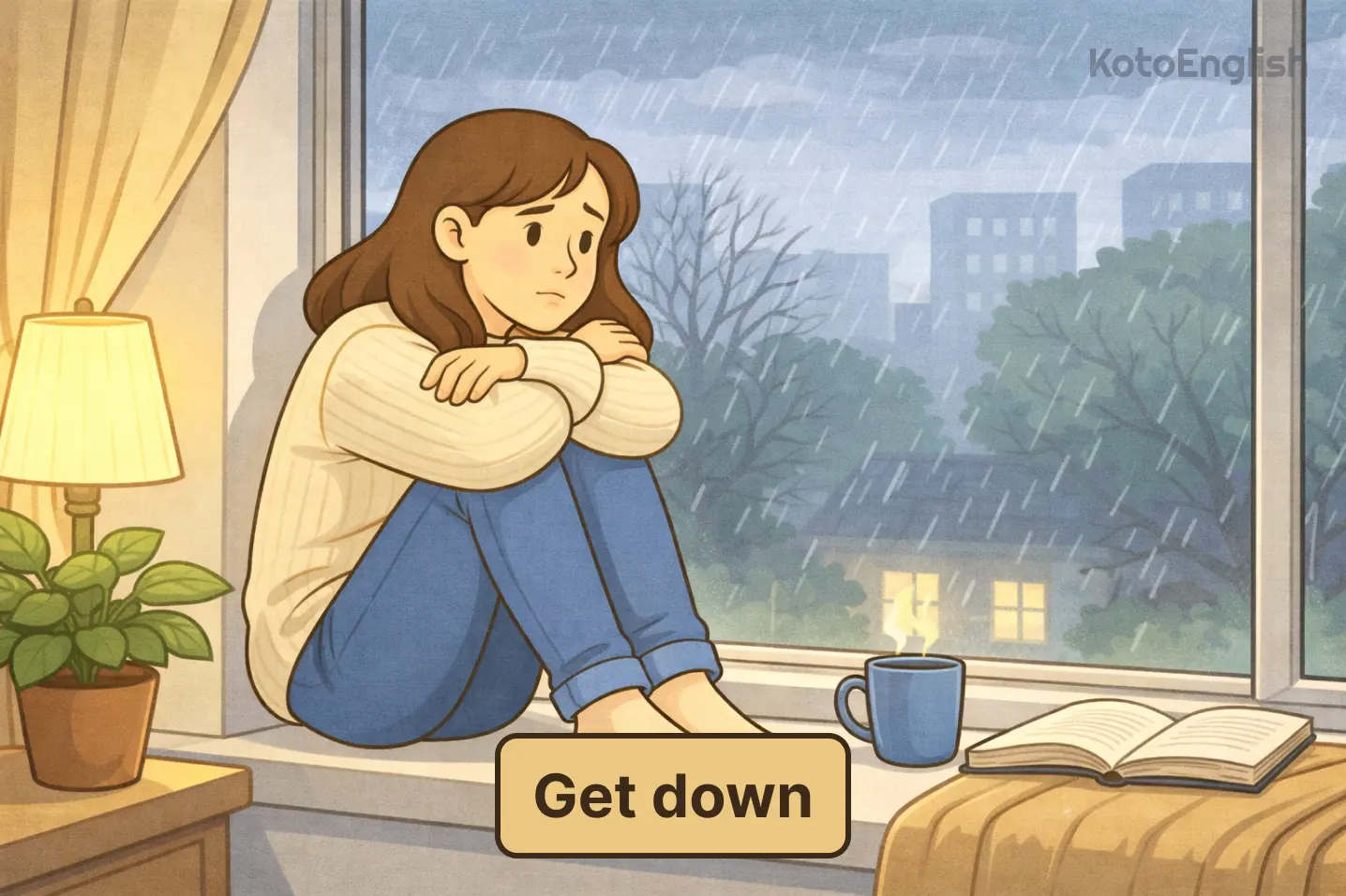
Get down
To get down has three meanings, one is simple, and two that may surprise you.
- To move to a lower position:
- To put effort and attention towards something:
- To feel unhappy or distressed:
Get together
Get together is a phrasal verb that refers to two or more people meeting each other to spend time together or do some activities.
Get off
To get off means leaving a place, usually at a planned time, in order to do something.
Get on
To get on means to continue or progress in doing something, usually trying to achieve success.
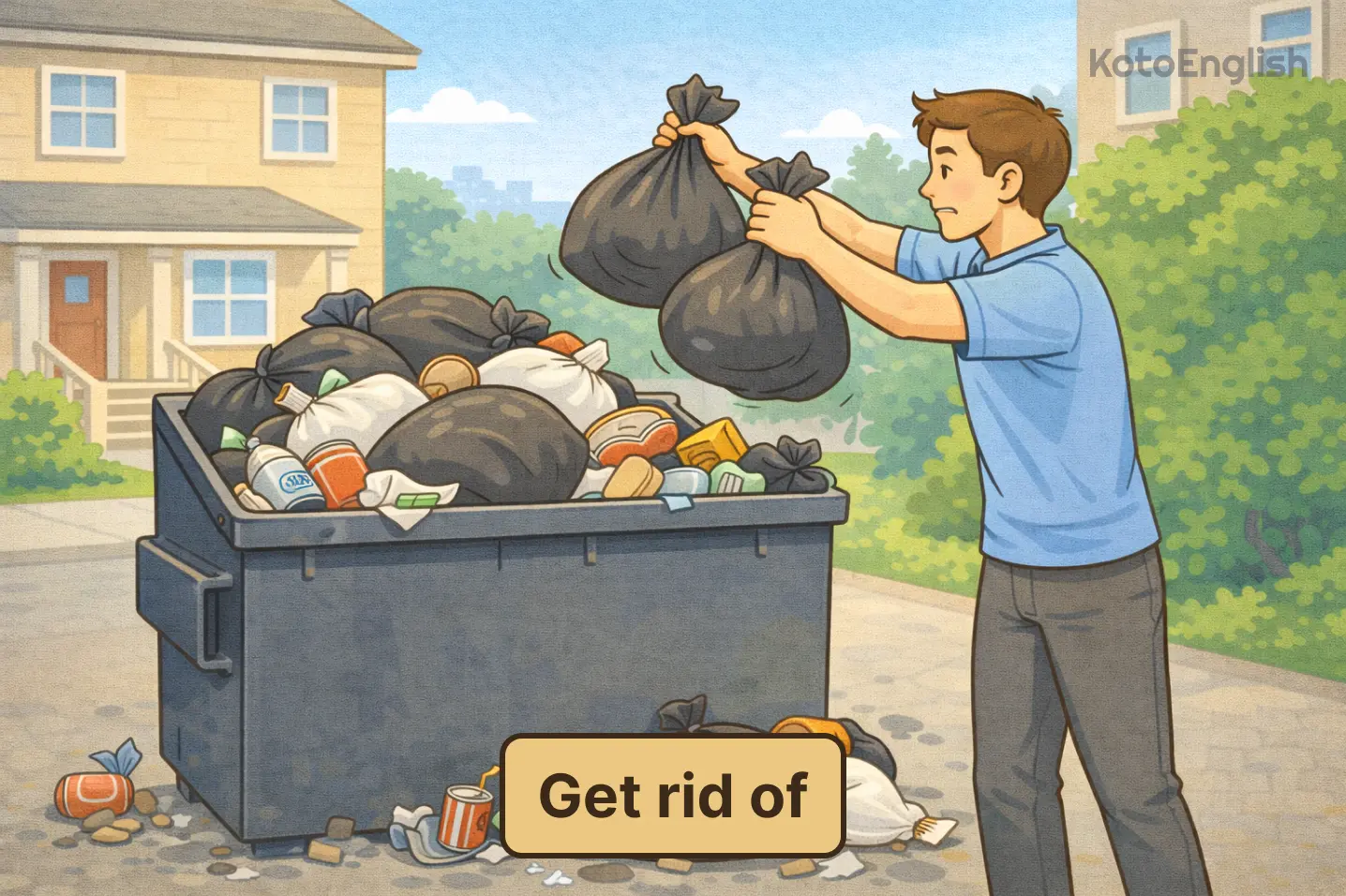
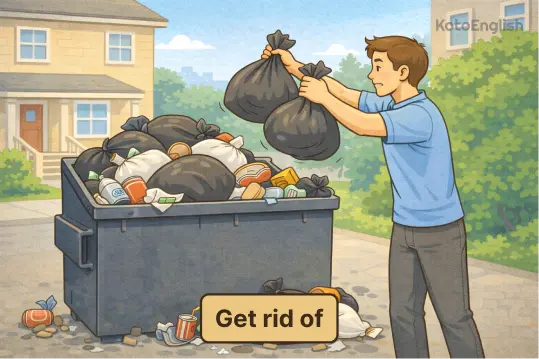
Get rid of
Getting rid of something or someone means removing a thing from your life that you no longer want or need.
Common mistakes when using phrasal verbs with “get”
These phrases can be challenging for learners because of their high frequency, idiomatic nature, and other aspects. To avoid any possible confusion and make you feel more confident in using English, let’s consider some of the most typical mistakes.
- Incorrect particle choice.
Common prepositions like up, on, to are the ones that change the meaning of the phrase, so choosing the wrong one will become a mistake. Here are the examples:
|
I am trying to get through my fear of flying.
|
I am trying to get over my fear of flying.
|
|
Poppy got on the taxi and left the party.
|
Poppy got in the taxi and left the party.
|
- Causative verb/“Get” structure error
Such phrases with “get” are tricky because of the complex grammar. To understand it better, check the examples below:
|
She got to cut her hair.
|
She got her hair cut.
|
|
I got to refund my tickets for the Skillet concert.
|
I got my tickets for the Skillet concert refunded.
|
- Incorrect object placement.
It happens when a phrase is separable; you can even see it from the examples above. The formula looks like: get + object + particle or get + particle + object.
|
I don’t like these shoes. I want to get off them.
|
I don’t like these shoes. I want to get them off.
|
|
Get up your brother! He is late.
|
Get your brother up! He is late.
|
Tips to learn and remember “get” phrasal verbs
It is true that studying all these phrases at once can be overwhelming. Phrasal verbs are large obstacles in the language learning process, mainly because they are numerous and every one of them has a specific meaning.
Nevertheless, there are also many small and effective steps you can take to make sentences with “get” stay in your mind. The following are the tips that can make the learning process faster and easier for you.
Tip 1. Group them by meaning
Sorting out based on the alphabet will only add complexity, so it is advisable not to memorize the list but group it into smaller parts. For example, you choose to learn the movement-related ones, from getting up to getting away at first. Then you can move to the section about relationships (get together, get along), and so on.
Tip 2. Use visualization
You can see the examples of pictures for some of the points above. For some students, it is easier to create a picture in their mind with strong mental associations. For example, “get through” can be imagined as a person (or even you) escaping a labyrinth.
Tip 3. Review constantly
Let new information sink in your mind, and then, do a little exercise and repeat English phrasal verbs with “get.” You can use flashcards for memorizing and reviewing, even while standing in line or commuting to the office.
Tip 4. Practice in context
By isolating these phrases, you will only make it harder for yourself as there are 30 of them which are the most common, and some additional as well. To use this verb naturally, you need to watch videos from native and advanced speakers, read short stories or even posts in Instagram, and so on.
You can also use the activities we prepared, which will help you to memorize this grammar quickly.
Practice exercises
To make progress, practice is required, just the one you can find below, which appears in three different quizzes. Here, you will find multiple-choice questions, put words in the order, and fill in the gaps with the correct answer.
Conclusion
Learning phrasal verbs is an exciting way to make your speech more native and casual. It can seem daunting to memorize all of the phrasal verbs with “get,” but you can try learning two or three phrases and start slipping them into the conversation.
You will remember and use more phrases as you practice. In this article, we took a deep dive into 30 different options, explaining what each of them means and how to use them in a sentence.
Feel free to use this article as your cheatsheet while you’re learning all these different phrases that make your speech more advanced.
Frequently asked questions (FAQs)
The phrasal verbs that are most commonly used with “get” are the following:
- get up
- get in
- get off
- get on
- get back
- get over
These verbs describe some of the most basic actions in our daily lives, such as waking up, entering or exiting, overcoming problems.
The term “get” is considered to be one of the most versatile in the English language because the core meaning of the verb involves the concept of change, movement or acquisition. This very nature of “get” enables the verb to be easily combined with a great variety of different particles, giving rise to specific meanings.
Yes, usage of phrases is generally regarded as informal and synonymous to lively conversation and everyday writing. In formal contexts such as academic papers, business reports, official documents, single-word equivalents are the usual preference.
Yes, they are super common in the English language spoken daily, they are part of almost all informal conversations. The very use of these verbs is so natural for the natives that they might not even be aware of the fact that they are using phrasal verbs at all.