Are free language learning apps really effective?
The answer to your question depends on how you utilize the devices. Contemporary learners find language study applications as accessible as Netflix and Instagram because they provide interactive content users can access throughout their day. The actual advantages of the system emerge from:
- Introducing and reinforcing vocabulary building.
- The program develops listening comprehension skills through audio training.
- Supports daily learning through its small lesson structure.
It is also essential to define where their limitations become noticeable:
- Fewer opportunities to practice communication within family, friends, in office.
- Little personalized feedback on mistakes.
- Less structured long-term learning compared to full courses.
Used strategically, apps without charges can strengthen the core foundations of your English level, offering daily practice that is vital for achieving higher-level proficiency. For now, let’s check which apps you can consider to study English effectively.


List of 10 best free language learning apps
Duolingo
Best for: Beginners and daily practice
Platform: iOS, Android, Web
Duolingo is one of the language learning apps that focuses on habit-building activity rather than an academic course. Rapid-fire exercises are available online, gathered in modules to help users train recognition and recall.
The program allows users to start forming sentences almost instantly through interactive exercises, as well as memorize some new words from lesson 1. This works owing to the playful, colorful design with various activities, helping to maintain consistency in studying.
Pros:
- The art of gamification through experience points, streaks, badges, leaderboard, etc.
- Compact exercises for short sessions when it is convenient.
- Memorizable design with unique characters for more engagement.
Cons:
- Minimum opportunities for spontaneous speaking.
- Advertising in the free version.
- Limited in-depth explanations for grammar.
Is it really free?
There is a free version, and you can apply for a premium subscription to remove ads, receive offline access, reach AI-powered features and unlimited attempts.
Memrise
Best for: Self-study and listening skills
Platform: iOS, Android, Web
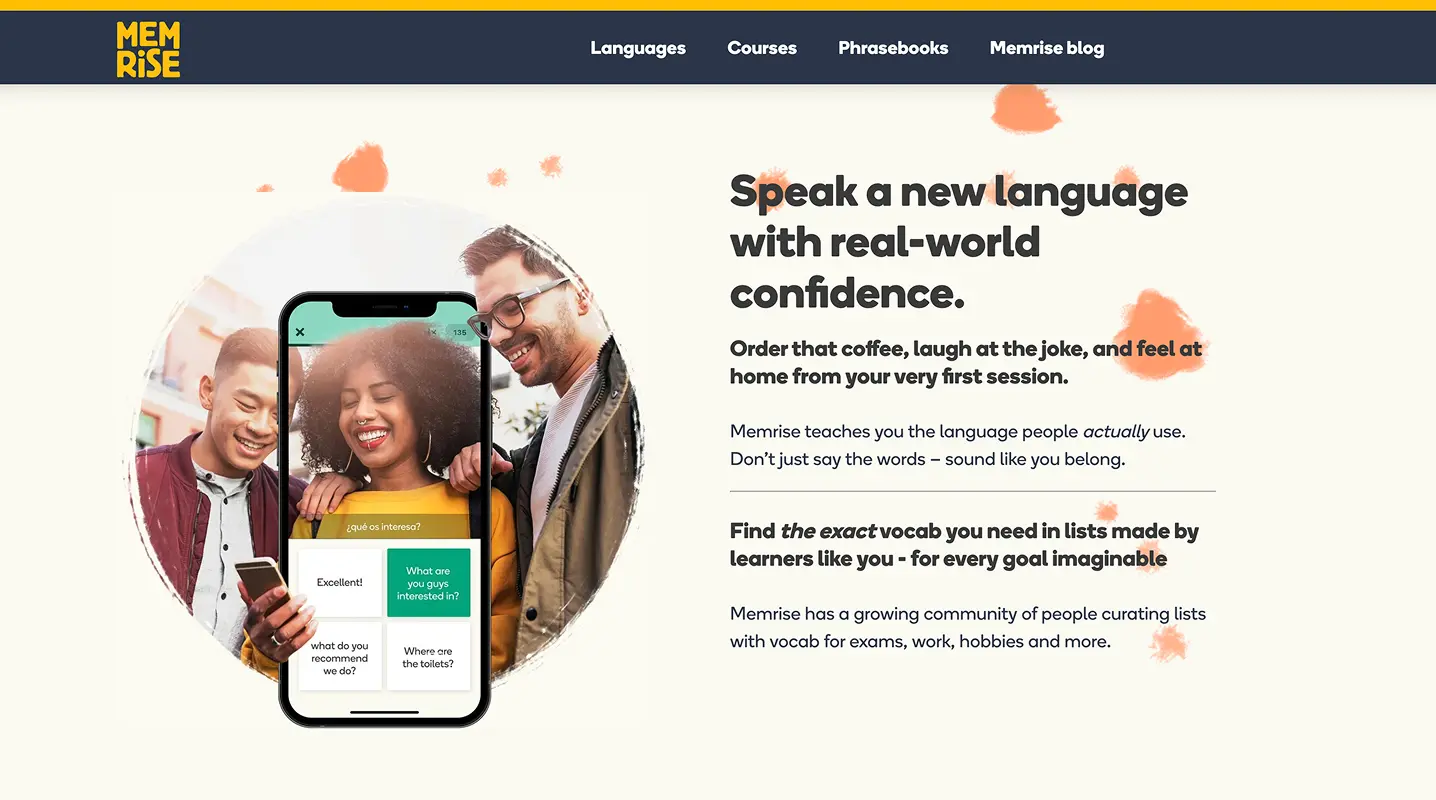
Memrise is one of the best apps to learn English for free focusing on practical language exposure, including vocabulary training along with short video clips featuring native speakers. Unlike other programs that rely on written exercises to teach vocabulary, this uses real-life pronunciation to introduce learners to new words and phrases.
The learning flow uses spaced repetition, which helps reinforce new words at regular intervals to build memory. The lessons are arranged around a theme, such as traveling or daily routine, helping to ground them in a way that is not abstract.
Pros:
- Video clips with native speakers for pronunciation improvement.
- Clear, user-friendly interface suitable for all learners.
- One of the core apps to improve vocabulary.
Cons:
- Limited speaking interactions.
- Paid subscription for advanced functions.
- Less emphasis on systematic grammar progression.
Is it really free?
The service provides a free version that allows access to basic lessons and vocabulary practice. Additional practice methods and content are included with a premium plan, but the service provides free access to basic learning tools.
Busuu
Best for: Structured learning with community feedback
Platform: iOS, Android, Web
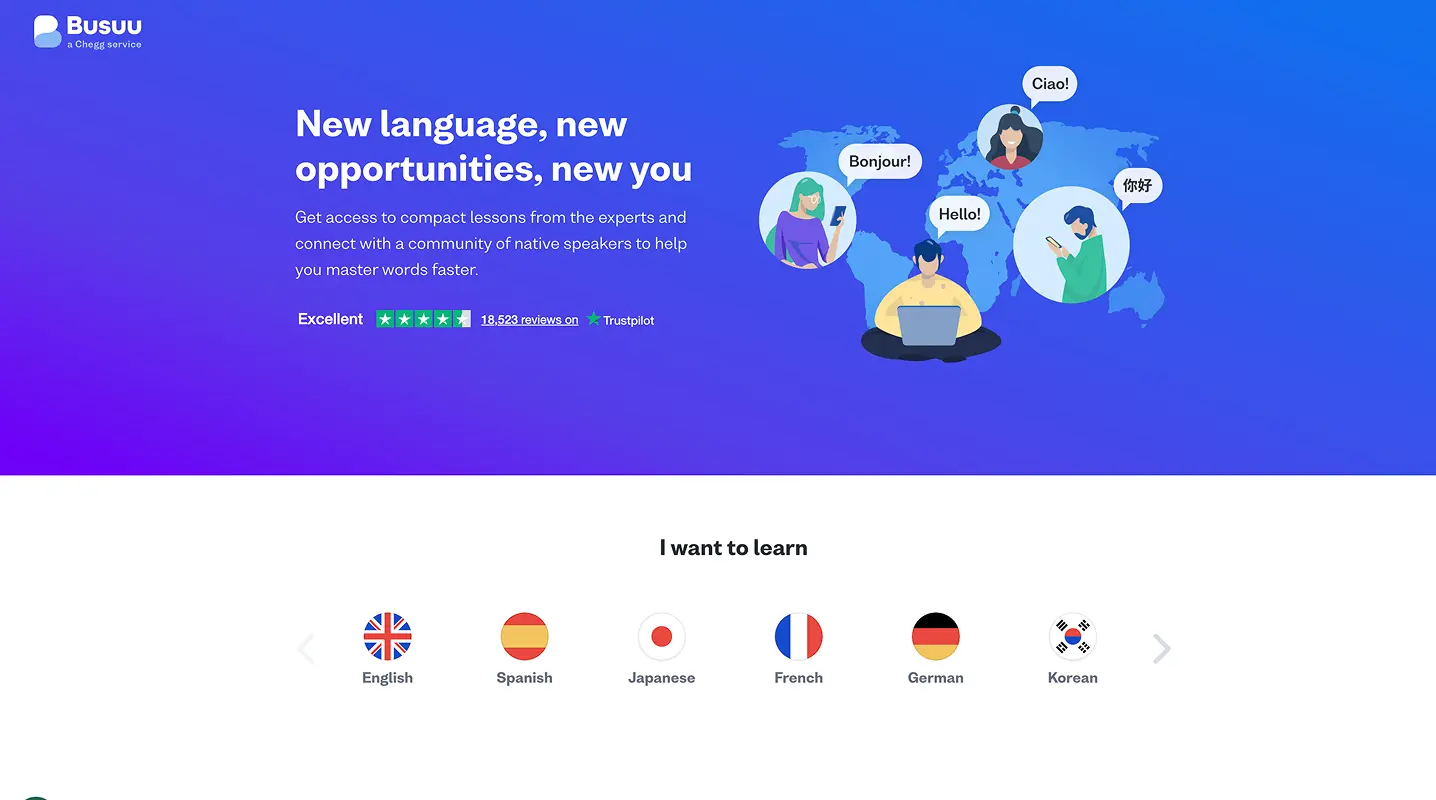
Busuu represents a solution as one of the language learning apps for adults and students with combined self-paced lessons and elements of social learning. The courses offered on the app are structured and follow a specific path corresponding to the levels of the CEFR.
One of Busuu’s defining characteristics is the community feedback system. It allows users to provide short written or verbal exercises, which are corrected by native speakers. This adds a new dimension to interaction that is not always available in free language apps.
Pros:
- Clear progression aligned with CEFR.
- Feedback from native speakers.
- Balance of vocabulary, speaking practice, grammar.
Cons:
- Advanced functionality is locked behind paid access.
- Limited real-time conversation practice.
- Peer feedback can vary in depth.
Is it really free?
There is free access to a limited selection of lessons. To unlock them, as well as certificates, offline access, users need to pay for a Premium subscription.
HelloTalk
Best for: Real conversation practice
Platform: iOS, Android, Web
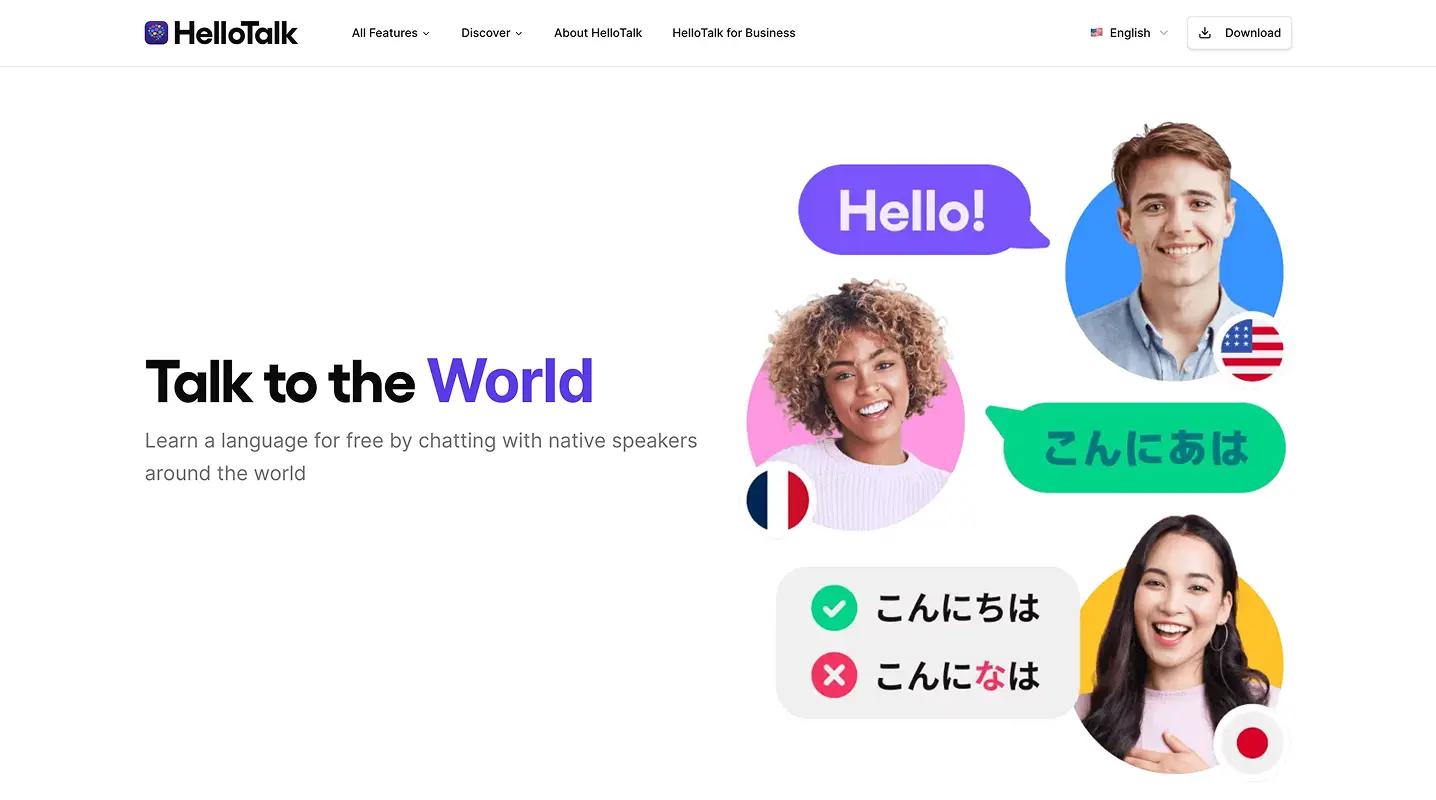
The app is centered on direct language exchange instead of lessons. Instead of a set curriculum, users can communicate with native speakers from around the world via text messages, voice messages, and video calls. It also includes a translation, pronunciation, and correction feature, making communication easier.
Among other language learning apps, it offers authentic interaction. Students are able to make real conversations through text, video or voice calls, and even make foreign friends among native speakers and other learners.
Pros:
- Direct communication with people worldwide.
- In-app correction and translation tools.
- Real-life English practice through an informal atmosphere.
Cons:
- There are no structured grammar lessons.
- The quality of conversations depends on the users.
- Some features are limited in the free version.
Is it really free?
HelloTalk provides free access to its message and language exchange tools. A VIP subscription provides premium filters, translation, and more visibility.
Tandem
Best for: Real-time language exchange
Platform: iOS, Android, Web
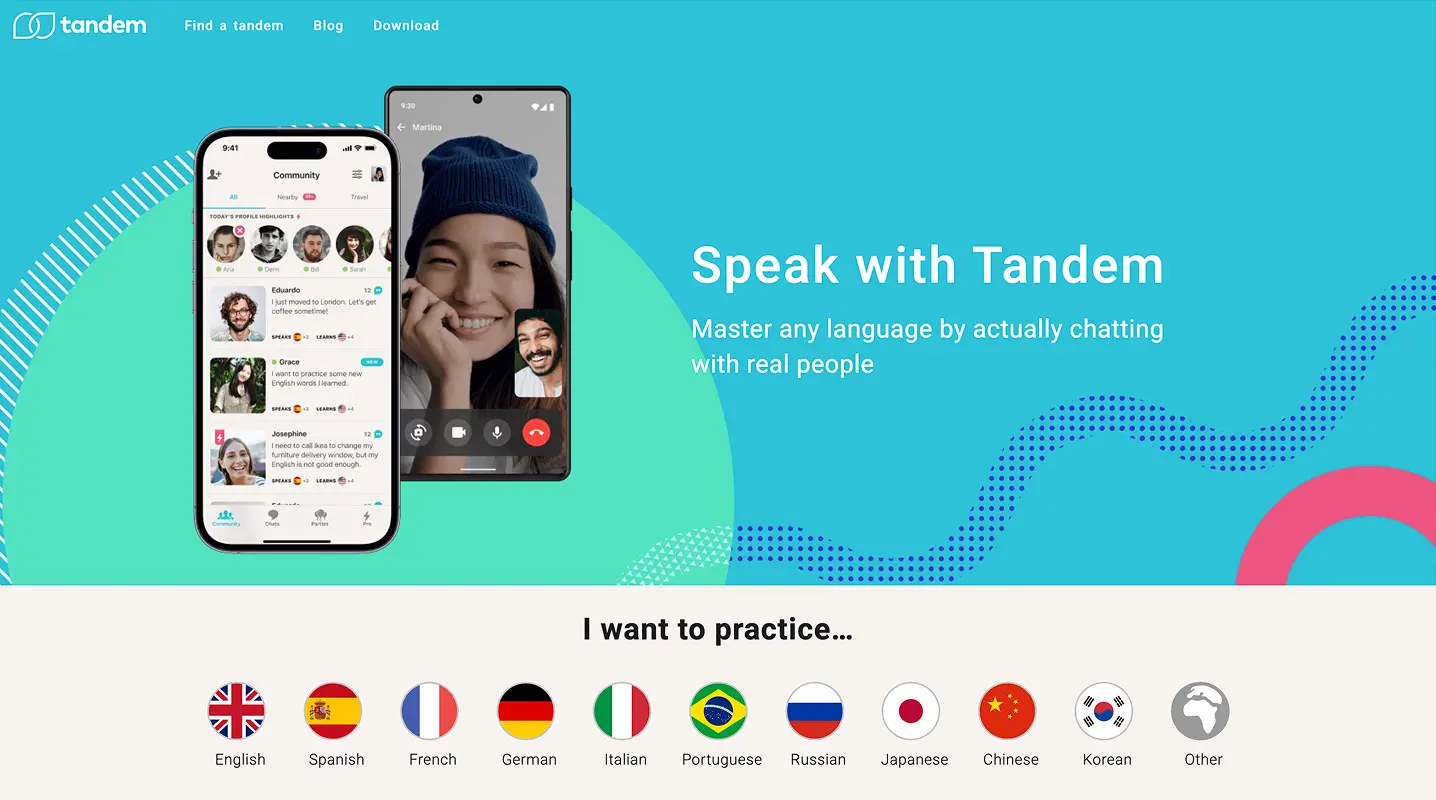
Tandem is a meeting place for language learners around the world. Instead of progressing through a course, you chat with native speakers and communicate with them in real-time. The chat may be done through text, voice notes, or video calls.
It’s a dynamic experience, and it’s up to you who you want to talk to, what you want to talk about, and how much you want to practice. There are also integrated tools such as message correction and optional translation support, which can make the interaction more seamless.
Pros:
- Language exchange through real conversations.
- Opportunity to learn about cultural nuances.
- Live rooms for speaking skills practice.
Cons:
- No built-in progress tracking or level assessment.
- Risk of mismatched language partners.
- Premium tier needed for advanced search visibility.
Is it really free?
Tandem allows users to learn a language for free through messages/calls with other participants, and a Pro subscription unlocks additional features.
Hallo AI
Best for: Speaking practice with AI tutors
Platform: iOS, Android, Web
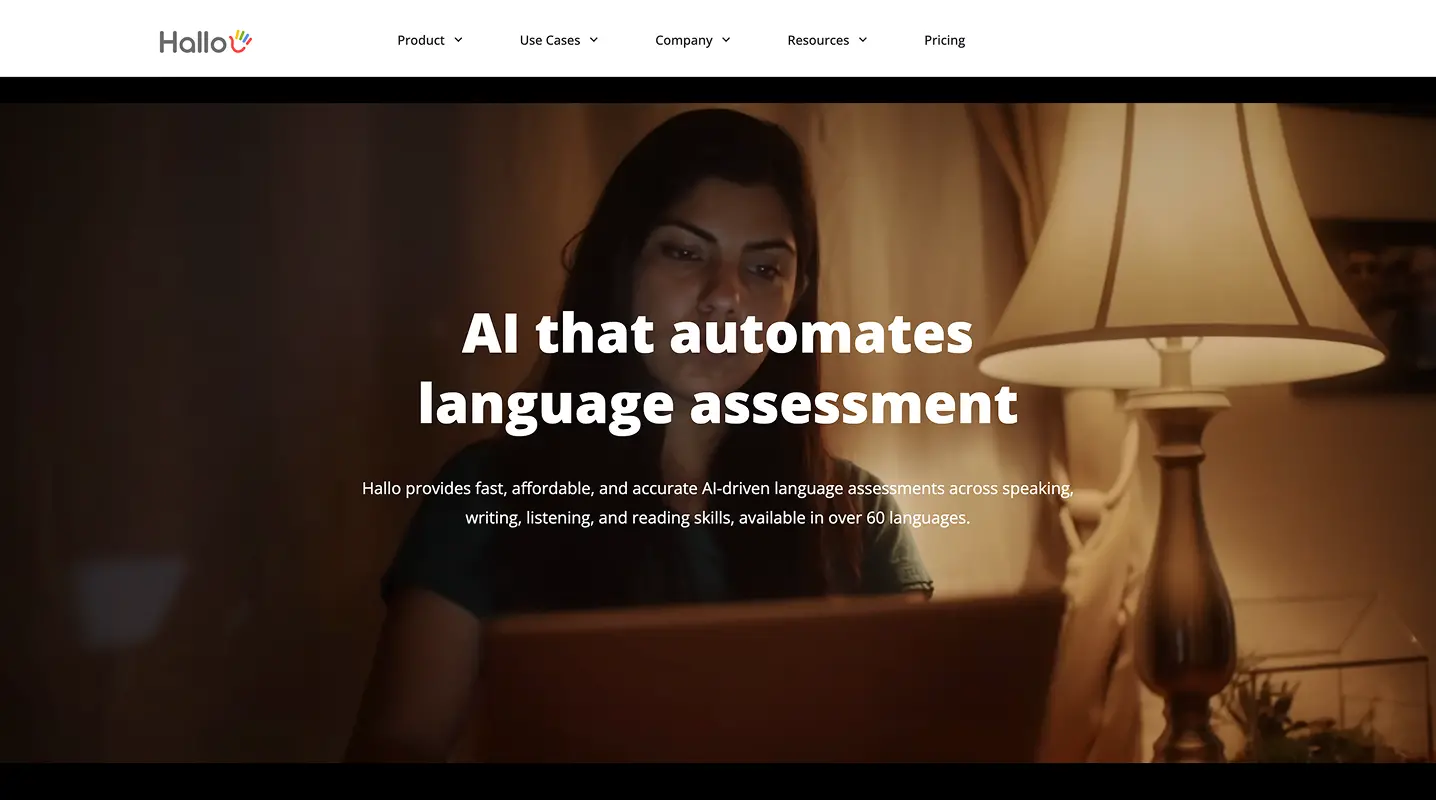
Hallo AI is a language learning tool that focuses on conversation simulation rather than exercises. The platform is centered on helping users become comfortable speakers of a language by enabling them to interact with AI-powered dialogue partners.
One important feature is the speech analysis, whereby, while the learner is speaking, the speech is analyzed and feedback is provided immediately. This is important in providing a more natural conversation while at the same time providing feedback.
Pros:
- Immediate pronunciation and fluency feedback.
- Flexible sessions without a schedule.
- Assessment tests for speaking skills.
Cons:
- Less suitable for learners who prefer structured lessons.
- Limited focus on grammar.
- Advanced tools require a subscription.
Is it really free?
Hallo AI offers a free experience that provides users with a limited opportunity to practice conversation. Additional speaking time, feedback analysis, and learning tools can be accessed with a paid subscription.
Elsa Speak
Best for: Pronunciation training and accent improvement
Platform: iOS, Android
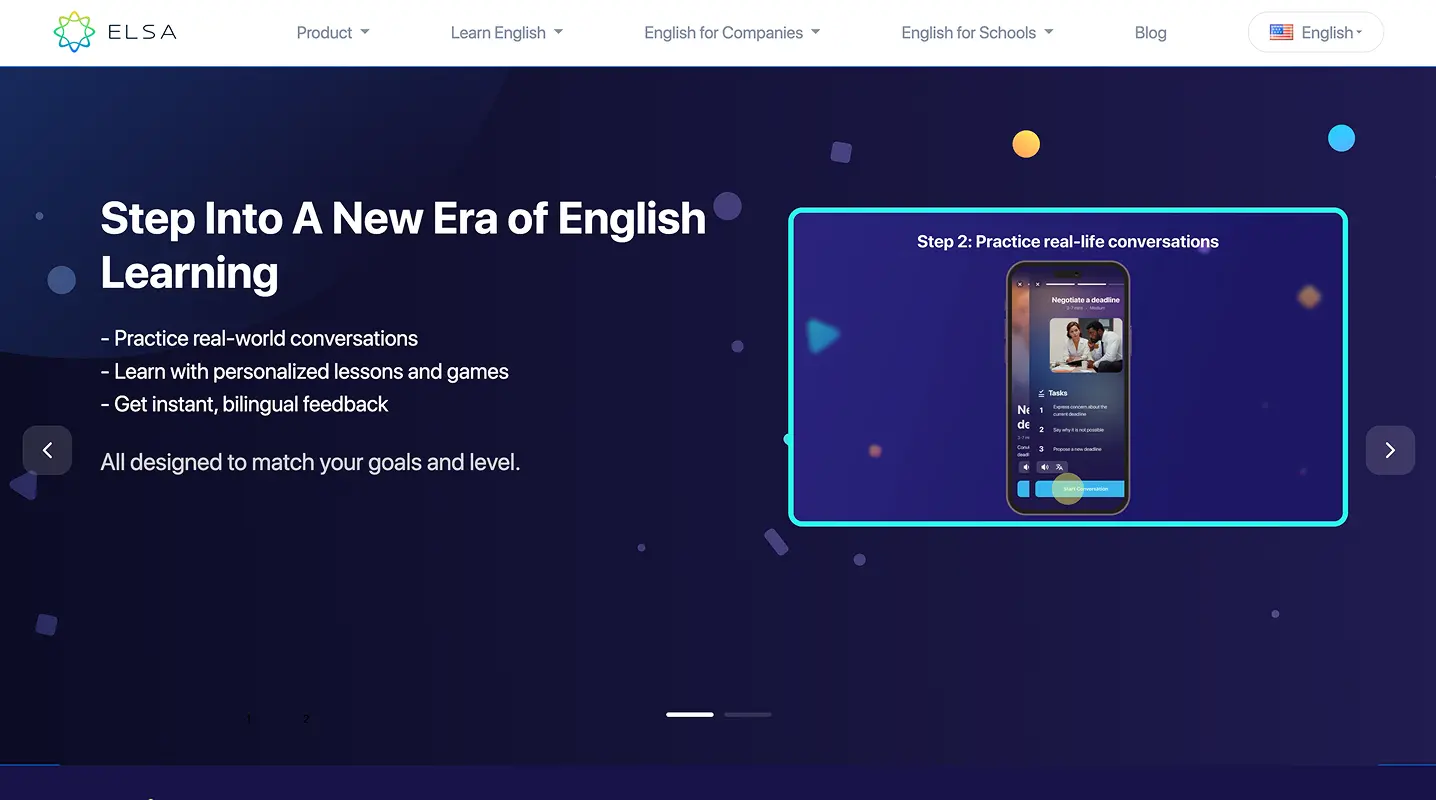
Among the best language learning apps, Elsa Speak is an app aimed at those who wish to sound more fluent when communicating in English. Instead of focusing on word lists and translations, the app places emphasis on word pronunciation.
The platform analyzes spoken language and divides it into smaller units of sound. The learner’s pronunciation is compared with that of a native speaker. After each try, users receive visual and written feedback on how they can improve.
Pros:
- Detailed pronunciation analysis.
- Personalized practice based on speaking performance.
- Short exercises designed for frequent practice.
Cons:
- Focus on pronunciation rather than full English learning.
- Some feedback functions are locked behind paid plans.
- Requires speaking aloud to benefit from the app.
Is it really free?
ELSA Speak provides a free version that allows users to access basic pronunciation practice materials. Users who choose to upgrade to the premium version can use all available materials and speaking practice tools which provide detailed feedback analysis.
Quizlet
Best for: Memorizing vocabulary
Platform: iOS, Android, Web
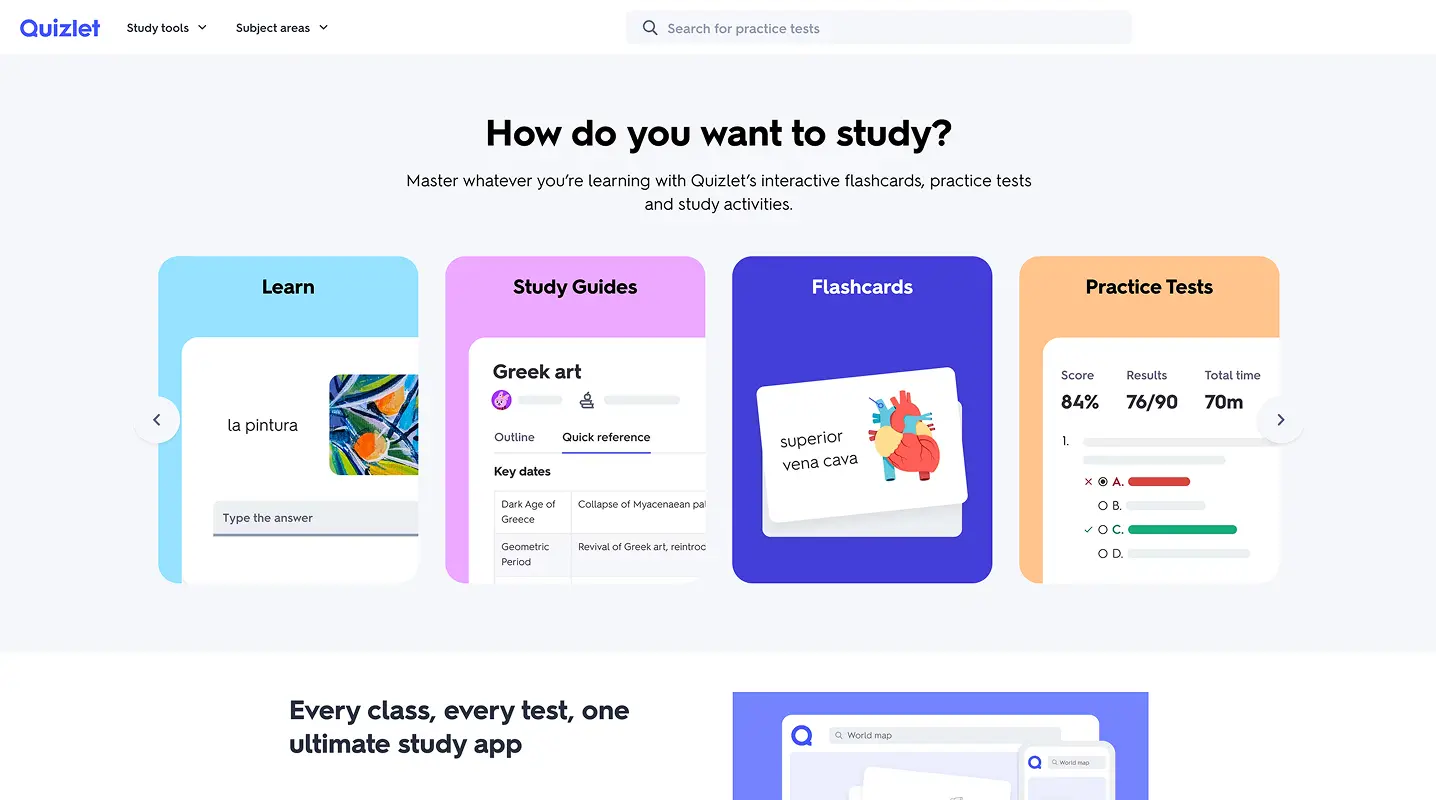
Quizlet appears to be primarily an online tool used to assist in learning and memory retention. It does not offer a language learning program, but rather allows users to create their own sets of words and their meanings.
There are several ways in which students can engage with the same content. Words can be used in quick recognition, spelling, and matching activities. This promotes repetition of the same content but from different perspectives, which can enhance memory retention.
Pros:
- Personalized vocabulary sets.
- Several practice formats that reinforce memory.
- Shared study materials from other users.
Cons:
- No built-in curriculum and guidelines.
- Minimal opportunity for conversation and pronunciation practice.
- Some features require a paid subscription.
Is it really free?
The service also offers a free version that enables users to create flashcards and access basic study features. The premium version provides access to additional features such as advanced learning analytics and ad-free functionality.
Cake
Best for: Immersive learning through short videos
Platform: iOS, Android
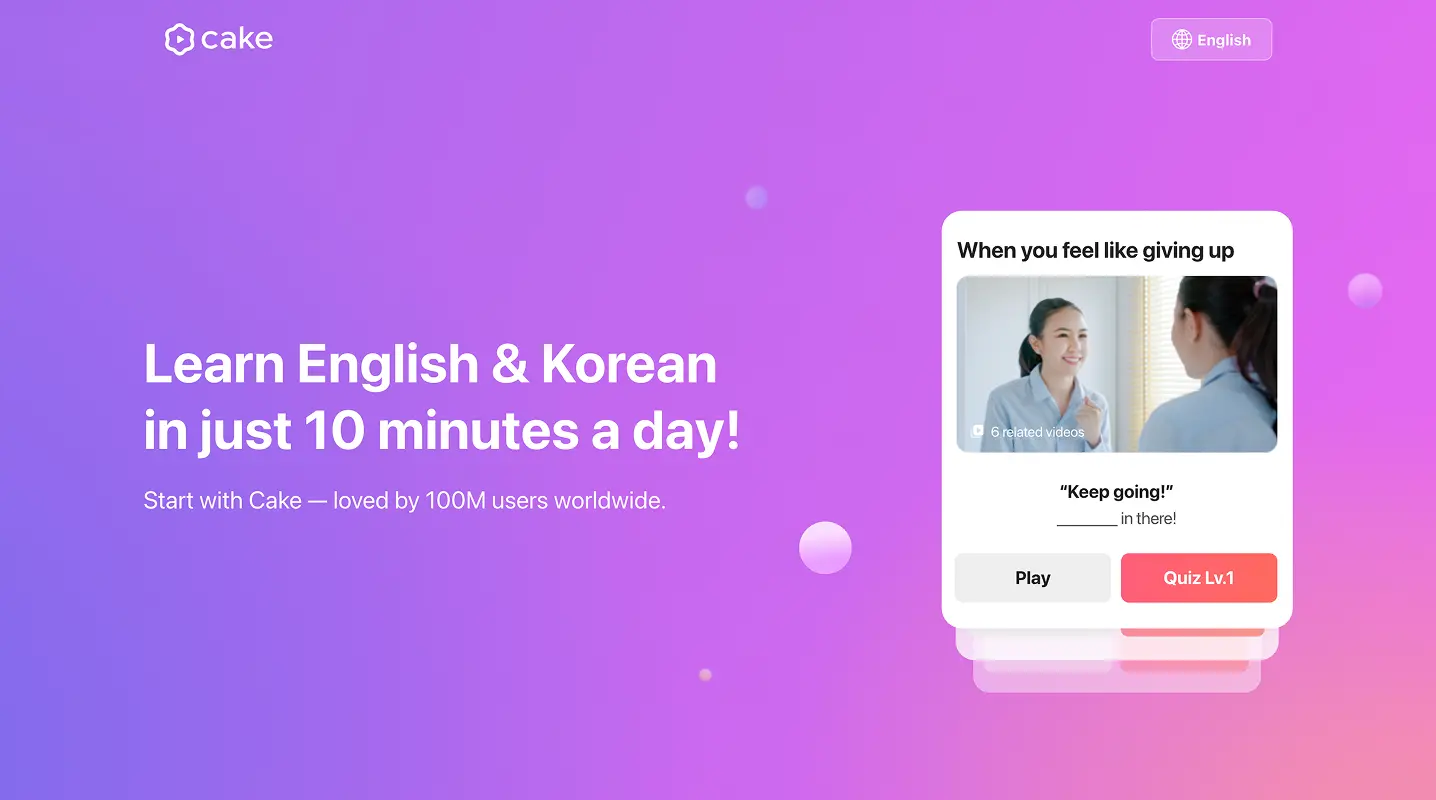
Cake provides a media-driven method for language education which uses short video clips from movies and interviews and internet videos as the foundation for its lessons. Cake differs from other language learning applications because it does not emphasize vocabulary lists as its main learning method.
The platform offers users a set of brief exercises which they can complete throughout the day. The process requires a learner to watch a video and study crucial sentence patterns before they record themselves repeating the spoken lines.
Pros:
- Real-life video examples with natural English usage.
- Voice recording tools to practice pronunciation.
- Frequent content updates.
Cons:
- Limited structured grammar instructions.
- No full progression from beginner to advanced.
- Some practice functions are part of the paid plan.
Is it really free?
Cake offers a free version that allows users to access daily video lessons. In addition to that, Cake offers a premium version that offers extra learning content.
Anki
Best for: Long-term vocabulary retention.
Platform: iOS, Android, Web
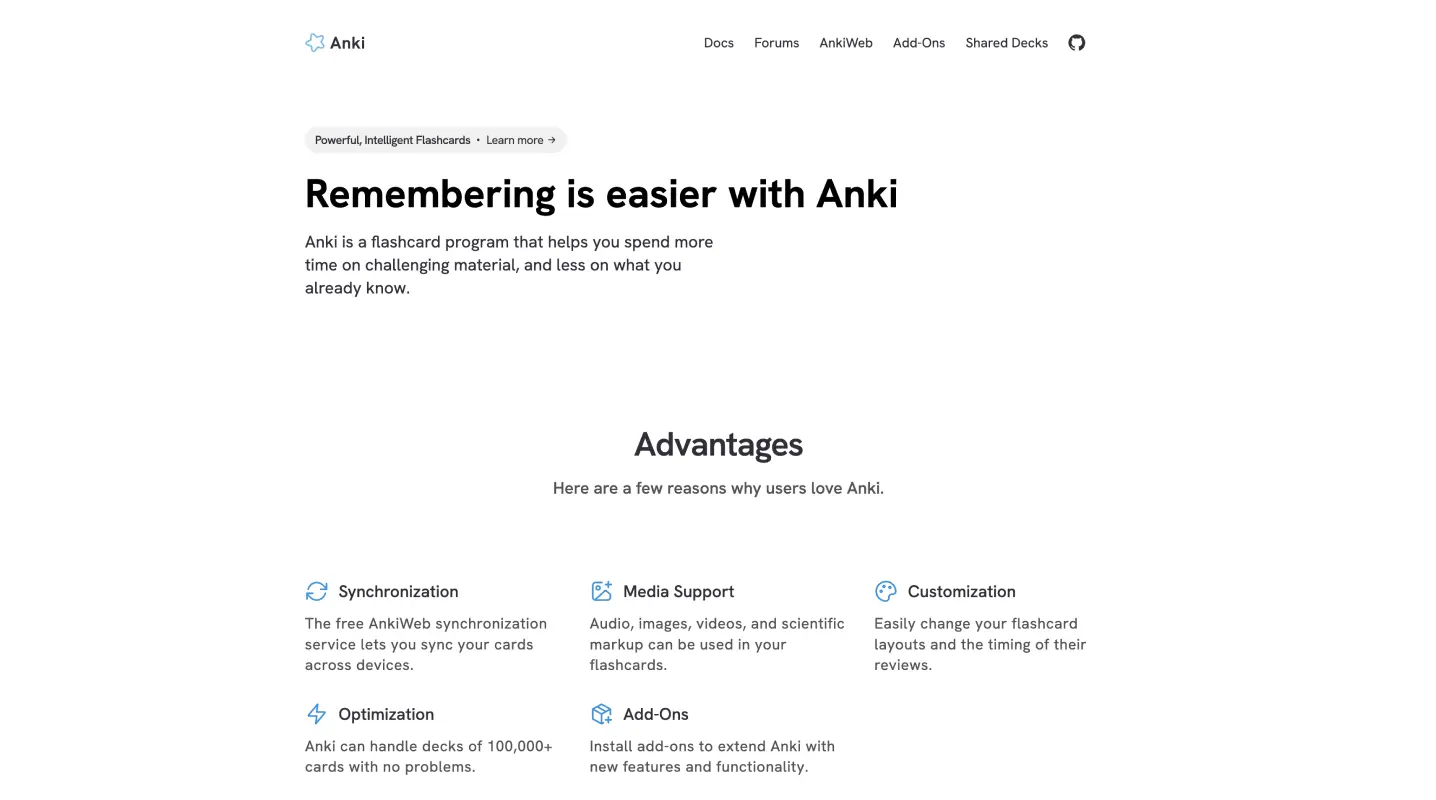
Anki is a learning tool that is based on a science-backed memory technique called “spaced repetition.” This means that instead of reviewing the information on each flashcard randomly, the program waits a specific, carefully calculated time before showing each one again.
Anki functions as a personal study environment where users can create their own flashcards with text, sound, or image content. In this way, they can make the software meet their particular needs.
Pros:
- Powerful system for efficient memorization.
- Highly customizable flashcards.
- Large community library of study decks.
Cons:
- Requires time to set up effective card decks.
- Lacks built-in speaking practice.
- Designed primarily for flashcards.
Is it really free?
The most popular versions of Anki are all free, including the computer program, the web service, and the Android app. However, the official iOS app, called AnkiMobile, is a one-time purchase, and the funds are used to support the continued development of the app.
English learning apps comparison
There are many different language learning apps, and choosing the right one for you can be hard. The table below compares some of the more popular ones to help you understand their advantages, whether they have free versions, and how much speaking practice they offer.
| App | Best for | Free version |
|---|---|---|
|
Duolingo |
Beginners |
|
|
Memrise |
Vocabulary building |
|
|
Busuu |
Structured learning |
Partial |
|
HelloTalk |
Language exchange |
|
|
Tandem |
Conversation practice |
|
|
Hallo AI |
AI speaking practice |
Partial |
|
Elsa Speak |
Pronunciation training |
Partial |
|
Quizlet |
Memorization & flashcards |
|
|
Cake |
Every day listening |
|
|
Anki |
Spaced repetition vocabulary |
|
With that information in mind, let’s move to the process of selecting the app that is right for your needs and style.
How to choose the right free language learning app
The choice of a language learning app is not about selecting the “best” program in general, but rather about selecting the app that matches a particular goal, level, and style of learning, as well as the amount of time and effort you have. In other words, a mismatch of these conditions is likely to result in disappointment.
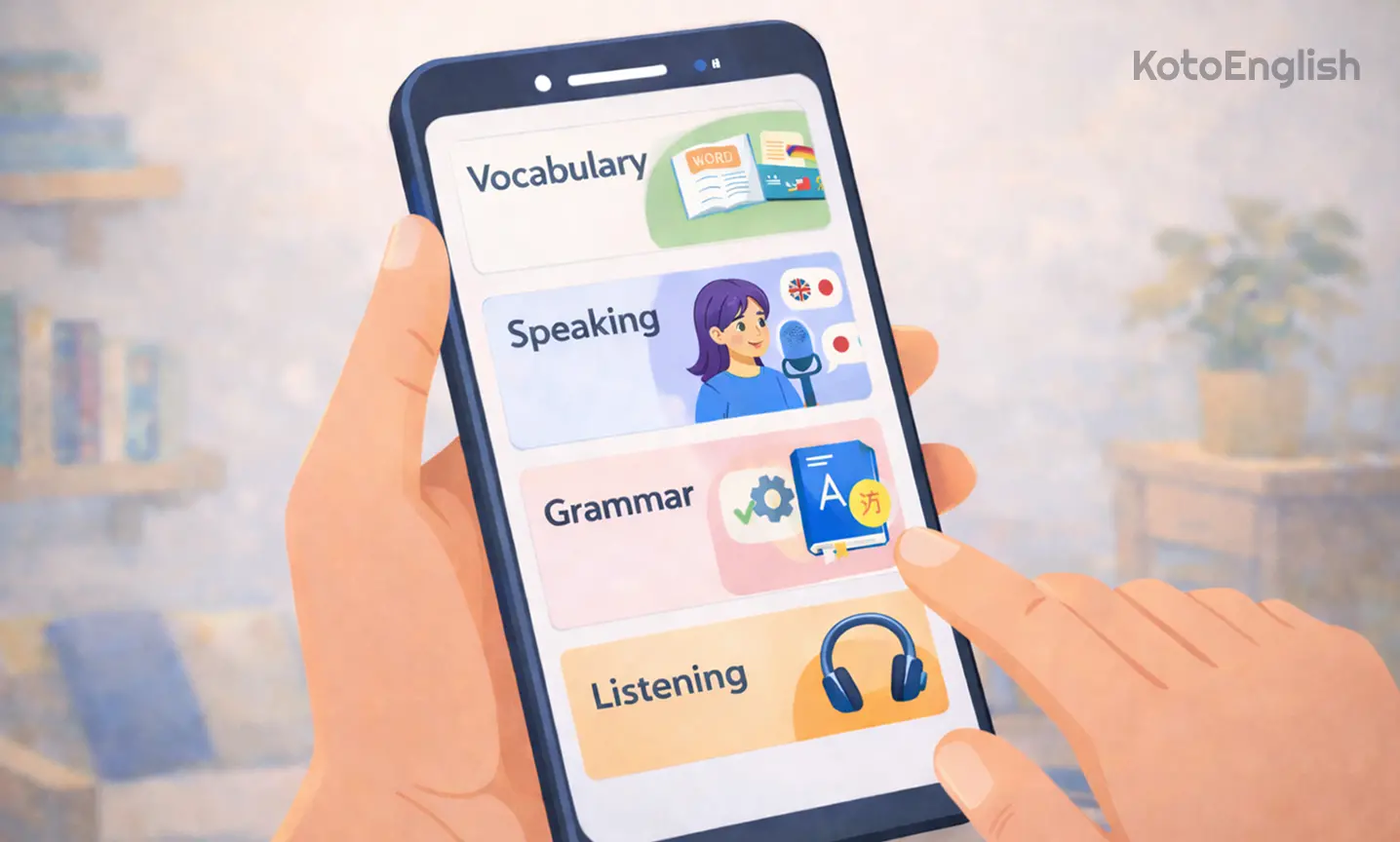
We will consider the core factors you need to evaluate to select the best app to learn a language for your needs.
Define your main goal first
It is essential to identify your primary outcome before downloading an app. This is because different outcomes require different types of content, learning paths, and skills. Here is how it works for learners:
| Your goal | What to look for |
|---|---|
|
Travel |
Phrase-based lessons, situational listening practice |
|
Career |
Professional vocabulary building, formal communication style |
|
International exams (IELTS or others) |
Structured lessons with grammar explanation, mock tests, timed activities |
|
Relocation |
Speaking drills, listening comprehension |
|
Daily usage |
Short, gamified sessions |
Chasing a new career and preparing for a job interview, getting a certification, and learning for fun to understand memes in English — all these outcomes can be reached with the right application, so let’s continue defining criteria for the right app.
Understand your learning style
Learning efficiency with the system that matches your vibe and routine increases widely, because not every person prefers to sit and study for 14 hours a day. Your school, university, full-time job schedule, hobbies and responsibilities that impact the learning format you need. Here are the core types:
- Visual learners. In each language learning app review you saw above, you saw programs with a strong focus on color-coded structures, video lessons, infographics, and more.
- Structured learners. They prefer level-based progression with clear milestones and a visible tracker of achievements.
- Independent students. This type of learning stands for flexibility paired with modular lessons personalized for each user, for example, in AI language learning.
- Social students. They perform better through interactions with other people, where they can discuss life, hobbies, movies, books, and more.
Some learners do best with a clear path from beginner to advanced, so level-based platforms are the right choice. Others prefer freedom to jump between topics, sections, making modular approach the most suitable. For people who struggle with discipline, gamified features can make consistency easier to achieve.
Alignment of cognitive style and platform design greatly impacts retention and consistency. For instance, you are able to choose apps to practice English speaking if your goal is to become confident in daily or professional communication.
Check what skills the app focuses on
Input-based learning is the primary focus of most free apps. This is rather than communicative skills. Understanding the distribution can help set appropriate expectations:
| Skill | How free app performs |
|---|---|
|
Vocabulary |
Strong |
|
Listening |
Strong |
|
Speaking |
Limited |
|
Writing feedback |
Very limited |
Vocabulary and controlled listening are usually well-supported, but spontaneous speaking and writing are limited or unavailable for correction.
Be realistic about free limitations
Free versions may have ads, inaccessibility of advanced features, limited speaking activities, and limited personalized feedback. This does not, however, render the apps ineffective but determines their purpose.
Knowing this helps you to utilize the free apps in an effective manner, using them as tools for structured practice, and using other tools to support your learning if your requirements demand greater levels of competence.
Can you become fluent using only free apps?
The ability to express yourself in a language at advanced levels through an application demonstrates fluent proficiency but actual fluency requires speakers to understand spoken language and respond immediately without translating their thoughts into another language.
Most free language apps work through structured exercises that assist learners in developing their vocabulary and grammar skills. The exercises fail to replicate the cognitive demands of real speech because learners need to create new answers during conversation instead of choosing from prepared responses.
So, how can you become fluent using free apps to learn English? By combining them with other forms of studying: attending online/offline classes, reading books, articles, consuming content in English when scrolling on TikTok to memorize real-life phrases, idioms, and other expressions.
When utilized strategically and consistently, free language apps hold the key to fluency for the student who uses the material they’re learning, asks for feedback on occasion, and gradually extends the scope of the language they’re exposed to.
Best way to use free language learning apps
Using a language learning app effectively requires efforts to practice daily and go an extra mile sometimes. It requires structure, intention, and effort. Without a plan, learners often repeat the same activities without increasing their skill levels. A strategic plan makes daily practice effective.
Combine apps with speaking practice
Vocabulary and grammar structures can be reinforced by apps, although dialogue is not always spontaneous and unpredictable. To achieve active fluency, learners need to combine the best language learning apps with other forms of lessons that promote spontaneous responses and real-time communication.
For instance, if you have been learning vocabulary for a startup or a tech-related career, try practicing explaining your skills as if you are applying for a remote position. If you have been learning travel-related vocabulary, try to practice situations at the airport. This helps to turn your memorization of words into smooth speech.
Set clear weekly goals
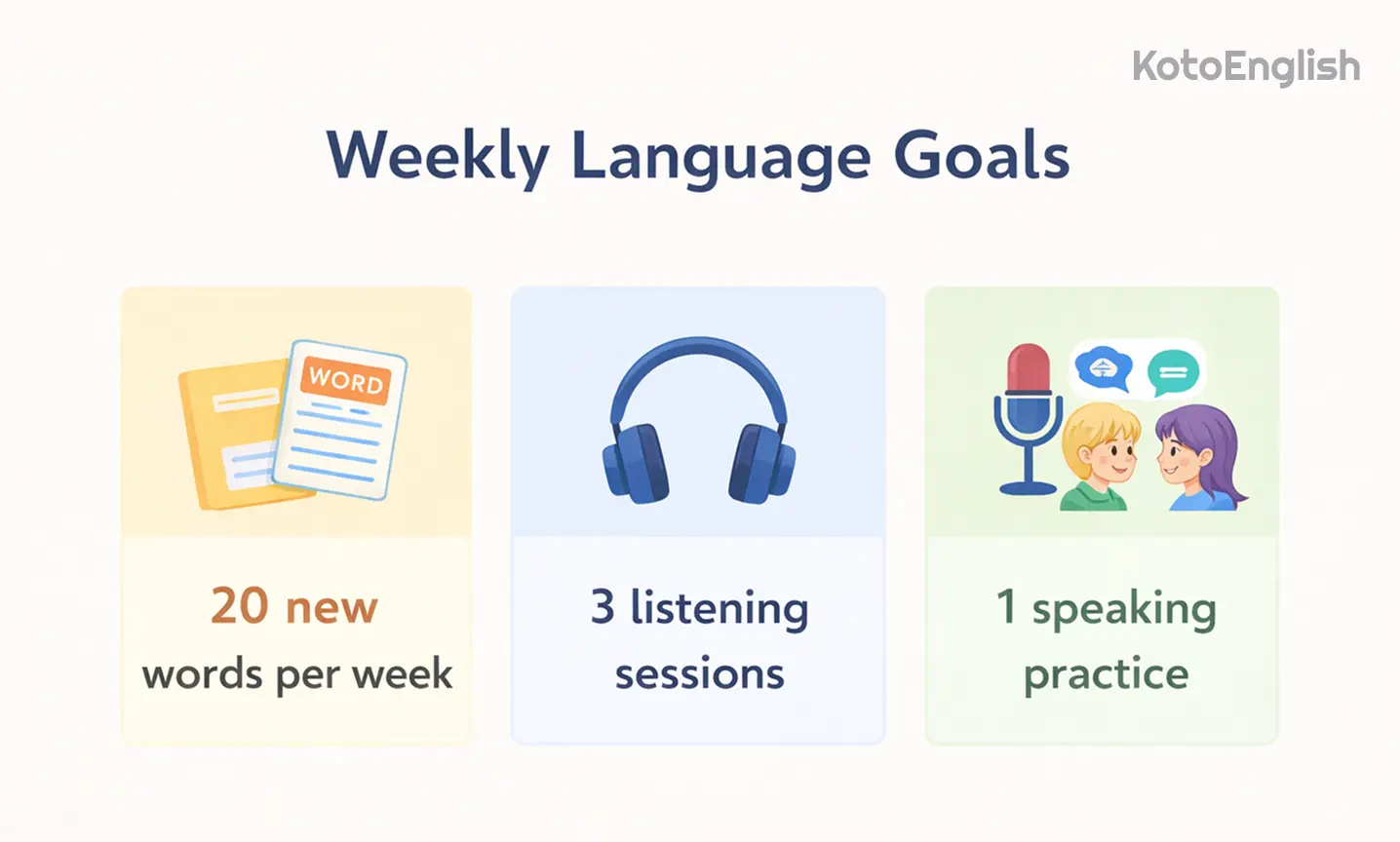
Consistency is also enhanced by the use of specific, concrete objectives. For example, instead of saying something too random, “Practice English more,” you can set more specific goals:
- Learn 20 new words related to your hobbies (gaming, fitness, digital marketing, school life).
- Complete 2–3 lessons aimed at your level of English.
- Schedule 1 speaking session in the app of your choice.
You will use the program on a daily basis, achieving your goals and feeling better because the progress will be visible. Let’s talk more about this point.
Track your progress the right way
Statistics on the app measure activity, and not always your competence. If you want to track improvement, use built-in tests (not every program has them, though) and combine them with outside activity. Keep a vocabulary journal using the app. Record yourself reviewing the lesson topic. Take an online level test monthly to measure comprehension and fluency.
Language learning apps can be powerful tools but not systems. Used in combination with speaking, goal setting, and self-tracking of student progress, language learning apps can form part of a language fluency system.
Final thoughts
Free language learning apps available in 2026 offer a good starting point for language learners, as they include structured learning, repetition, and speech that enable a person with a hectic schedule to practice their language learning.
The convenience factor cannot be denied, as it removes financial constraints, traveling time, and enables the student to study at a time when they want to, which makes the study process more consistent.
For strong results, all the applications function best as a supplement to systematic learning and constant real-life practice. Stay tuned to our blog and get that meaningful, guided English study process.
Frequently asked questions
If you practice for 20 to 30 minutes a day, it may take 3 to 6 months to attain a basic level of conversation (A1–A2 level). It may take 6 to 12 months to attain an intermediate level (B1 level) of proficiency.
Languages similar to your native language may be easier to learn than those with very different writing systems or grammar structures.
The majority of language learning apps offer basic lessons for free, but other features, such as offline access, advanced grammar, and speaking, might only be available for those who pay for a subscription. Some apps might have ads for those who use the app for free. To use the app without any limitations, you would need a subscription, monthly or yearly.
Free apps can help in learning new words, reviewing grammatical rules, and improving listening skills. Nevertheless, there are just a few free apps that provide practice tests, timed tests, and test results. If you are preparing for IELTS, TOEFL, or DELE, you should use the app in conjunction with other test materials and practice tests.