



What is the difference between affect and effect?
Unboundedly, in the English language, there are multiple words with similar meanings or sounds that can confuse a non-native speaker or an ESL student, like who vs whom. Among them is affect and effect. There is a double confusion in this case since these terms are similar in how they are written and pronounced, and their meanings overlap.
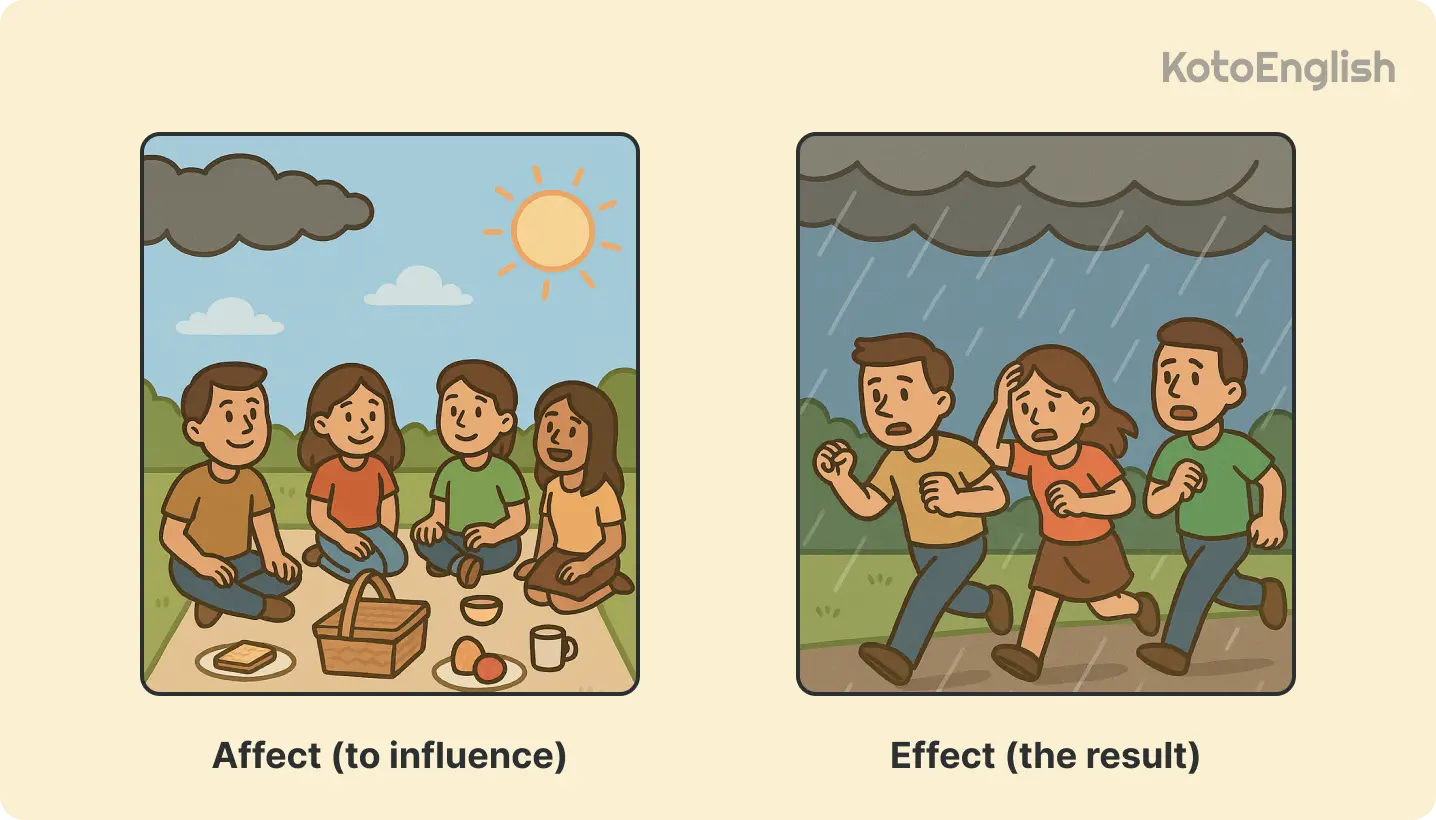
To give you a basic understanding of differentiation, affect is most commonly used as a verb, and it means “to cause or produce something to happen.” The effect is typically a noun used to say “the result of something changing or coming into reality.”
| Word | Part of Speech | Meaning | Example |
|---|---|---|---|
| Affect | Verb | to influence |
The rain
|
| Effect | Noun | result or outcome |
The rain had a bad
|
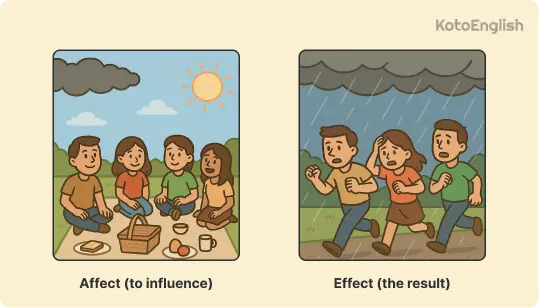
So far, it sounds pretty simple and you can get away with this explanation. Nevertheless, in case this subject still requires explanation to you, we have several tricks and tips up our sleeve that can help you understand it more clearly and confidently. We will move on to discussing when to employ affect and when to employ effect.
Level up your English with Koto!
Affect or effect: the core difference
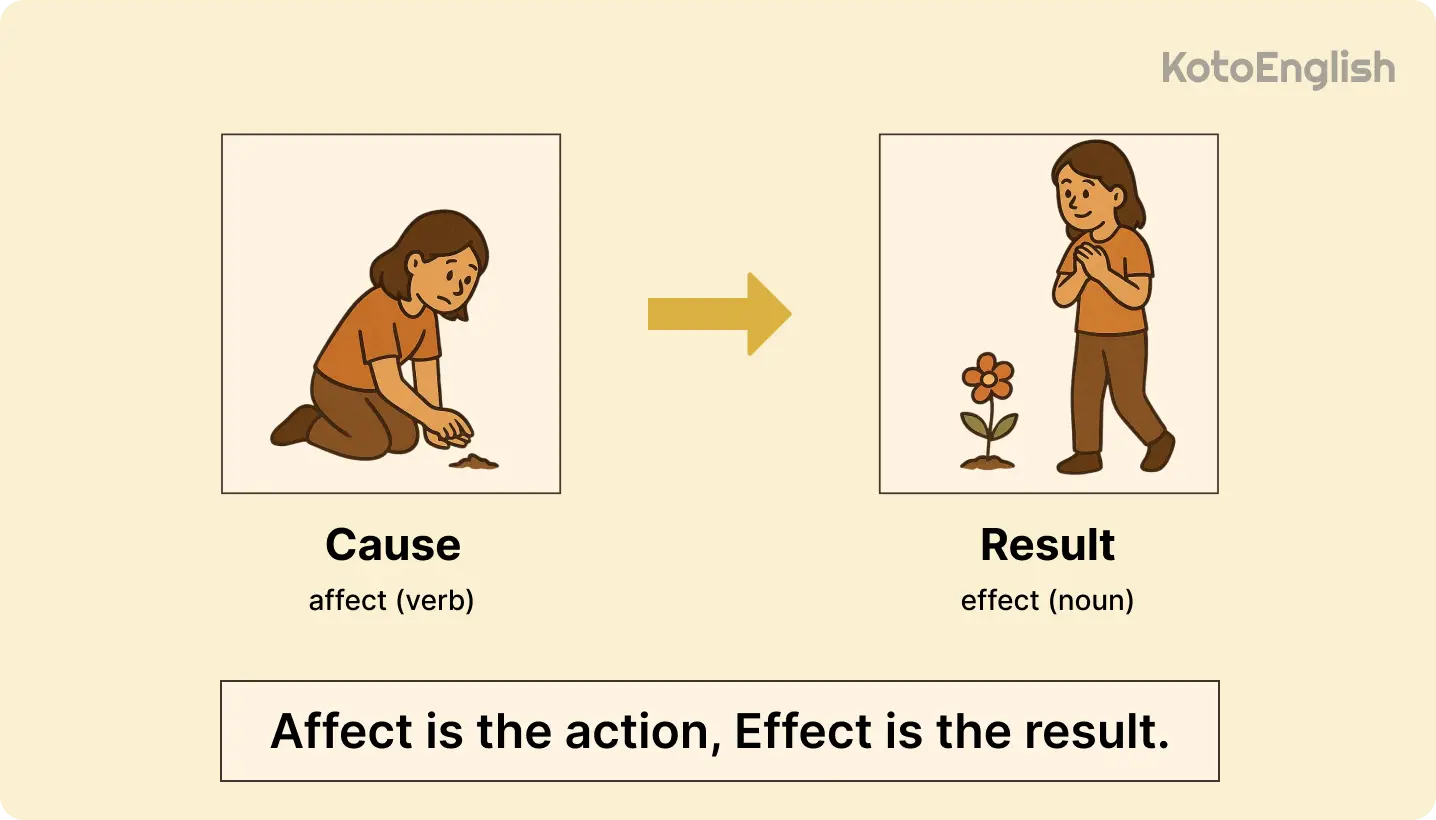
The problem of affect and effect is mostly confusing since they are similar in appearance and sound, yet their positions in a sentence are completely different. Where each word falls in the cause-and-effect chain is the primary distinction.
How to use affect (as a verb)
Affect typically acts in the form of a verb and it has been defined as influence, change or a push in a new direction by one factor on another. Affect shows the way one factor impacts or alters another, such as a mood change or reaction. Like:
In both sentences, we observe a force of action in making something happen.
- Affect in everyday writing
Everyday communication relies on affect to demonstrate the way in which circumstances redefine behaviour, performance or mood.
Anytime something shifts, big or small, affect is at work.
- Affect in emotional and social contexts
Human interactions also carry their own chain reactions:
These illustrations demonstrate that affect works the same way in both small and large social situations
- A special note: affect as a noun
Primarily, such a way of using this term is typical in psychology and describes a human’s mental or emotional state or response to a stressful situation. Affecting vs effecting examples in a sentence of this type would be the following:
You can find more information about these exceptions from the rules in English grammar books and explore how to form sentences with them appropriately. Still, these words used in deviation are primarily formal in expression and rarely come up in casual speech.
With this knowledge in mind, let’s look at more affect examples in sentences to solidify what we have learned.
How to use effect (as a noun)
Effect often goes into a sentence in the form of a noun which points to a consequence or result. It marks what appears after an action, event or decision takes place.
Effect in both instances refers to a measurable or observable consequence. The deed is done, and you can see the effect.
- Effect as the result of an action
Effect is much easier to realise since the results are tangible. A strategy shift creates an effect on performance. In writing, effect signals the endpoint , not the initial push.
- Effect as a verb (rare but important)
There is a rare verb form as well. To effect something means to bring it into existence or make it happen . It remains a formal usage, yet recognising it removes surprises when encountering official reports or strategic documents.
Moving on to the following term, the word effect is undoubtedly one of the coolest words in English that can be used in various situations. While similar to affect, it carries a different meaning and is used differently in a sentence.
Mastering what we have learned so far, let’s put this into practice with effect examples in 5 consecutive sentences.
Use the following table to understand affect or effect in context:
| Word | Part of speech | Meaning / function | Example sentence |
|---|---|---|---|
| Affect | Verb | To influence, change, or impact |
The rising cost of living
|
| Affect | Verb | To influence emotions or behavior |
The teacher’s kind words profoundly
|
| Affect | Verb | To influence performance or outcomes |
Noise in the office can
|
| Effect | Noun | Result, outcome, or consequence |
A well-designed interface has a noticeable
|
| Effect | Noun | Tangible impact of an action |
The team’s unexpected victory had a shocking
|
| Effect | Noun | End result after a process |
The worldwide pandemic had an unprecedented
|
When the idea settles in, the confusion affect vs effect fades quickly. Affect handles the influence, and effect shows what comes after. That contrast works like a mental signpost that points you in the right direction.
Enjoy personalized learning!
Common mistakes
The words are almost the same, and as such, misunderstandings in the simple messages, scholarly documents and even refined business reports occur. The good news is that spotting affecting vs effecting makes it much easier to avoid these repeat errors.
Using affect as a noun in normal writing
As we mentioned above, affect is sometimes used as a noun in the psychology field, but otherwise it remains a verb. It is a common mistake among many learners to use it as a noun to discuss the results.
|
The affect of the new rule was noticeable.
|
The effect of the new rule was noticeable.
|
|
We observed a strong affect on our results.
|
We observed a strong effect on our results.
|
When you can use the term result instead of word, you require effect.
Using effect as a verb in everyday contexts
Effect may be a verb and that is the formal way of saying something, to bring about or to cause something to occur. This application is uncommon in non-legal, non-political or non-academic literature. In the majority of cases, individuals unintentionally pick up effect when aiming at affect.
|
The new schedule will effect how we work.
|
The new schedule will affect how we work.
|
|
The city’s nightlife was drastically effected by the blackout.
|
The city’s nightlife was drastically affected by the blackout.
|
If you want a word that means “influence,” choose affect.
Mixing them up in formal reports
Such traditional blunders are sometimes found in the official paperwork, appearing so well-polished. Its strictness does not save it against confusion.
|
The committee analyzed the affects of the new budget allocation.
|
The committee analyzed the effects of the new budget allocation.
|
|
This study measures the affects of market fluctuations on revenue.
|
This study measures the effects of market fluctuations on revenue.
|
Reports tend to talk about the consequences, and thus, effect is more commonly used than affect.
Clear thinking about action versus result fixes most of these errors. Once the roles feel familiar, the confusion calms down.
How to remember the difference easily?
Once you master a few basic memory techniques, choosing between affected vs effected becomes much less stressful. A lot of students rely on visual clues or little mental shortcuts that serve as anchors, and these little tools are surprisingly effective.
Rather than attempting to learn rules about affect vs effect by heart, you can employ rapid associations that lead your mind to the correct choice each and every time.
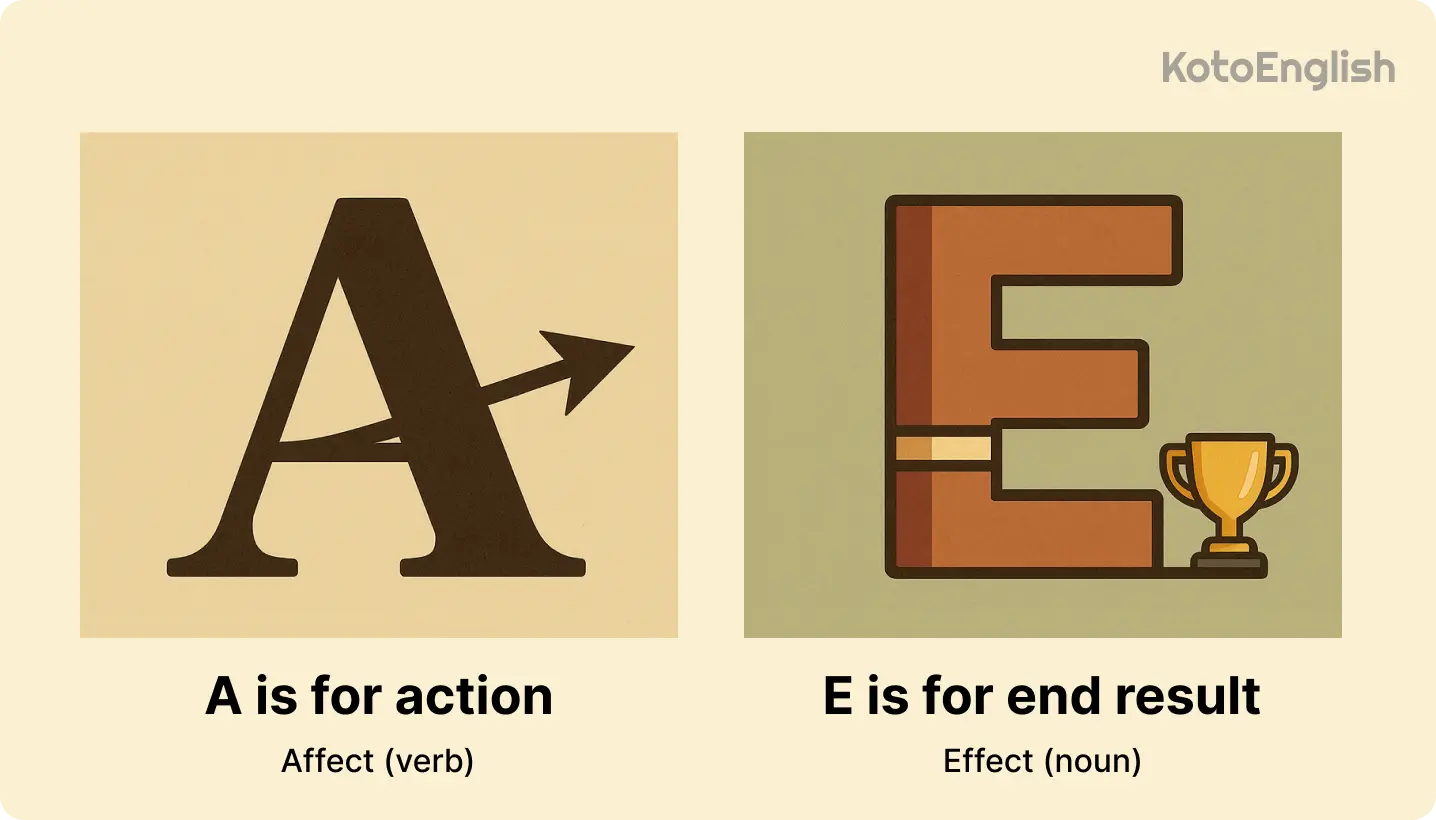
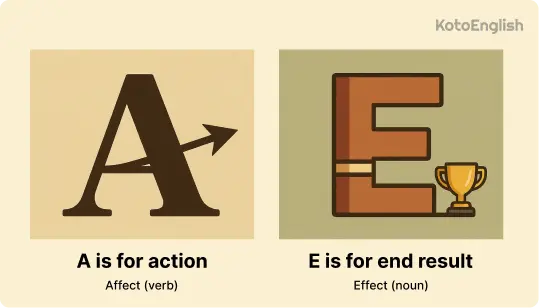
When these hints are added to your arsenal, the decision becomes easy, a A for action → affect (verb)
Affect deals with influence, change, or impact. It behaves like an active force that nudges something along, so the A stands for action . Because affect is a verb, it changes depending on English tenses , which makes spotting it in a sentence easier.
When a sentence talks about something causing a change — stress shifting your mood, weather shaping your day, policies changing behaviour — affect fits.
Try picturing the word with a little arrow attached to it, as if it’s pointing forward and giving something a shove. That tiny visual cue builds a strong link between the word and its role.
- E for end result → effect (noun)
Effect reveals the outcome. It shows what appears after something has acted. The E stands for end result, which makes choosing much easier. If a sentence focuses on a visible consequence, better sleep, higher sales, or a mood shift, the effect fits. Imagine effect stamping a result label on the sentence, like a finishing marker. The picture helps cement the idea that this word belongs at the end of the chain of events.
These shortcuts work once you build habits around them, helping you remember the difference between effected vs affected. You can even turn them into quick daily reminders:
- Say the pair like a short chant: Affect acts, Effect ends.
- Write a tiny sticky note with “A = action, E = end result” and glance at it while writing.
- Draw a cause-and-effect time span: the cause is at the beginning, the effect is at the end.
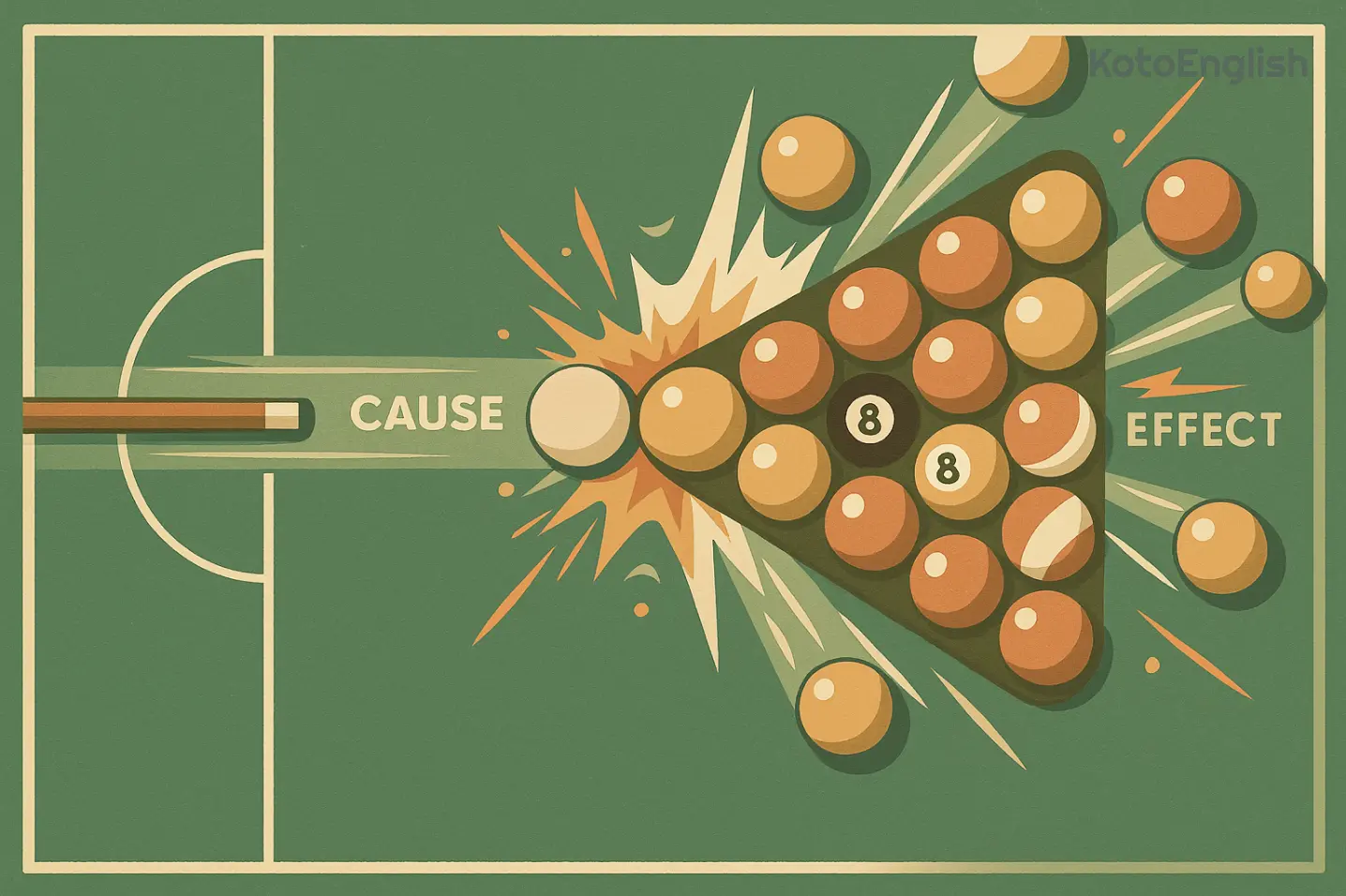

The second trick that can assist is to test the sentence by substituting the word with a simple one. If influence fits, use affect. If result fits, use effect. This fast interchange allows you to get the meaning without having to take too much time.
nd the words cease to be identical twins. Even a small construction, a couple of images, and a spurt of drill will do.
Conclusion
The distinction between these words should no longer give the impression of a language trip. Having an excellent understanding of what action and result are, you will be able to treat sentences carelessly and with confidence.
This guide is all you need to pick the correct answer when to use effect or affect with no hesitation because of the shortcuts and examples in the guide. Learn English, continue practicing, be curious and have faith in what you are doing.
Every rule you master opens the door to more fluid and expressive writing — and you’re already moving in the right direction.
FAQ about the difference between affect and effect
Affect usually appears as a verb that shows influence or change. You often see it in sentences about emotions, decisions, or events shifting something. The form of noun is present in psychology, but it is not commonly used in regular writing.
Effect can be used in the form of a verb, but the application is very infrequent. It is to create or make things to occur, which is commonly used in both formal and technical writing.
Actions are commonly affected by the writer:
Affect (action/influence):
Effect (result/outcome):
A simple shortcut helps: Affect = Action, Effect = End result. The matching of the initial letters works as a sticky note in the mind. When the cause of change is seen, select affect. In case you are viewing the result, select effect.
A short test helps:
- Try swapping the word with “influence”; if it works, use affect.
- Try swapping the word with “result”; if it fits, use effect.
This 2-second check keeps you on the right track even when you are writing in a hurry.
Yes, and sometimes the sentence even becomes a neat mini-lesson on grammar. Since affect shows action and effect names the outcome, they can sit together naturally. For example: